Springs · Parkway
Torsion Spring Replacement in Parkway
After pulling the red release cord, you tried lifting the door yourself and it would barely leave the floor.
In plain words
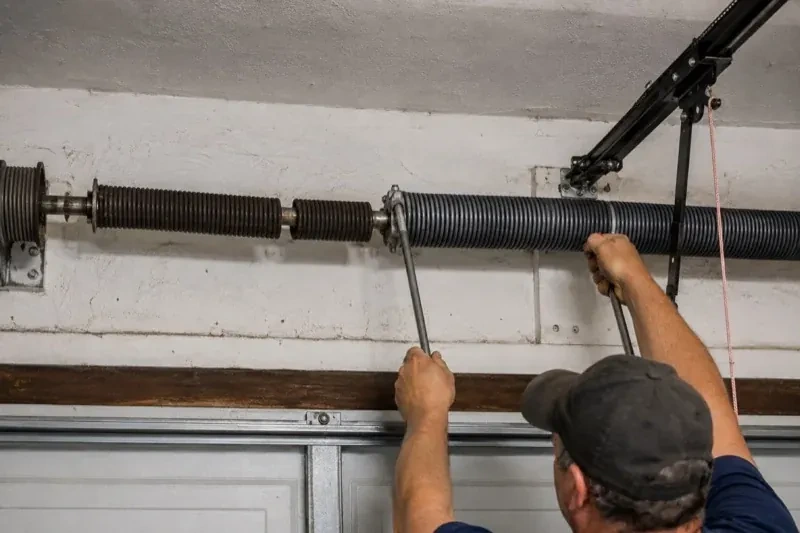
Torsion spring replacement restores the counterweight that makes a garage door light enough to lift. A sectional door often weighs more than a fridge, and the spring above the opening carries nearly all of that load, storing energy as the door closes and releasing it as it opens. When a spring breaks or wears out, the technician removes it, fits a spring matched to the door's weight and height, winds it to the correct number of turns and checks that the door balances at every point of travel. The opener returns to doing its light share of the work, and the door moves smoothly and evenly again.
How the visit goesThe door drops the last stretch to the floor rather than settling, and when you stop it halfway by hand it slides down instead of staying put. Balance has drifted, and the spring is no longer holding its share of the weight.
Torsion Spring Replacement
How the visit goes
Confirming the system layout
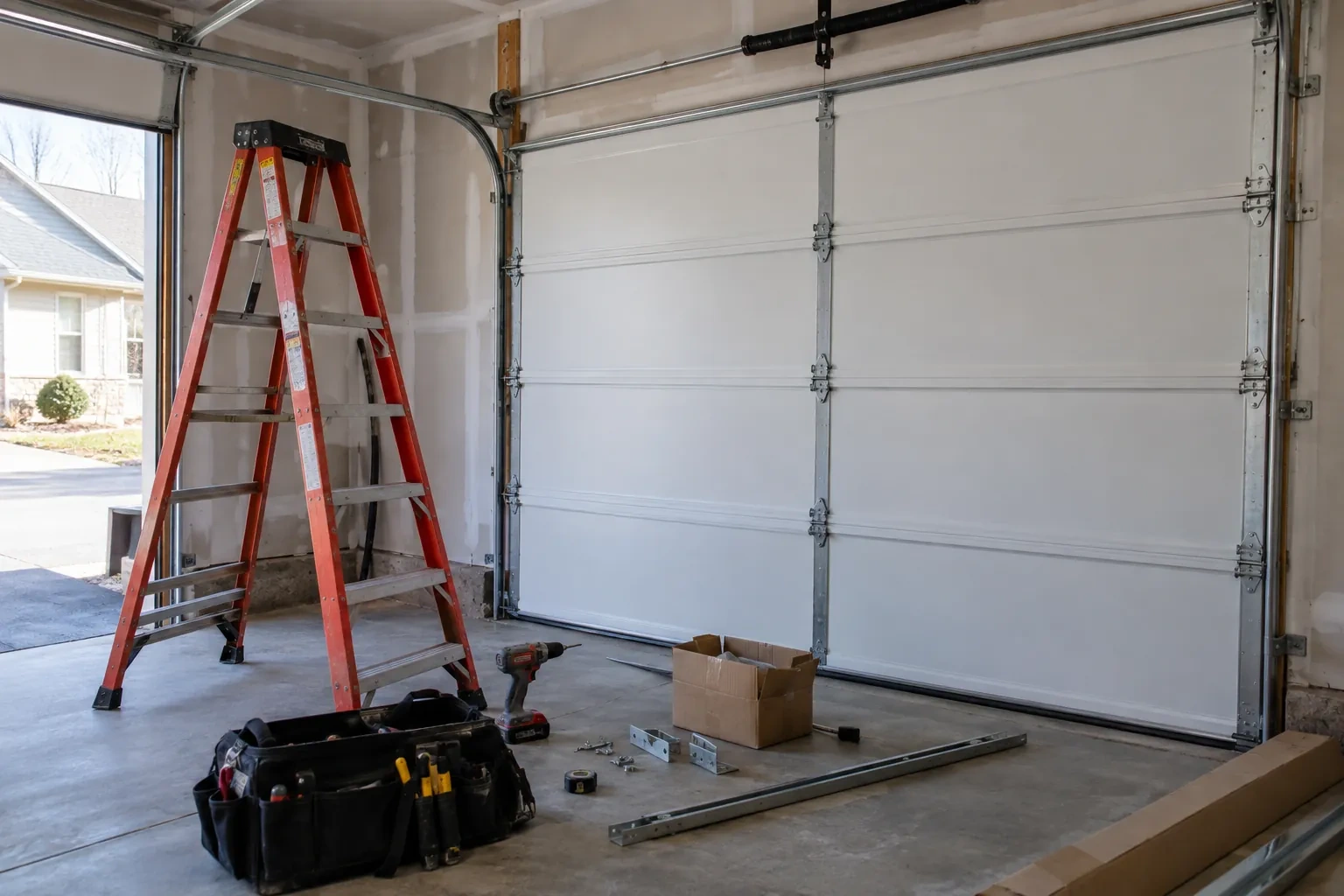
Doors are set up in several ways, and the replacement has to match. The technician notes whether there is one spring or two, whether the shaft is a single piece or two halves joined by a coupler, and what the shaft diameter is. Drum type is read from the drums themselves: standard-lift drums for a normal ceiling, high-lift or vertical-lift drums where the door rises well above the opening, or a rear-mounted assembly in a low-headroom garage. Track radius and headroom are measured because they change how many turns the spring needs and which drums it must work with.
The replacement from start to finish
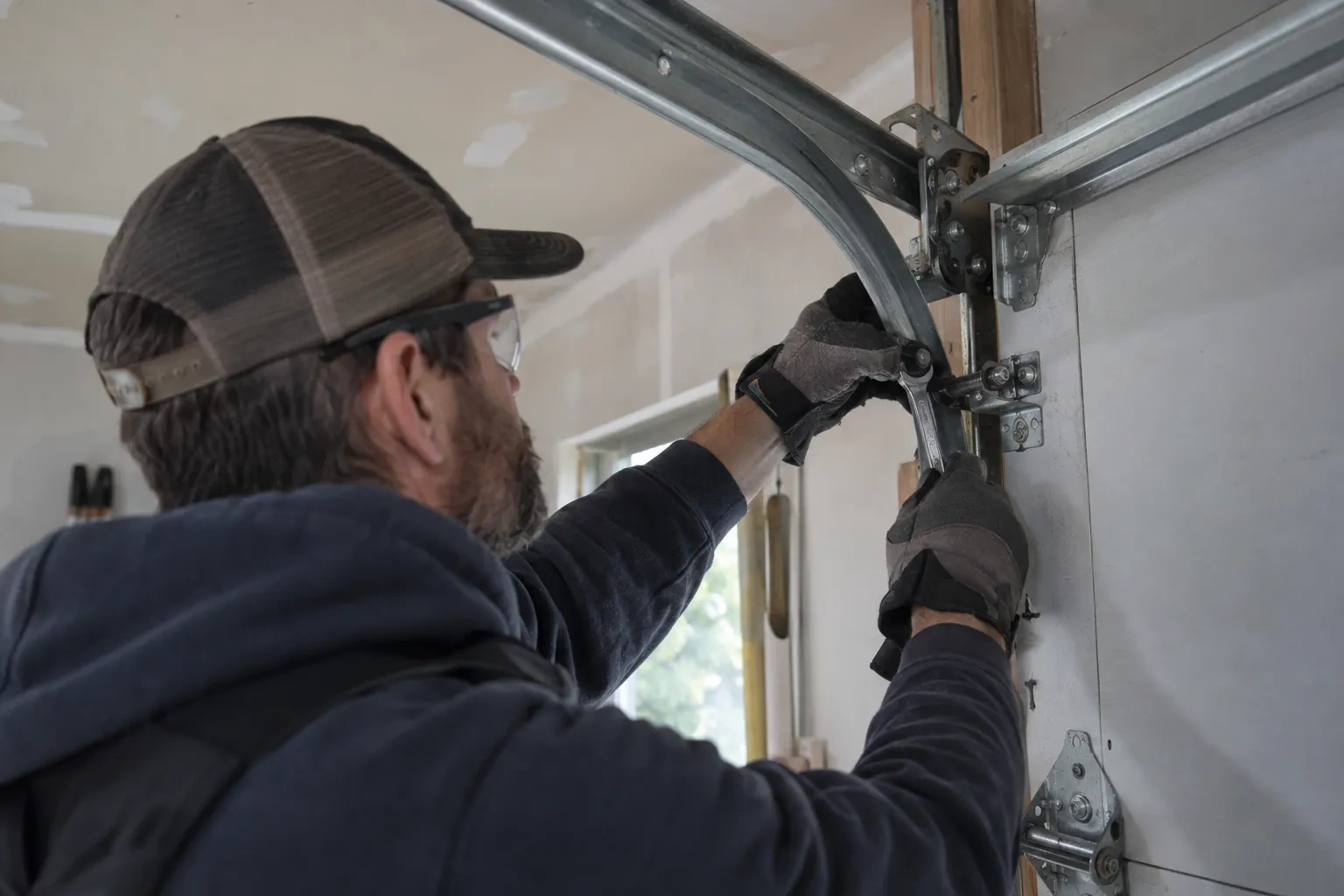
With the door clamped and the opener disconnected, the technician releases any tension left in an intact spring, loosens the drum set screws and slides the drums inward, then removes the old spring from the shaft. Bearings are inspected while the shaft is free. The new spring goes on with its stationary cone bolted to the centre bracket and the winding cone facing the drum. Drums are refitted, cables seated, the shaft levelled and cable tension evened on both sides. Winding follows, then the set screws are seated and the clamps come off for a balance check. Each stage is done deliberately and in order.
Relief for the opener
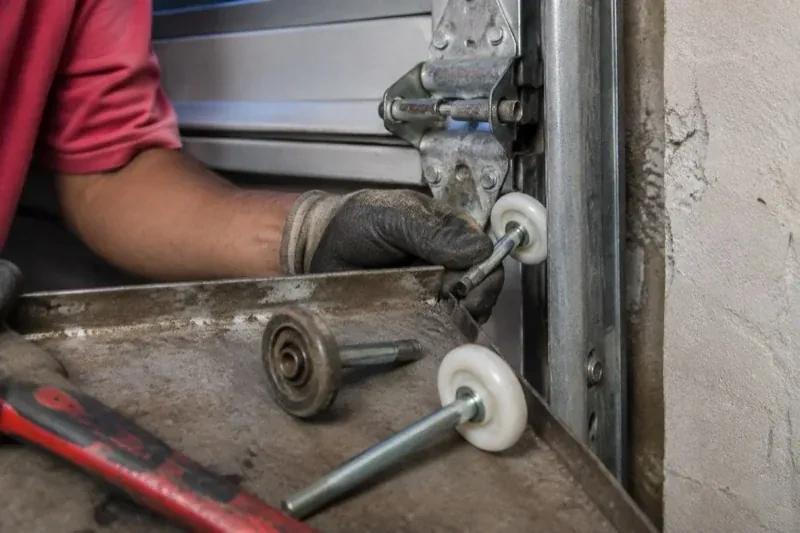
Your opener benefits as much as the door. With the spring carrying the weight again, the motor, gear drive, trolley and rail return to the light duty they were designed for, which tends to mean a longer working life and less noise. Force settings have been reset to suit a balanced door, so the safety reversal reacts to a genuine obstruction rather than to a heavy door. Once a year, repeat the simple reversal test by placing a length of wood flat on the floor in the door's path and confirming the door reverses on contact. The opener's photo-eye sensors deserve a wipe at the same time.
Torsion Spring Replacement
In the van
End bearing plates
Lift cables
Wire gauge and tape measure
Torsion springs, oil-tempered or galvanized
Torsion shaft and coupler
Torsion Spring Replacement
What affects the quote
Shaft condition
A bent, badly rusted or worn shaft is replaced so the drums and bearings turn true. Coupled two-piece shafts and their coupler are checked at the same time.
Spring finish
Oil-tempered and galvanized springs suit different garages. A coated or galvanized spring for a damp or salt-exposed space is a choice the customer can make when the specification is discussed.
Oversize or non-standard doors
Very wide doors, tall doors, carriage-house doors with heavy overlays and light-commercial doors may need duplex springs, multiple springs or larger drums, which changes both the hardware and the method.
What to have ready
- Is the door currently closed, open, or stuck partway?
- About how many times a day does the door open and close?
- Can you see a gap in the spring above the door?
Torsion Spring Replacement: questions
QuestionsWhy does the door need to be balanced, and how is that tested?
Balance means the spring is holding almost exactly the door's weight, so the door neither flies up nor slams down and the opener only guides it. It is tested by releasing the opener, lifting the door to about waist height and letting go: a balanced door stays there. The technician fine-tunes in quarter turns of the spring until the door holds at several heights and travels evenly on both sides.
What is the difference between torsion and extension springs?
Torsion springs mount on a shaft above the door and twist to store energy, lifting the door through cables and drums. Extension springs run alongside the horizontal tracks and stretch as the door closes, pulling it up through pulleys. Torsion systems tend to lift more evenly, take up less space beside the tracks and are the standard on most modern doors. Both are professional service items because of the energy they hold.
What is the difference between galvanized and oil-tempered springs?
Oil-tempered springs are the traditional dark grey or black coil; they hold their tension well over time and are widely used. Galvanized springs have a zinc coating that resists rust, which is useful in damp garages, though they tend to relax slightly and may need a small adjustment after settling in. Both are available in standard and high-cycle ratings, and the technician can explain which suits your garage.
Related services
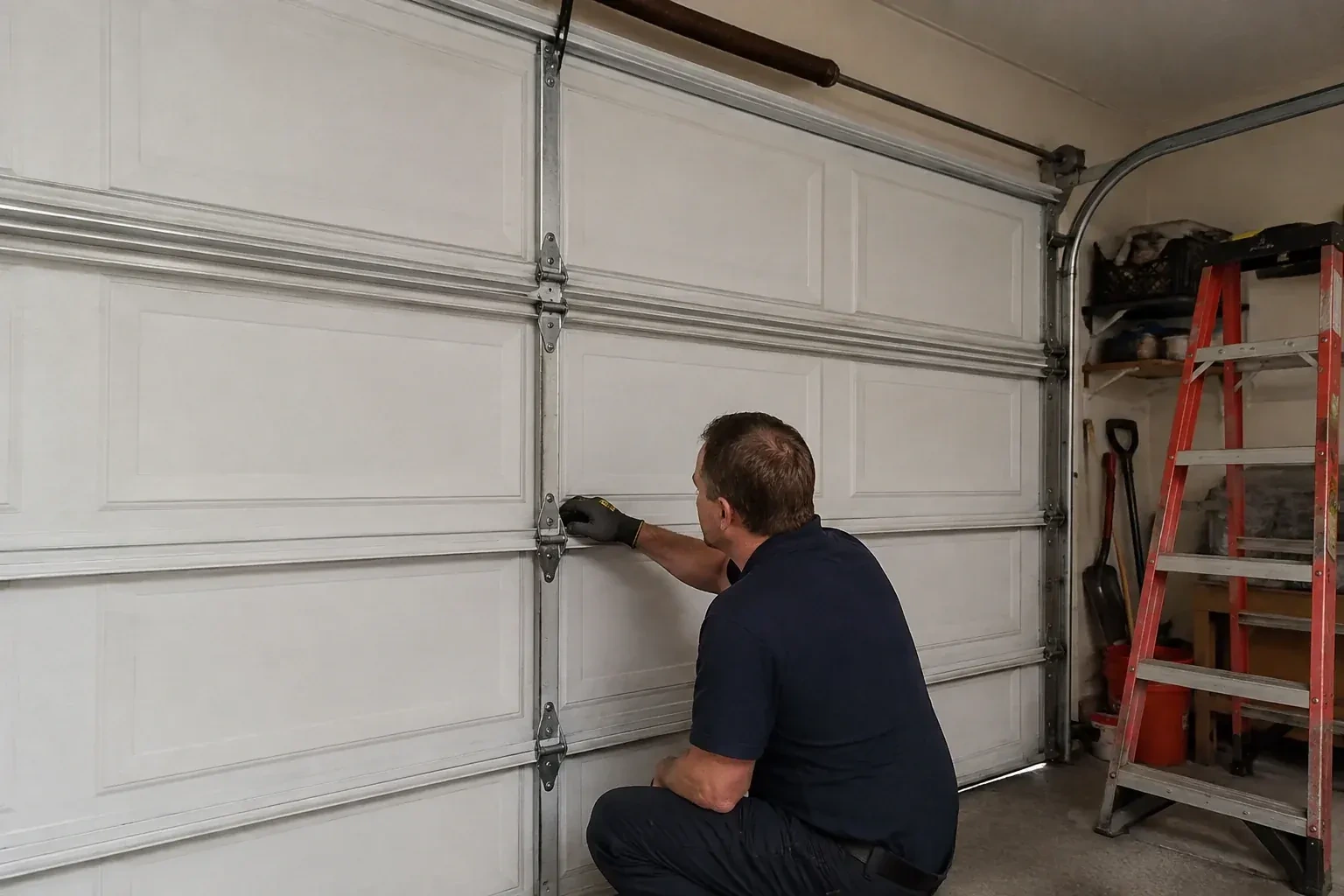
- Garage Door Hinge ReplacementOn the old wood door, one hinge has pulled away from the panel, dragging a screw and a chunk of soft timber with it.
- Garage Door Track Repair or ReplacementBacking out this morning, the mirror caught the track beside the door.
- Garage Door Cable ReplacementThe car bumper kissed the door on the way in.