Repairs · Kitchener
Garage Door Panel Replacement
You misjudged the last metre of the driveway and felt the bumper meet the door.
In plain words
Winter is hard on the bottom section. Meltwater collects under the seal and freezes the door to the slab; the opener then pulls on a door that is anchored at the floor, and the bottom section bows or a hinge tears out of its stile. Road salt and slush finish the job by rusting the lower edge. Replacing that section restores a flat, sealed bottom edge and gives the door a new set of bottom brackets and seal retainer. Because the lift cables attach at the bottom, the springs are unloaded first, then reloaded and balanced once the new section is in, so the door runs as it should.
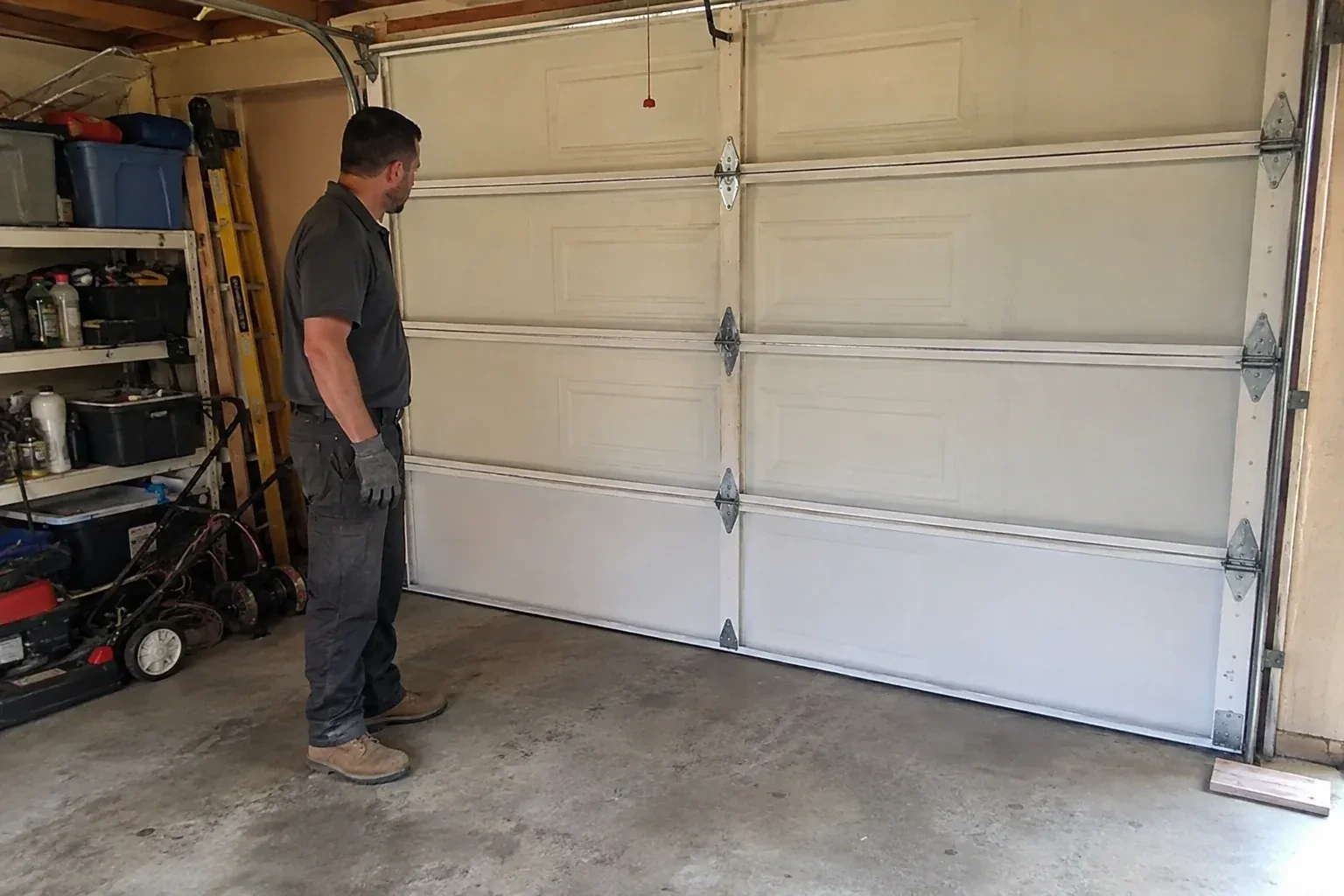
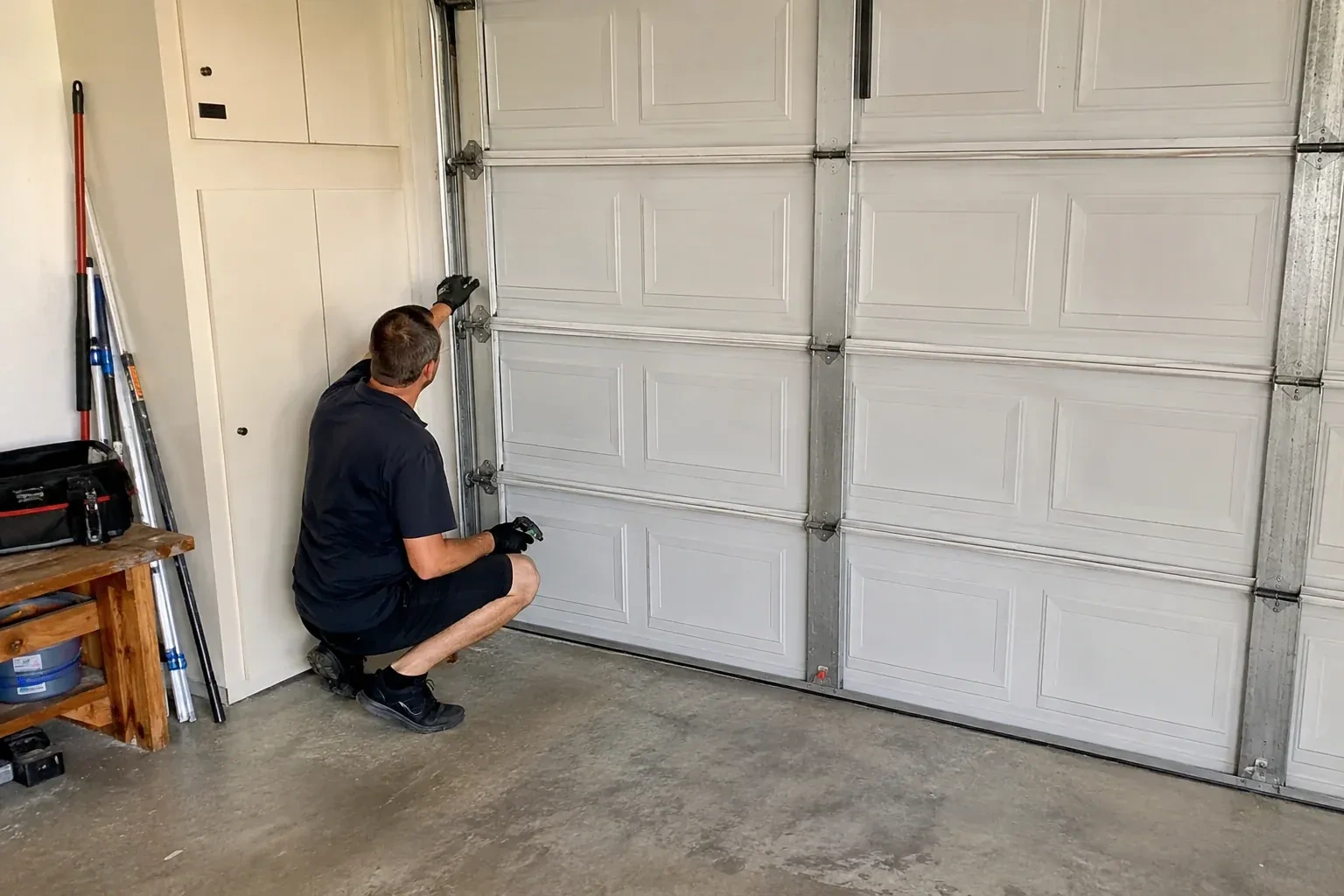
How the visit goesThe inside face of one section has started to bow outward and the outer skin has a soft, wavy look. Tap it and it sounds hollow in places. The door is insulated, and the foam core seems to have parted from the steel.
Garage Door Panel Replacement
How the visit goes
What the impact did to everything else
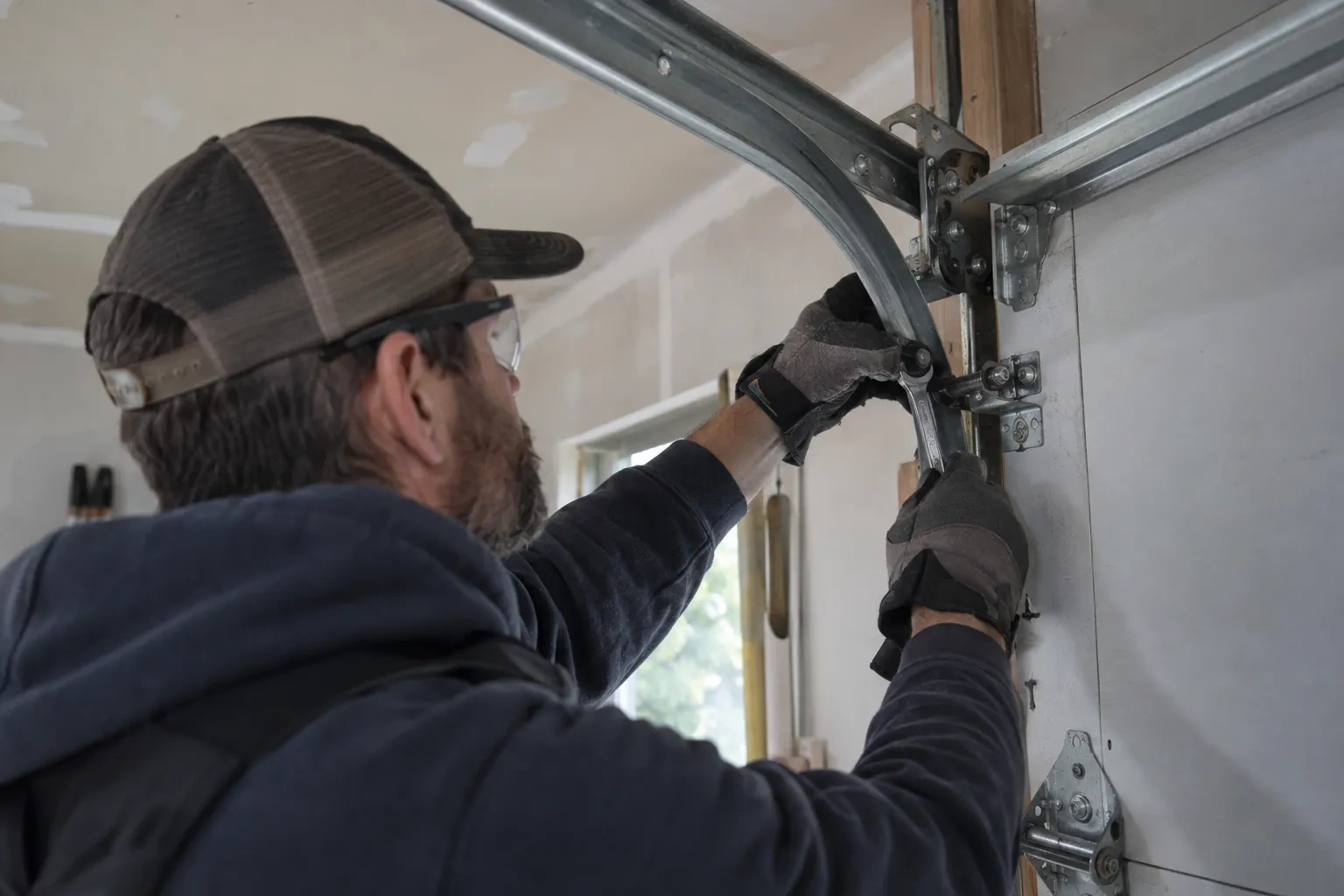
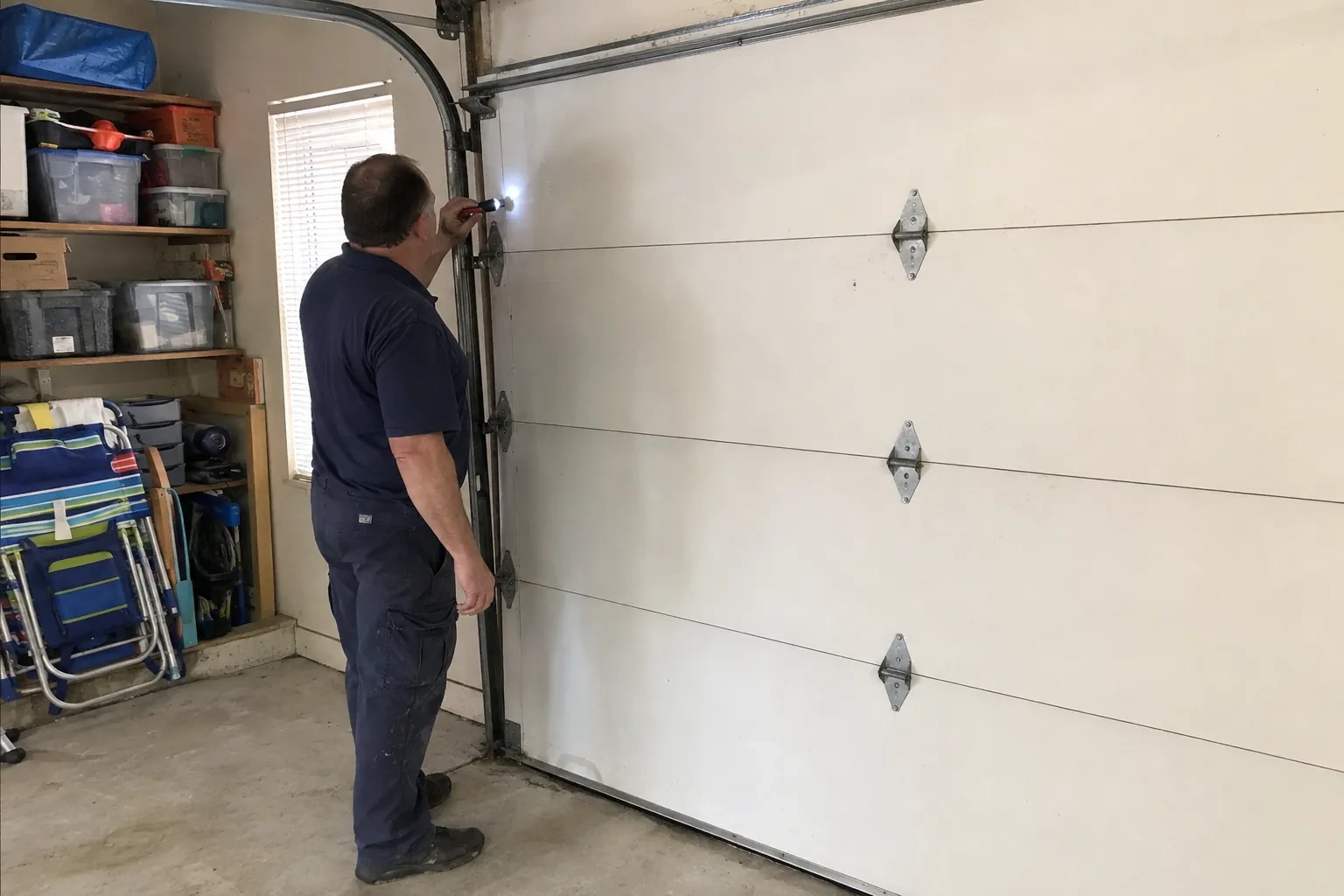
Trade-association guidance is clear that after a vehicle strike, a storm or a freeze-up the whole door is looked at, not just the dented part. The technician runs a hand along the hinges for cracks and pulled screws, spins each roller for flat spots and bent stems, sights down both tracks for kinks and checks the brackets that hold them to the jambs. Cables are inspected for fraying where they wrap the drums, spring anchors and the centre bearing plate are checked, and the opener arm and its bracket are examined for bending. Anything the impact disturbed goes on the list alongside the section.
Removing the damaged section
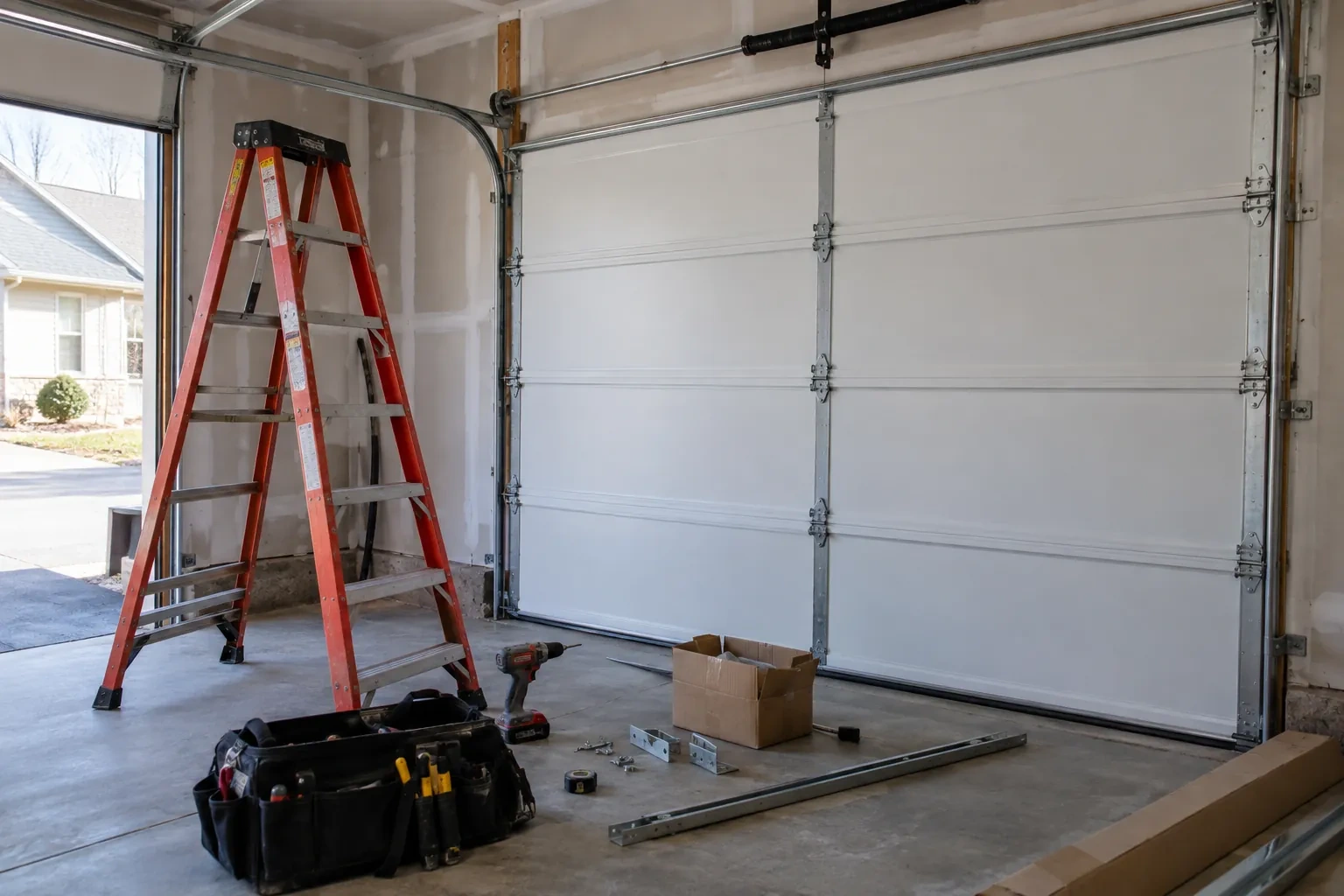
With the door secured and, where relevant, the springs unloaded, the hinges joining the damaged section to its neighbours are unbolted and the rollers slid out of the tracks. A section is wider than the opening between the tracks, so it comes out by tilting one end inward and walking it clear, occasionally after loosening a track bracket to gain a few millimetres. Two people handle a wide or insulated section because of its weight and its sharp edges. Once it is out, the technician checks the exposed edges of the sections above and below for damage that was hidden while the door was assembled.
Hinges, rollers and a monthly minute
The new hinges and rollers benefit from the same light care as the rest of the door. Once a month, with the door closed, glance along the hinges for a screw that has backed out and give the rollers a spin to feel for roughness. Twice a year, put a small amount of garage-door lubricant on the hinge pivots, roller stems and bearing plates, wiping off the excess so it does not gather dust. Springs can take a light film too. Tracks should stay dry and clean rather than greased, since grease there collects grit and makes the rollers skate.
Garage Door Panel Replacement
In the van
Nylon or steel rollers
Bottom seal retainer and astragal
Adjustable top roller brackets
Garage-door lubricant
Matching replacement section
Garage Door Panel Replacement
What affects the quote
Reinforcement struts
If the section had a strut that bent, or if a top or wide section is to gain one it never had, the strut and its fasteners appear as their own line on the quote.
Special-order handling and freight
Made-to-order sections travel from the factory or distributor, and a long or glazed section needs careful handling in transit. Freight and order handling are shown as their own line rather than folded into labour.
The age and condition of the rest of the door
On an older door with rust, worn hinges or tired springs, the quote may show the single section next to a whole-door option, so you can compare what each includes rather than choosing in the dark.
What to have ready
- Does the damaged section have windows in it?
- Are any hinges, rollers or cables visibly bent, loose or hanging?
- Is the door insulated, and how thick are the sections?
Garage Door Panel Replacement: questions
QuestionsWhat happens to the opener during the work?
It is disconnected at the release cord and unplugged before any hardware comes off, so the motor cannot pull on a door that is missing a section. After the new section is in and the door has been balanced by hand, the opener is reconnected and tested: its reversal against a board on the floor and its photo-eyes are checked every time, and the open and close limits or the force setting are reset only if that check shows they need it.
Why is the bottom section handled differently from the others?
The bottom section is where the lift cables attach, through the bottom brackets at each end, and those cables are under the full pull of the springs. Before the brackets come off, the springs have to be unwound or unhooked so the cables go slack. The bottom section also carries the seal retainer and astragal that meet the floor. After the new section is in, the springs are re-tensioned and the balance reset.
What is a strut, and does a new section need one?
A strut is a horizontal steel stiffener fastened across the inside of a section to keep it from bowing. Wide doors, top sections where the opener arm pulls, and bottom sections that take knocks are the usual places for them. If your damaged section had a strut, the new one gets a straight strut refitted or replaced. If a top section bowed because it never had one, adding a strut is part of putting it right.
Related services
- Garage Door Tune-UpYou pulled the red cord to lift the door by hand during a power cut and it felt like lifting a car.
- Off-Track Garage Door ResetOne side of the door hangs a hand's width lower than the other.
- Garage Door Bottom Seal ReplacementThe garage doubles as a workshop, and with the heater running the floor near the door stays cold and the draft finds your ankles at the bench.