Repairs · Parkway
Garage Door Perimeter Weatherstrip in Parkway
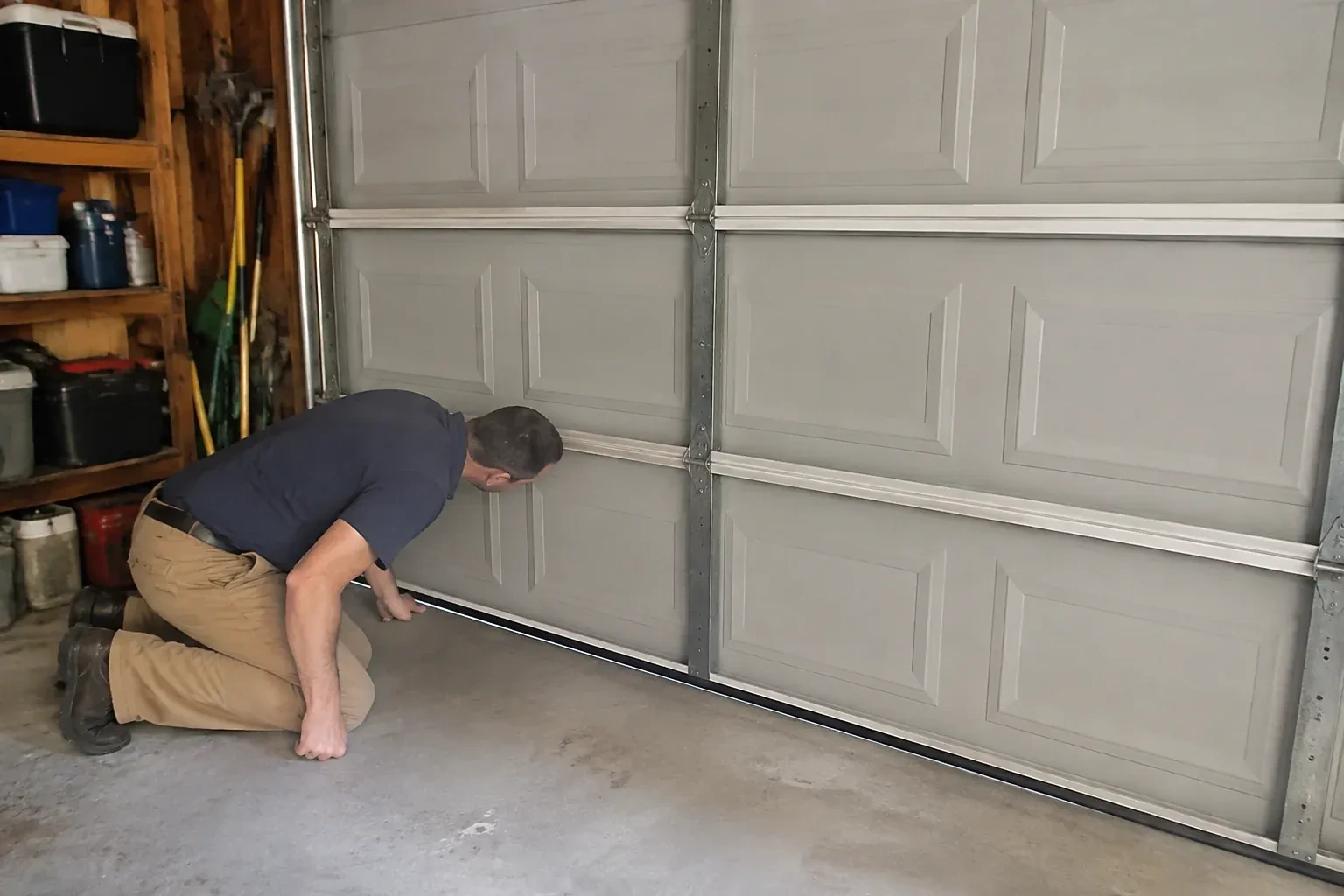
Every time the door closes there is a rubbing squeal along one side, and the flexible fin has folded under itself and torn.
In plain words
Winter is what wears a perimeter seal out here. Sun and cold cycles harden the vinyl until it cracks, freezing rain glues the fin to the door so the opener tears it, and salty slush sits against the bottom of the jambs and rots the wood the strip is nailed to. One visit deals with all of that: soft wood at the base of the jamb is cut out and replaced, fresh seal is fitted in continuous lengths with the corners overlapped, and the fin is wiped with silicone so ice does not bond to it. The garage stays drier and calmer through the next freeze-thaw season.
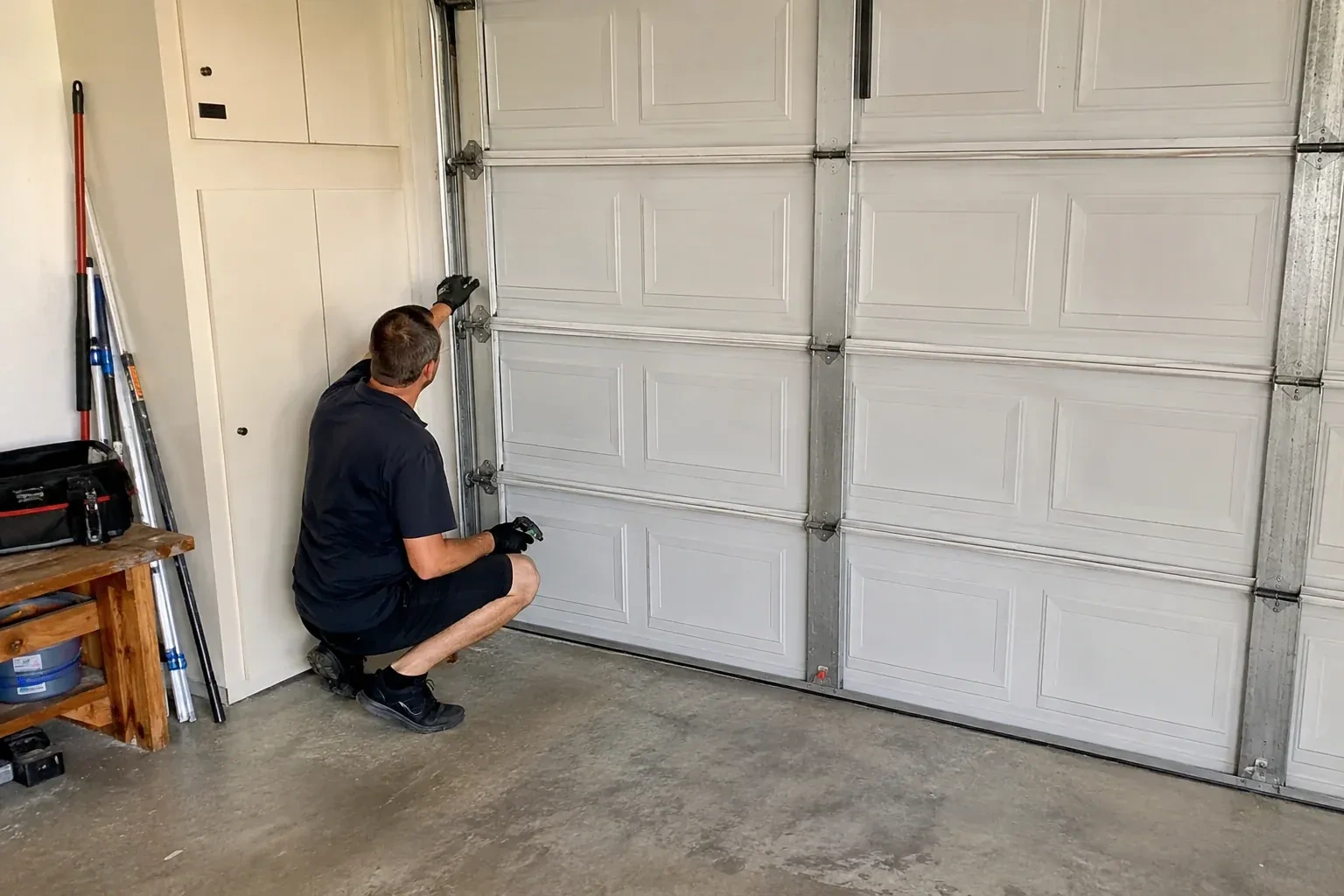
How the visit goesThe bedroom over the garage is always the cold room, and standing in the garage you can feel why: a steady draft along the door edges that moves the cobwebs on the wall. The seal around the opening has flattened to nothing.
Garage Door Perimeter Weatherstrip
How the visit goes
What has been getting in, and what the garage is for
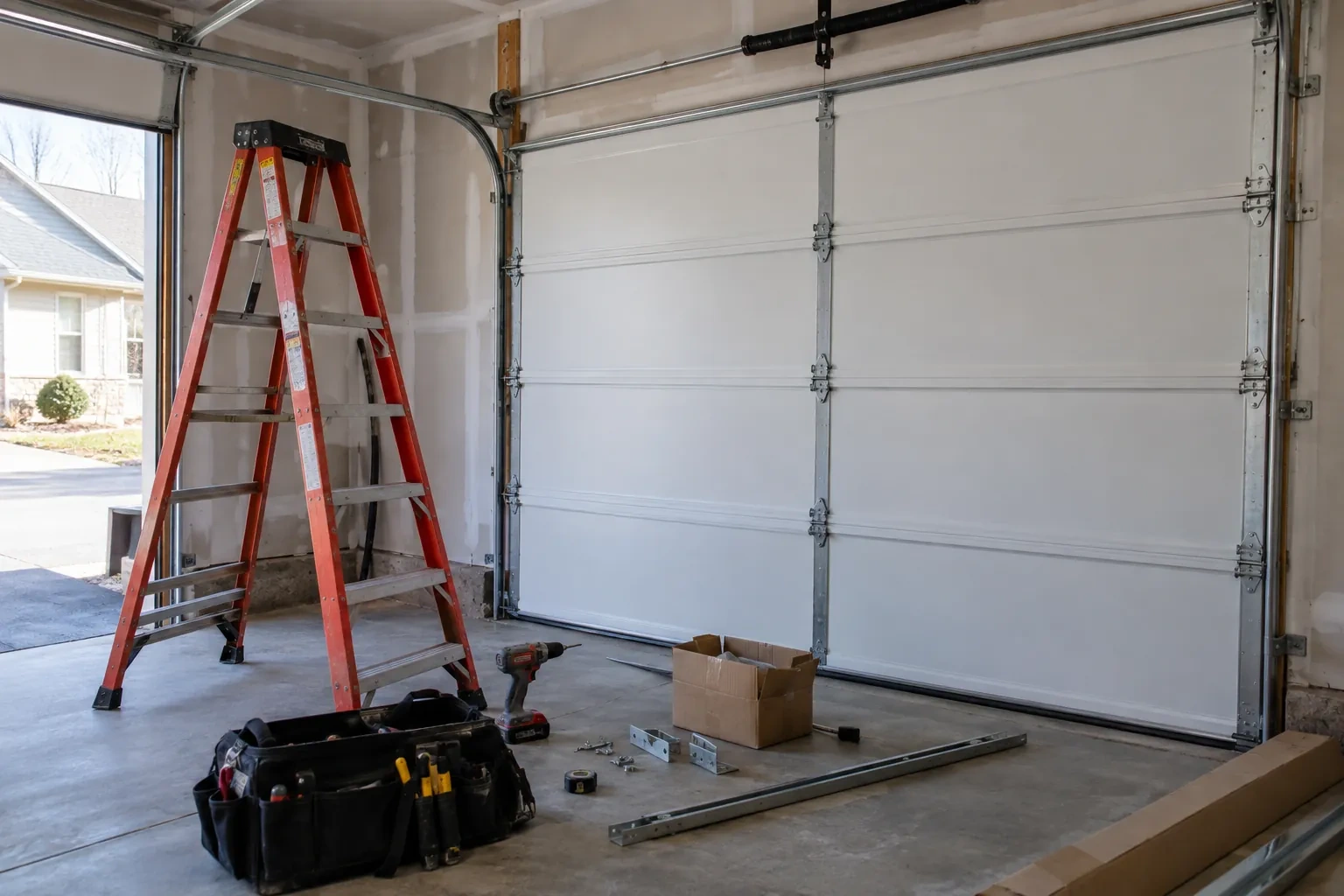
A short conversation shapes the rest of the visit. Is the garage attached and heated, or a detached shell? Has snow, water, leaves or an animal been coming in, and where? Is the door used several times a day or once a week? Was the door itself replaced or adjusted recently? A heated garage under a bedroom justifies a full one-piece stop and careful corners; a detached garage used for storage may want a straightforward fin replacement. Knowing what the household has noticed also tells the technician which side to test first and whether a section of jamb has been wet for a long time.
Cycling the door and sealing the joints
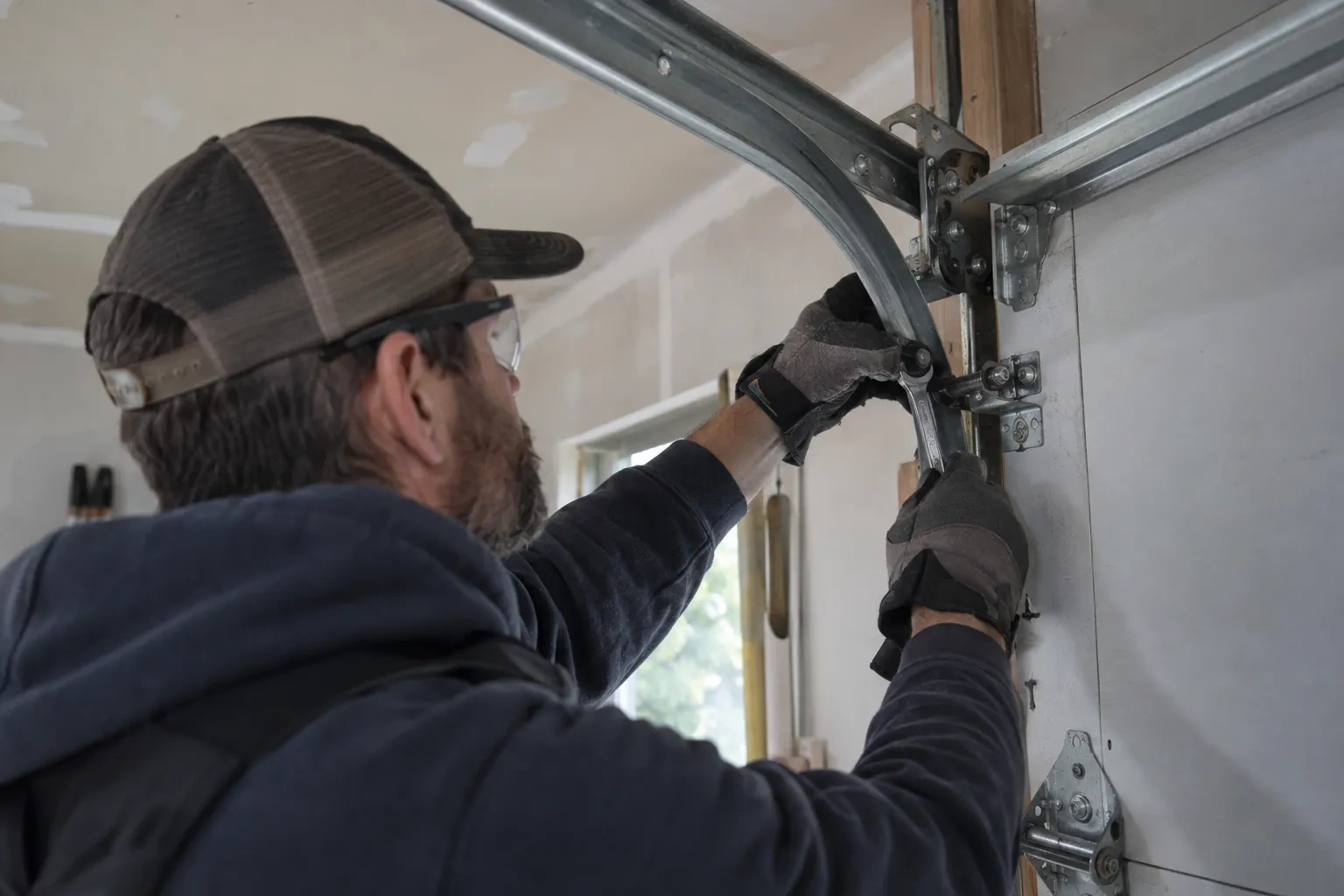
Once all three lengths are on, the door is run through several full cycles by hand and then with the opener, while the technician watches each fin for catching, folding or rubbing and listens for a squeal. The daylight test is repeated from inside with the lights off. Any joint between the new stop and the trim or brickmould where water could get behind is caulked with an exterior sealant, and the fin is wiped with a silicone spray to cut the odds of ice bonding it to the door. The old material is bagged and removed, and the household is walked round the finished opening.
Slush, salt and the bottom of the jambs
The lowest part of each jamb is where the weather does its work, so a little attention there protects the whole seal. Push slush away from the jambs when clearing the driveway rather than piling it against them, and rinse the salt off the bottom of the stop on a mild day. Keep the joint between the jamb and the sill caulked so meltwater runs off the face instead of behind it. If a section of jamb was replaced, keep its paint or PVC surface intact. A dry jamb base holds its fasteners, and fasteners that hold keep the seal tight.
Garage Door Perimeter Weatherstrip
In the van
Flexible vinyl fin seal
Exterior caulking and gun
Galvanized or stainless trim nails
Epoxy consolidant and exterior primer
Flat bar, hammer and nail set
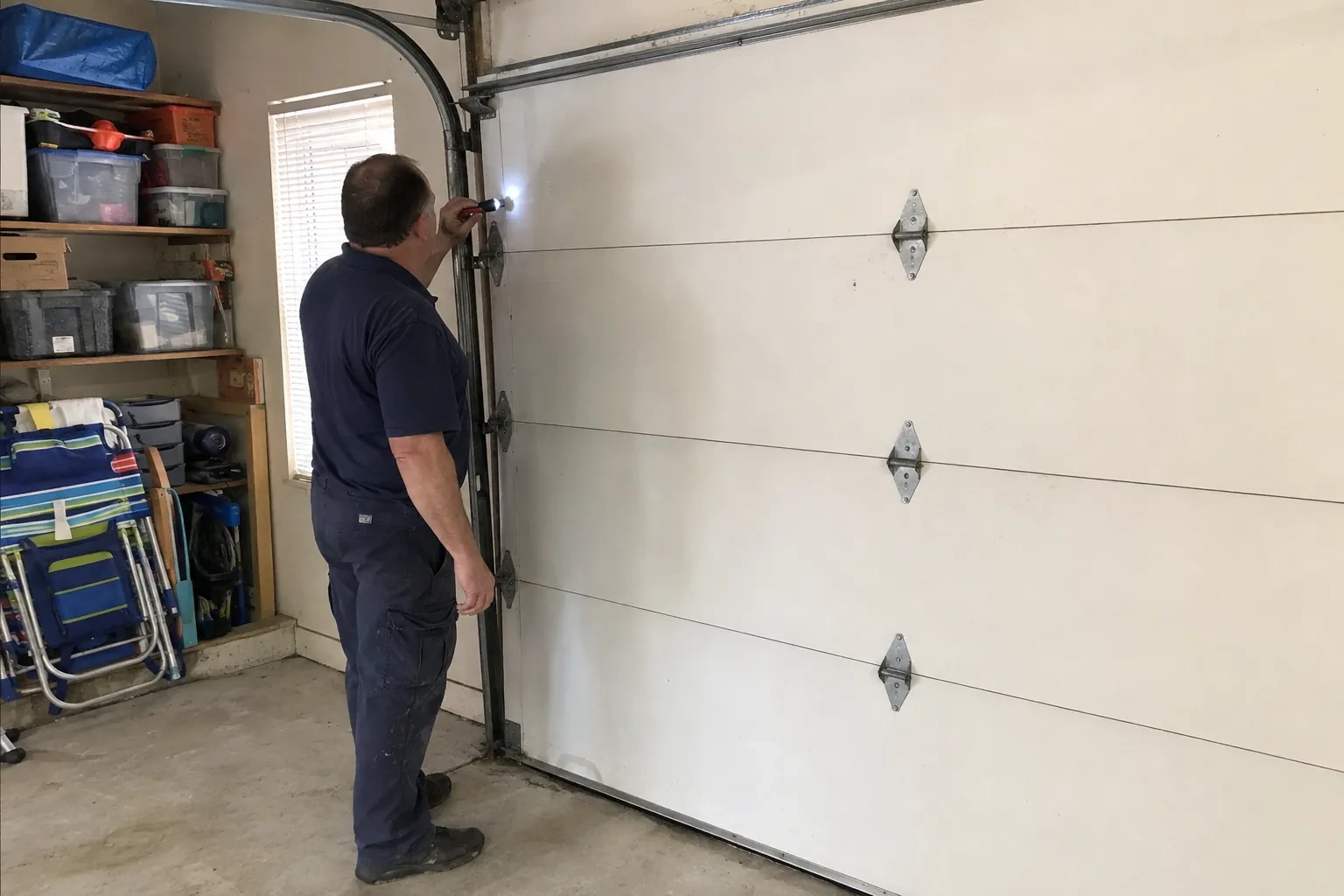
Garage Door Perimeter Weatherstrip
What affects the quote
Working height and access
A tall header, a sloped driveway that makes a ladder awkward, shrubs against the jambs or cars and storage close to the door all affect how long the work takes.
Alignment work on the door
Where the door sits out of square and a track bracket or the door itself needs small correction before the seal can meet it evenly, that adjustment is named separately.
Size of the door
A double door has a longer header and the same two sides as a single, so more material and a two-person lift for the top piece; taller openings take longer side lengths.
What to have ready
- Does the door rub or catch on the seal when it moves?
- Is it a single or double door, and roughly how wide and tall?
- What colour is the trim around the door?
Garage Door Perimeter Weatherstrip: questions
QuestionsDoes it matter if my garage is detached and unheated?
The seal still earns its place. It keeps driven snow, rain, leaves and animals out of the garage and off whatever is stored there, and it stops the door edges rattling in the wind. For an attached or heated garage the comfort benefit to the house is added on top. The technician may suggest a simpler fin replacement for a detached shell and a one-piece stop where the garage is lived beside.
Can you replace just one side or only the top piece?
Yes, a single damaged length can be replaced when the rest is sound and still soft; the new piece is matched to the existing profile and colour and its corner is overlapped with the neighbouring fin. When the whole set is the same age and the others are hardening too, replacing all three at once gives an even seal and saves a second visit, and the technician will say which applies.
How is the seal fastened to the frame?
A flexible fin is nailed or stapled to the face of the wood stop with galvanized or stainless fasteners spaced evenly along its length; a one-piece vinyl stop is nailed or screwed through its rigid edge into the jamb and header. Fasteners go into sound wood, heads are set flush without crushing the vinyl, and the joint between stop and trim is caulked where water could get behind.
Related services
- Garage Door Tune-UpYou pulled the red cord to lift the door by hand during a power cut and it felt like lifting a car.
- Off-Track Garage Door ResetOne side of the door hangs a hand's width lower than the other.
- Garage Door Panel ReplacementYou misjudged the last metre of the driveway and felt the bumper meet the door.