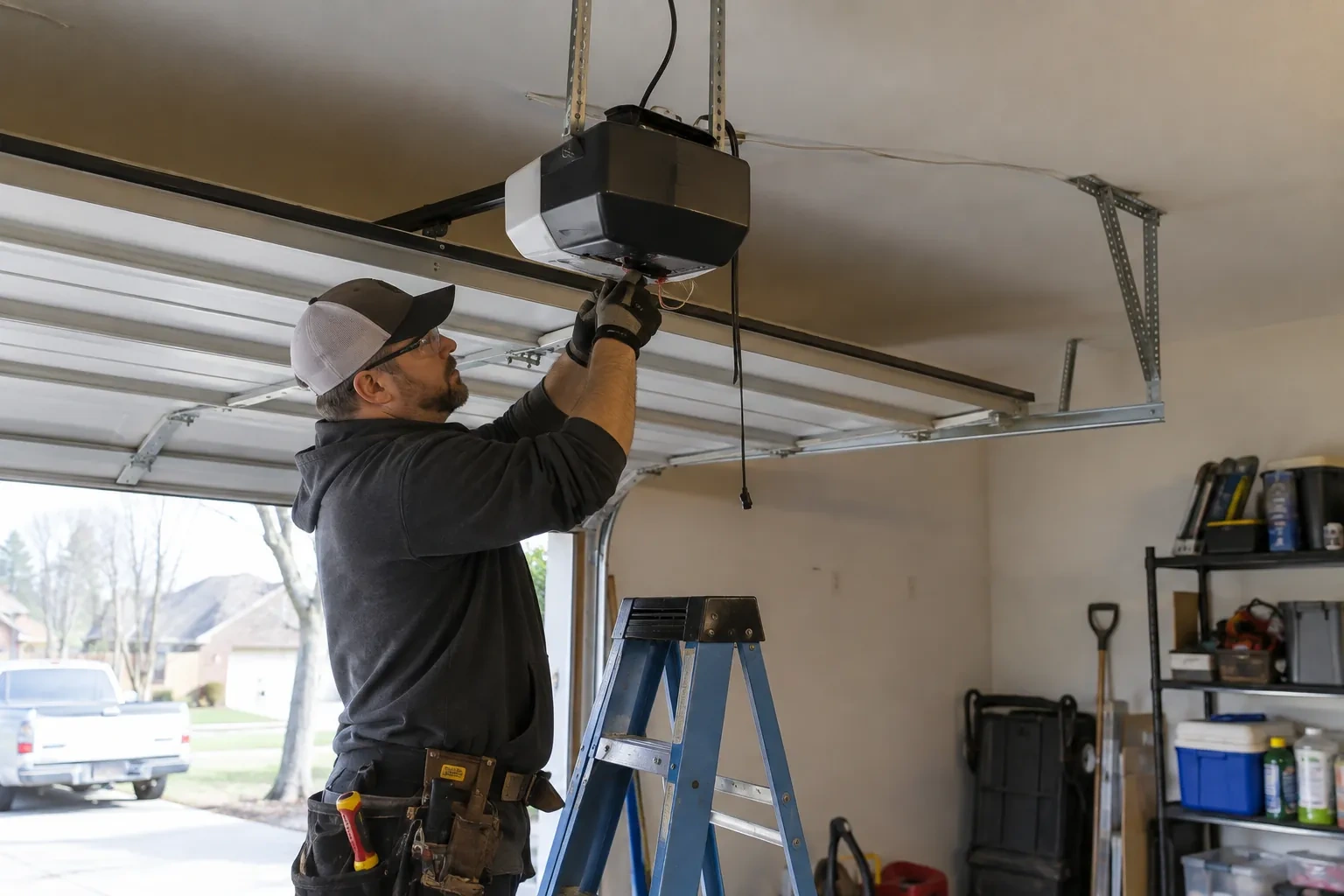
Garage Doors
Between visits
Before you book
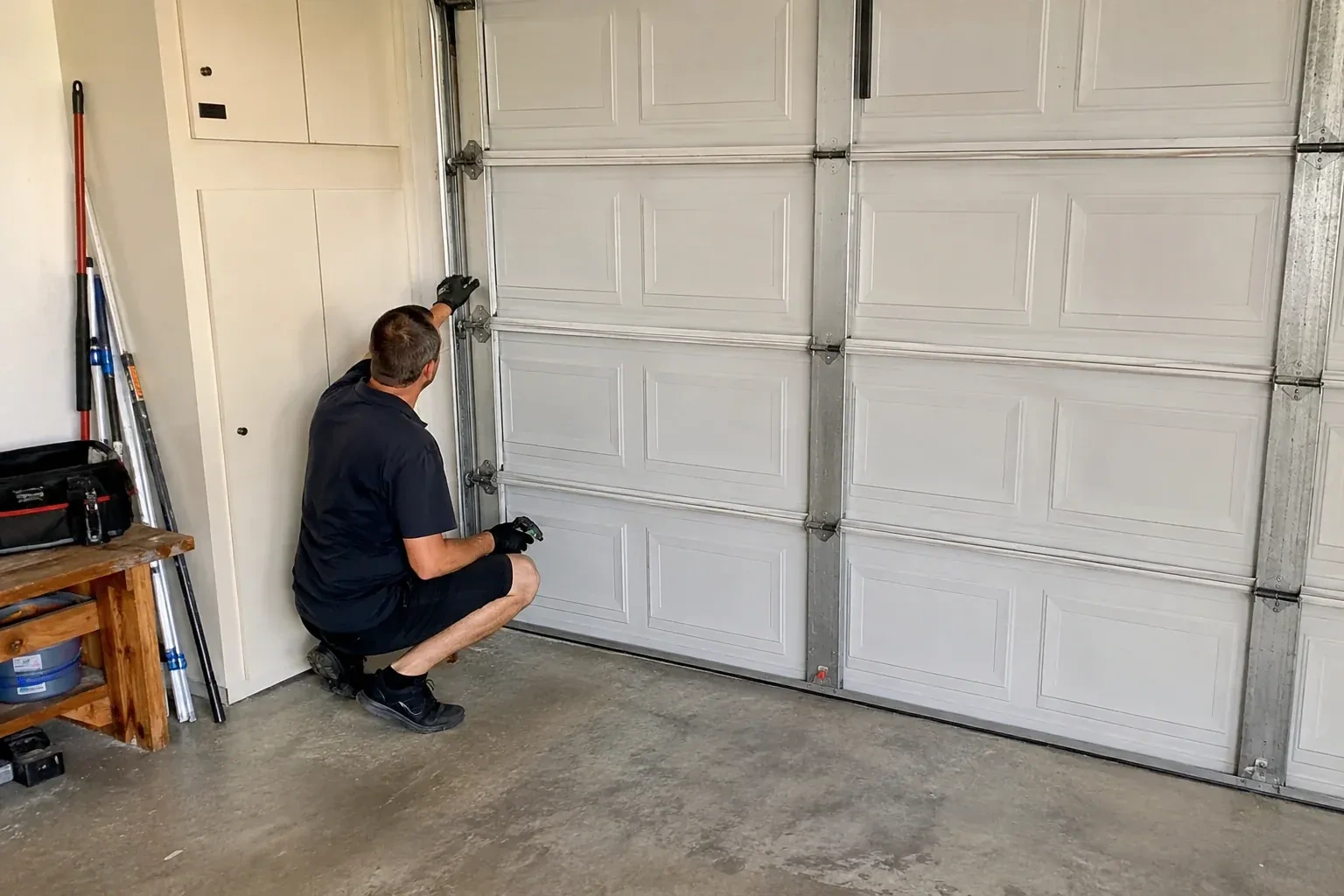
Is the inspection different for an older detached garage with springs along the tracks?
The route is the same and the counterbalance looks different. Extension springs stretch beside the horizontal tracks and pull through pulleys, so the technician examines each spring for stretch and a broken end, each pulley for a grooved wheel or a seized bearing, the cable clips, and whether a containment cable runs through the centre of each spring. Balance, reversal and photo-eye tests are unchanged.
How should I prepare the garage before the visit?
Move vehicles out of the garage or well clear of the door's path, and clear the floor under the opening and along both tracks so a stepladder can be set up. Keep children and pets out of the garage during the work. If you have the door or opener manual, or know the model, have it handy. A short note of what you have noticed and when, especially in cold weather, is genuinely useful.
Can a door frozen to the floor really cause this?
Yes, and in winter it is one of the most common causes. Meltwater under the bottom seal refreezes overnight and bonds the door to the slab. The opener pulls, the door stays put, the cables go slack and unwind off their drums, and when the ice lets go the door lurches up unevenly. Freeing the seal by hand before using the opener on icy mornings prevents almost all of these calls.
What happens to the opener during the work?
It is disconnected at the release cord and unplugged before any hardware comes off, so the motor cannot pull on a door that is missing a section. After the new section is in and the door has been balanced by hand, the opener is reconnected and tested: its reversal against a board on the floor and its photo-eyes are checked every time, and the open and close limits or the force setting are reset only if that check shows they need it.
Is this something I can do myself?
Many homeowners do, and a technician's value lies in the parts that go wrong: identifying the exact profile so the seal seats, freeing a strip that has fused into its channel, spotting a retainer or door-level problem behind the gap, and resetting the opener's limit and force so the door lands gently and still reverses on an obstruction. If you would rather have it measured, fitted and tested in one go, that is what the visit is for.
Does it matter if my garage is detached and unheated?
The seal still earns its place. It keeps driven snow, rain, leaves and animals out of the garage and off whatever is stored there, and it stops the door edges rattling in the wind. For an attached or heated garage the comfort benefit to the house is added on top. The technician may suggest a simpler fin replacement for a detached shell and a one-piece stop where the garage is lived beside.
How do I lock the garage door during a power outage?
With the door closed, pull the opener's release cord so the trolley lets go of the door, then throw the slide bolt or turn the T-handle to lock. When power returns, unlock first, check both bars are clear of the track, and then re-engage the opener as its manual describes, usually by running it once. Keeping to that order is what protects the lock and the opener.
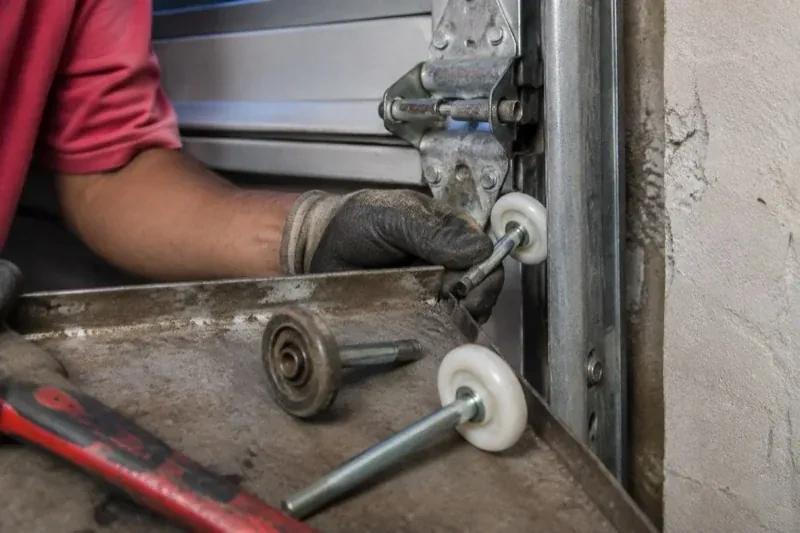
How many ball bearings should a roller have?
More bearings spread the door's weight over more contact points, but count alone does not decide how smoothly, quietly or long a roller runs; the complete design matters more. Budget rollers carry six or seven, better residential rollers ten to thirteen, and premium rollers use a sealed cartridge with a dust and moisture seal. For an ordinary residential door, a nylon roller with ten or more bearings is a sound choice; for a damp or salty garage, or a door used constantly, sealed bearings are worth asking about.
Will new hinges make the door quieter?
Often noticeably. A cracked or loose hinge is the source of many pops, clicks and rattles, and a hinge that holds its roller square lets the wheel run flat instead of scraping the track lip. Combined with fresh lubricant on the knuckles and rollers, the door settles into a steady rumble. Any noise that remains usually points to the rollers, the opener chain or the springs, which the technician can identify for you.
Can a low-headroom or high-lift layout be fitted to my existing door?
Often, yes, and it is a track job with a spring job attached. Low-headroom dual track lets a door open under a low ceiling or a beam, while high-lift track carries the door further up the wall to clear a car lift or storage. Each changes the horizontal run, the curve, the top fixtures and usually the cable drums and spring turns. The technician measures headroom, sideroom and backroom first and confirms the door suits the change.
How do I tell a cable problem from a spring problem?
Look above the door with it closed. A torsion spring that has broken shows a clear gap in the coil, and both cables usually go slack together because nothing is turning the shaft. A cable problem tends to show on one side only: a frayed length, a coil of loose cable, or one corner sitting higher. Either way the technician inspects both, since a weak spring is a common reason a cable fails.
Why does the door need to be balanced, and how is that tested?
Balance means the spring is holding almost exactly the door's weight, so the door neither flies up nor slams down and the opener only guides it. It is tested by releasing the opener, lifting the door to about waist height and letting go: a balanced door stays there. The technician fine-tunes in quarter turns of the spring until the door holds at several heights and travels evenly on both sides.
How do you know which springs my door needs?
By weight. Extension springs are rated for the weight they lift, so the technician releases the opener and weighs the door on a scale, then matches that figure and the door's height to a spring rating and stretch length. The old springs are measured as a check on wire size, coil diameter and length. Where the two disagree, the scale decides, since doors gain weight from added insulation or panels.
I am getting a new opener. Should the door be balanced first?
Yes, and installers will usually insist on it. A new opener is set up against the door it meets on the day, so its travel and force settings are only right if the door is already balanced. Fitting a new motor to a heavy door shortens the motor's life and puts the safety reversal out of range. Balancing first means the new opener starts life doing the light work it was designed for.
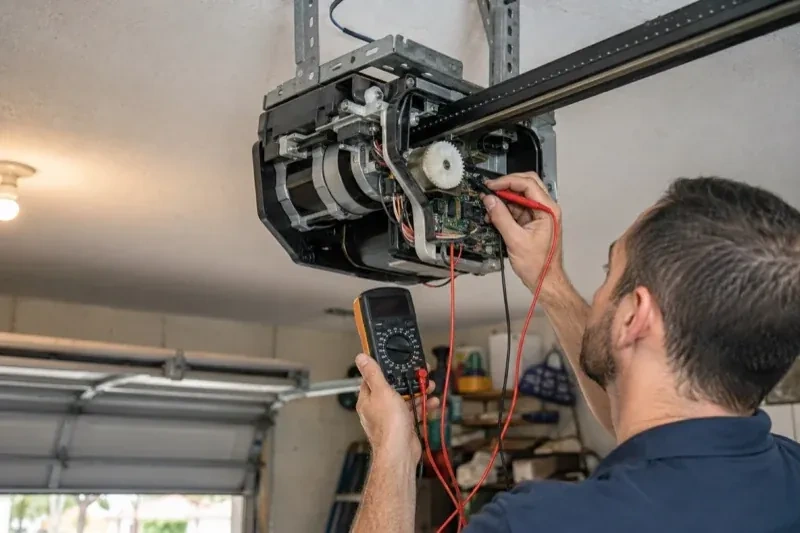
Why does my garage door open by itself?
A door that opens with nobody pressing anything is usually being told to by a fault in its wiring or a control. A pinched or stapled wire to the wall control can short intermittently and act like a button press; a stuck button on a remote left in a coat pocket does the same; and a neighbour's remote on an old fixed-code opener can occasionally trigger it. The technician isolates each control in turn until the phantom command stops.
What is the trolley, and why would it get stuck?
The trolley is the carriage that rides along the rail, pulled by the chain, with the door arm hooked to it. It gets stuck when the travel limits creep and it is driven onto the stop bolt at the head end or the stop tab at the door end, where the motor hums but nothing moves. The technician slackens the chain, runs the trolley off the stop under power, and pulls the limit back so it stops short in future.
Why does my belt drive clatter like a chain drive now?
Sprocket noise on a belt drive almost always means tension is wrong in one direction or the other. A slack belt skips teeth on the sprocket and slaps the rail; a belt pulled too tight grinds on the sprocket and strains the motor bearings. Both sound harsh. Setting the tension spring to its proper length, and checking that the sprocket and idler pulley are not worn, brings the quiet back.
Can my phone control the door?
Yes, with a Wi-Fi capable operator or a small add-on hub for a compatible unit. The app opens and closes the door, shows whether it is up or down, sends an alert if it has been left open and can close it on a schedule. The garage needs a usable Wi-Fi signal at the head unit, which the technician checks during the assessment; a range extender solves a weak signal in a detached garage.
What do the small lights on the sensors mean?
Arrangement varies by model: most pairs carry an indicator on each side, in differing colours for sender and receiver, though some older pairs light only the receiver, so check the maker's chart. A receiving light that is dark or flickering means the beam is not landing on it, so the pair needs aligning or something is in the way. Both lights dark means the pair has no power, which points to the wire or the terminals at the head unit. Steady lights on both sides mean a healthy system.
Does programming a new remote erase the old ones?
No. A short press of the learn button adds a control to the memory alongside the others. Erasing them takes that model's own sequence, a longer hold on many openers and a different button combination on others. Pressing into the erase sequence by accident is what occasionally leaves a household finding every remote dead after trying to add one. The fix is to reprogram each device.
Can one controller handle two garage doors?
Many hubs support two doors from one unit, each with its own door sensor, and each door appears separately in the app with its own name, status and history. Openers with built-in radios register individually, so a two-door garage with two connected openers simply shows two doors under one account. The technician confirms which arrangement your hardware supports before the visit.
I lost the key to the outside release. What now?
The cylinder can be replaced with a new one and two fresh keys, which is the usual answer since a lost key may be in someone else's hands. On some units the cylinder can be rekeyed instead. Either way the cable and lever are checked while the lock is out, and the technician suggests keeping the spare key outside the garage, with a neighbour or in a lockbox, rather than inside behind the door it opens.
What maintenance can I do myself?
Keep the door path and seal contact areas clean, visually observe cables and rollers from a safe position, and use designated handles for occasional manual checks. Test operator safety functions as its instructions describe. Adjustments to springs, cables or bottom fixtures remain technician work because those components carry the counterbalance forces.
Can decorative handles and hinges be added?
Decorative hardware can often be included when it is approved for the chosen door and installed in the specified locations. The order records finish, pattern and placement so the exterior remains balanced. Functional lifting hardware is a separate matter and must provide a safe gripping point. Added pieces should not obstruct section joints, tracks, seals or the door's path.
Why does the technician inspect the jambs and framing?
Door loads travel through the tracks and brackets into the jambs, then into the building structure. Soft wood, split material, loose blocking, shallow anchors, or unsupported trim can interrupt that path. Inspecting the mounting surfaces shows whether ordinary preparation is sufficient or whether structural work should be coordinated before the new system is attached.
What routine care does the decorative finish need?
Care follows the selected surface. Factory-finished steel and many composite overlays generally benefit from mild washing with non-abrasive tools, while wood components may require coating attention at intervals described in their instructions. Keep a record of the finish name and approved care products. During cleaning, look over overlay edges, fasteners, glazing retainers and weather seals for visible changes.
Can a full-view door fit a low ceiling?
A low ceiling may suit a low-headroom track arrangement, but the decision depends on measured space above and behind the opening. Beams, bulkheads, lights, ducts, storage and opener hardware are mapped together. The selected sections also need the correct top-fixture geometry and travel path, so feasibility is established from the complete room rather than ceiling height alone.
How can the installed door be protected during remaining construction?
Keep masonry, paint, plaster, floor coatings and abrasive dust away from sections, seals, tracks and rollers. Other trades should avoid leaning materials against the door or using horizontal tracks for storage or support. Controls can be managed so the system is operated only by authorized project personnel before handover. If protective covering is used, it should avoid trapping moisture or adhesive against the finished surface.
How are springs and cables handled during repair?
The technician first controls the door's weight and position with suitable supports or clamps. Stored spring energy is then managed with proper winding tools and a defined sequence before connected parts are loosened. Cables, drums and springs are matched to the door and lift geometry, installed with the system secured, and checked for level tension through controlled movement.
What information helps before the visit?
Useful details include the opening size, curtain material, manual or powered operation, model labels, current door position, recent impact or weather event and the exact point where travel changes. Photos of the full opening, bottom bar, controls and labels can clarify the system. Mention a fire-protection label at the outset so that scope is recognised.
What information helps assess feasibility from photos?
Useful photos show the full inside opening, both track sides, the wall above the header, the complete ceiling run, spring and shaft area, opener, beams, lights and other obstructions. Include a wider image showing the planned vehicle lift or equipment zone. Measurements remain necessary, but clear images help identify questions and prepare an efficient site assessment.