Springs · Kitchener
Garage Door Cable Replacement
The car bumper kissed the door on the way in.
In plain words
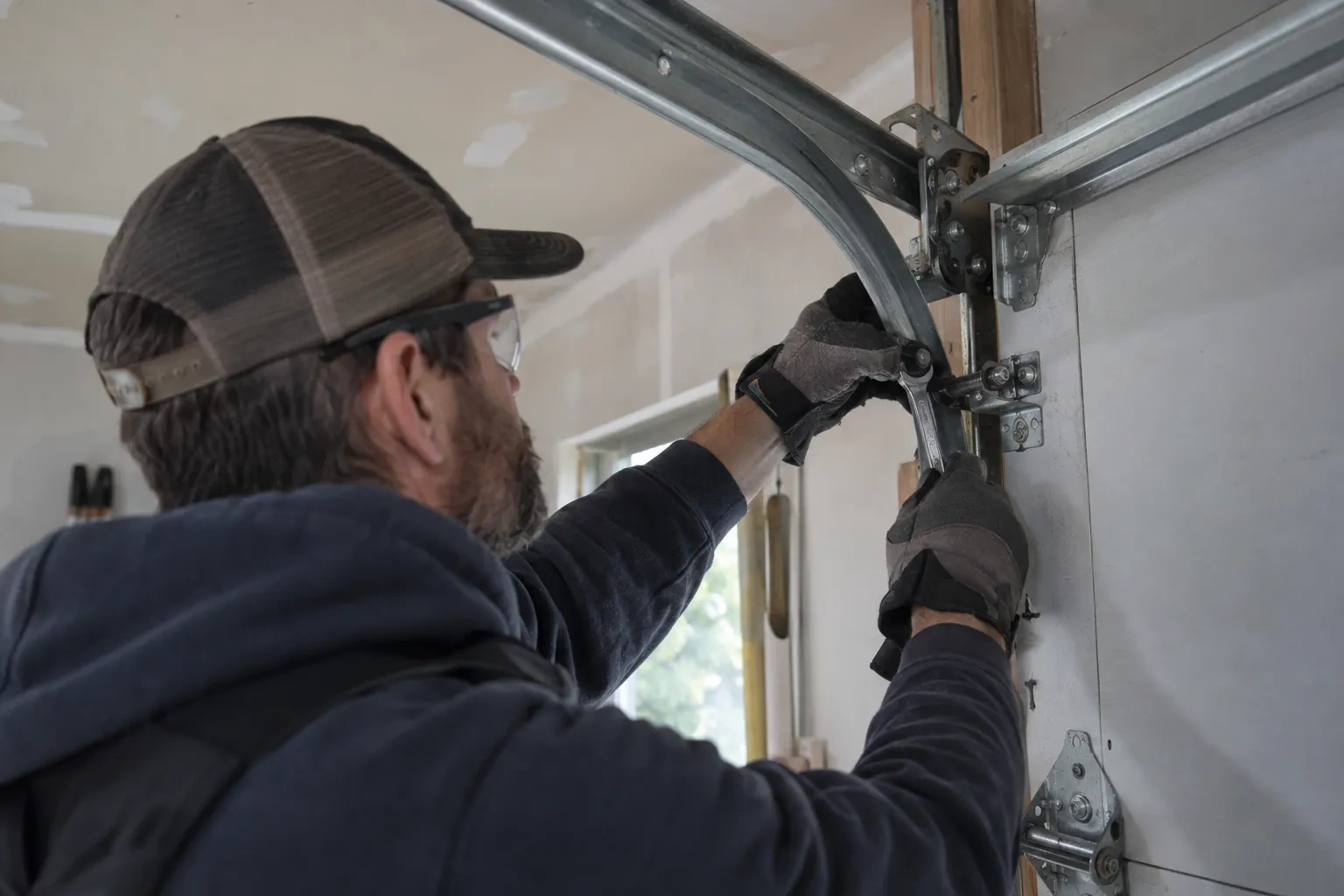
A failed cable is usually telling you something about the rest of the system. It may have frayed against a bent track, rusted at a corroded bracket, jumped its drum when the door closed on an object, or slackened because a spring is weak. Cable replacement therefore starts with the whole lifting path: both cables, both drums or pulleys, the bottom brackets, rollers, hinges, track and springs. Whatever caused the failure is put right alongside the new cables, so the fresh steel is not rubbing on the same rough edge that finished the last set. That is what turns a repair into a lasting one.
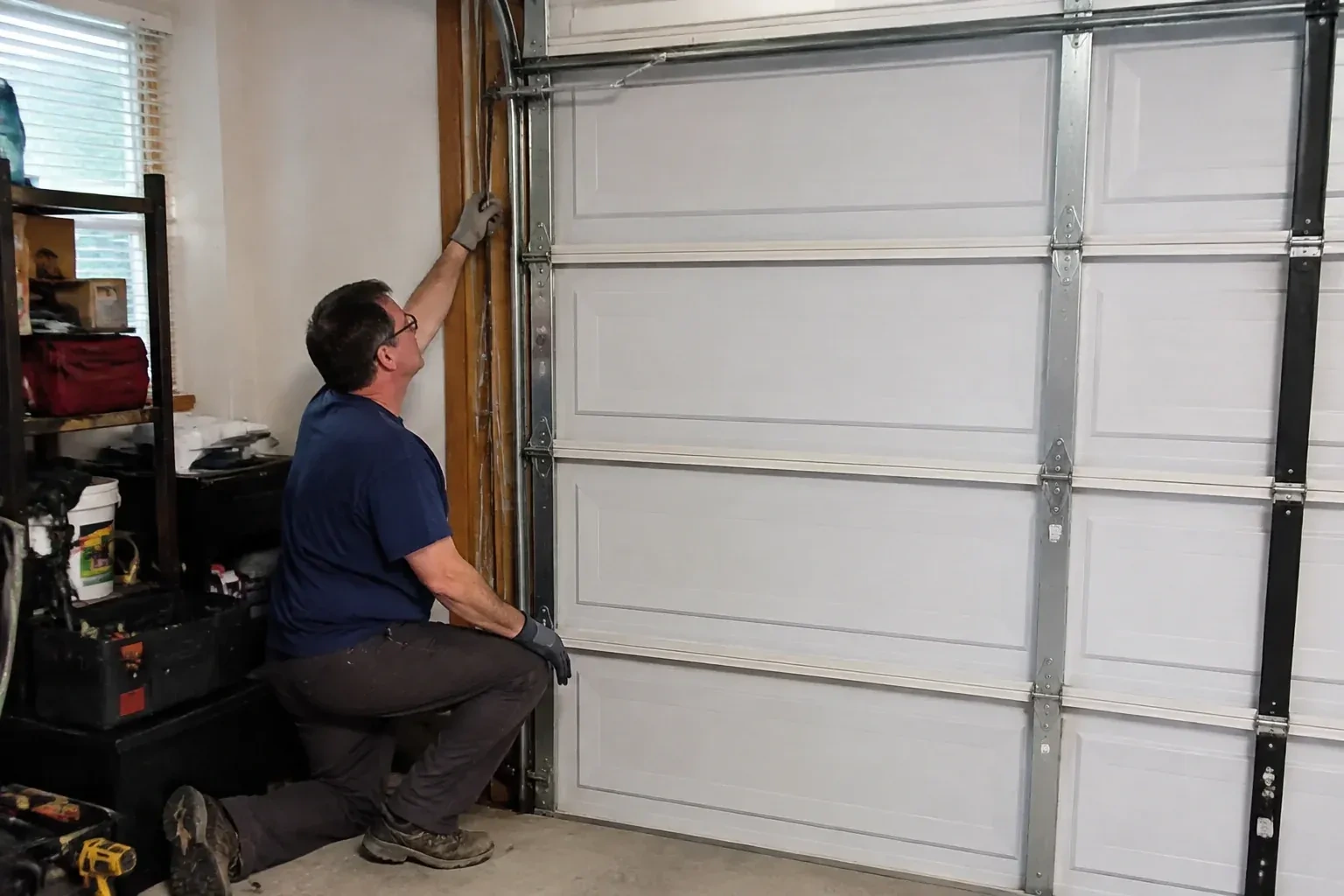
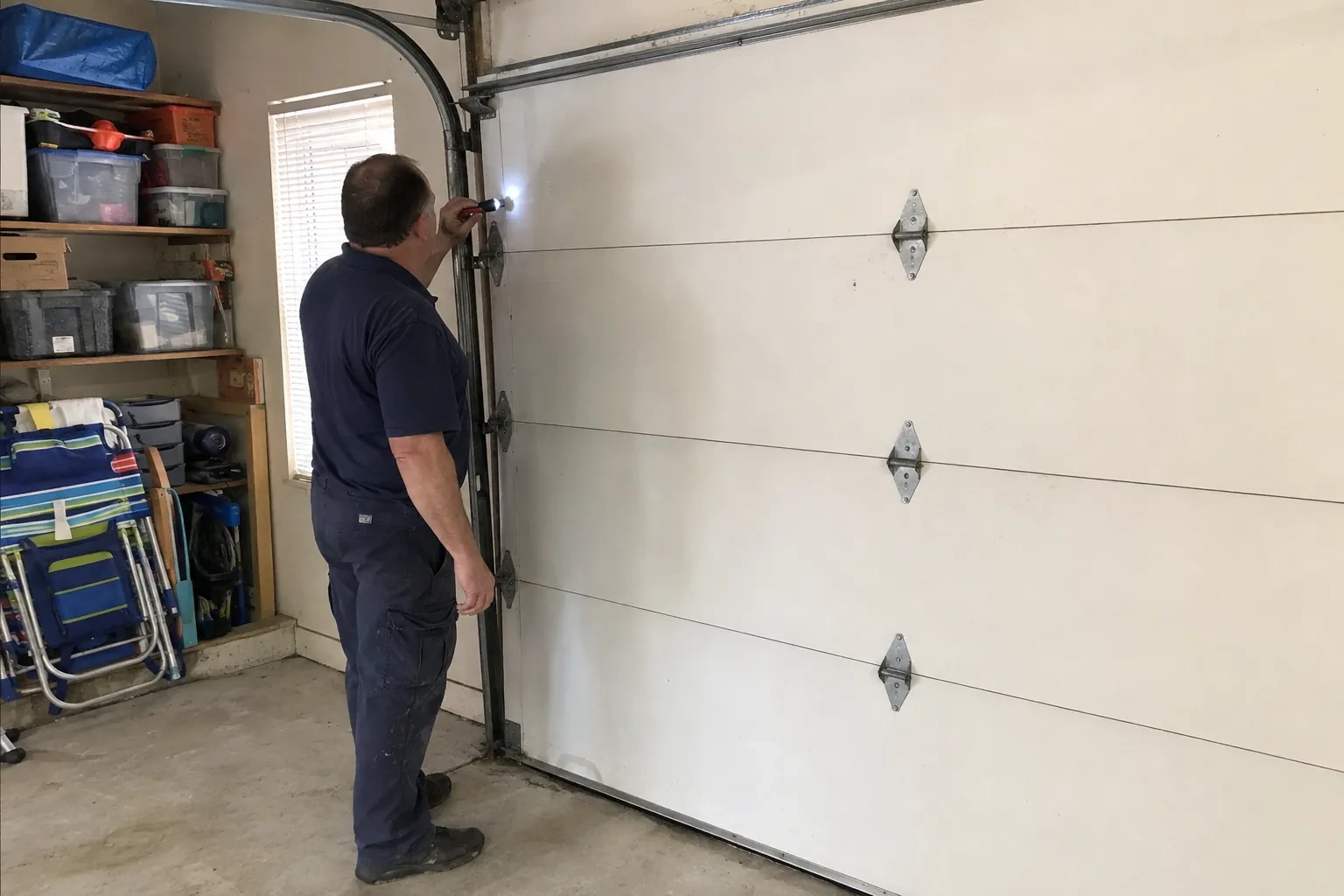
How the visit goesAfter years of slushy winters the cables look thinner near the bottom brackets, with rust streaks running down the door where they attach. The door still works, but the frayed wires catch your glove when you brush past.
Garage Door Cable Replacement
How the visit goes
Torsion or extension, and which lift
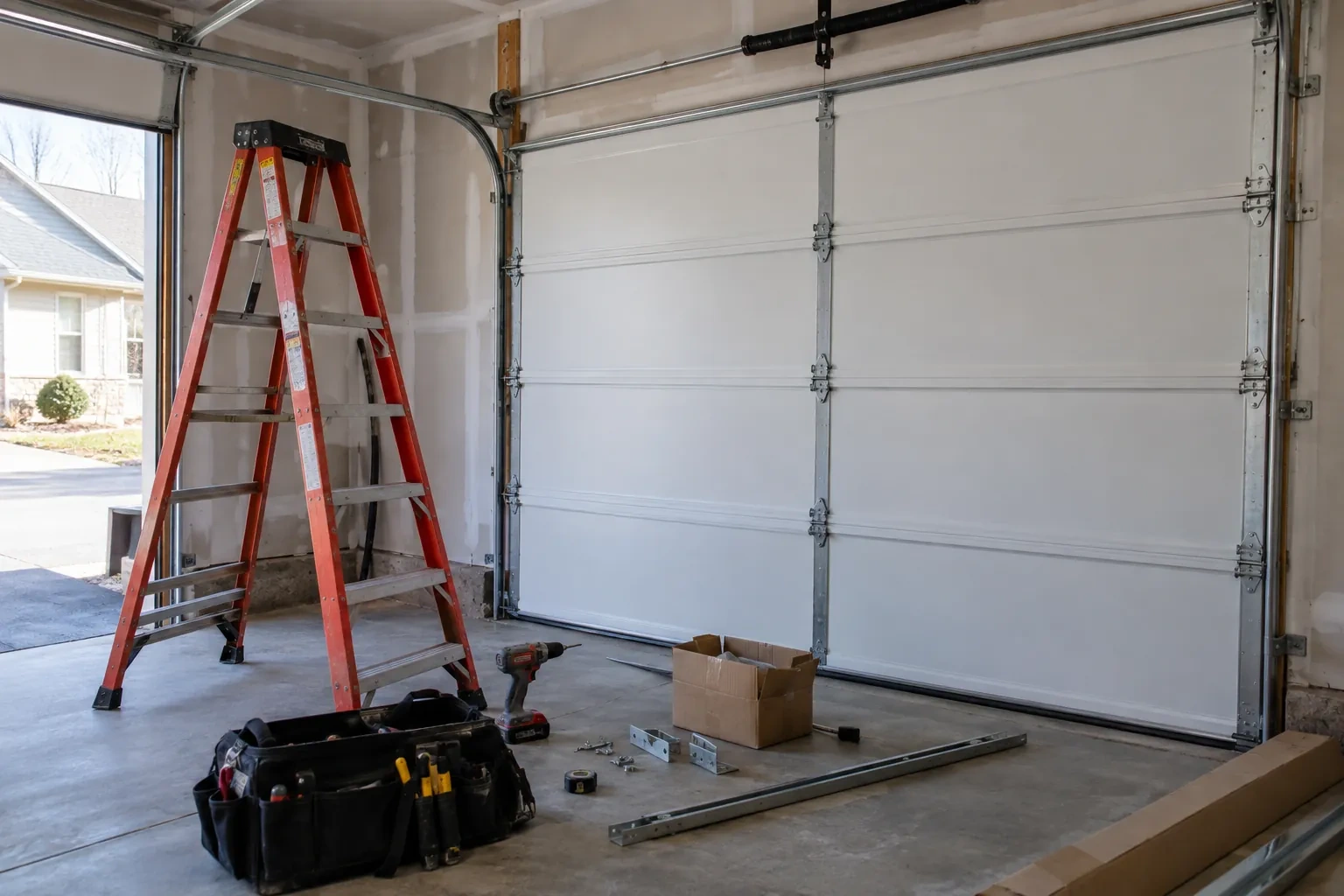
The technician identifies the counterbalance before choosing parts. A shaft with drums above the header means a torsion system; springs stretched beside the horizontal tracks with pulleys mean extension. Then the lift type: standard lift on most attached garages, low headroom hardware where the ceiling is tight, and high lift where the door climbs well above the opening before turning. Each uses a different drum profile and a different cable length, and a double door of the same height may need a heavier cable than a single. Reading these details correctly is what makes the replacement cable wind evenly on the drum instead of overlapping.
Removing the old cables
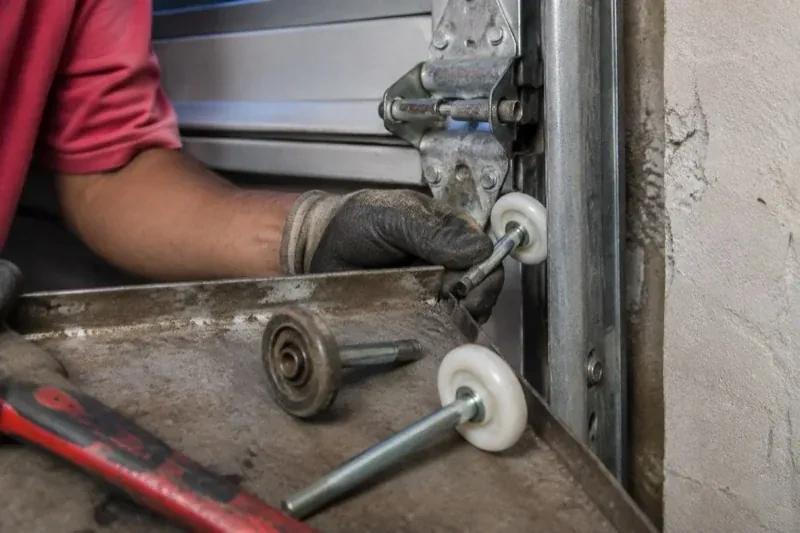
Each drum's set screws are backed off so the drum spins freely on the shaft, and the old cable is unwound from its groove and the stop slipped out of its slot. At the floor, the loop is lifted off the bottom bracket pin, or the clevis pin and cotter pin are withdrawn where the door uses them. The old cable is kept for a moment to measure against its replacement and to show you the wear that caused the call. On an extension door the cable comes off its pulleys and the adjusting clip at the track hanger. Both sides are stripped before anything new goes on.
Lubrication that helps, and where it does not belong
A few minutes with a can of garage-door lubricant twice a year keeps the whole system easy on the new cables. Spray the torsion spring lightly along its length, the hinge pins, the roller stems and bearings, and the bottom bracket pins, then run the door a few times to spread it. A light mist on the cables themselves slows rust; heavy grease is avoided because it holds grit and moisture. The tracks are left dry and simply wiped clean, since lubricant there collects dirt and lets rollers slide instead of roll. Silicone or a lithium spray made for doors is the right product.
Garage Door Cable Replacement
In the van
Drum set screws
Track clamps or locking pliers
Bottom brackets with cable pin
Containment cables
Cable drums, matched pair
Garage Door Cable Replacement
What affects the quote
Worn rollers and hinges found on the way
Cracked roller wheels or split hinges seen during the inspection are pointed out and offered as optional items, since replacing them while the door is unloaded is efficient.
One cable or the pair
Cables are normally renewed together, and the quote reflects two cables and the work of setting both sides level. Where one side was recently replaced, that is discussed on site.
How the door is sitting
A door resting closed is simpler than one wedged crooked in the opening or off its track, which has to be supported and straightened before the cables can be handled.
What to have ready
- Is there rust on the cables or brackets near the floor?
- Can you see a cable hanging loose, frayed, or wound around the shaft?
- Is there a car inside that you need out before the visit?
Garage Door Cable Replacement: questions
QuestionsHow do I tell a cable problem from a spring problem?
Look above the door with it closed. A torsion spring that has broken shows a clear gap in the coil, and both cables usually go slack together because nothing is turning the shaft. A cable problem tends to show on one side only: a frayed length, a coil of loose cable, or one corner sitting higher. Either way the technician inspects both, since a weak spring is a common reason a cable fails.
Will the springs be checked as part of cable work?
Always. Cables and springs are one system, and a spring that is weak, mismatched or wound short is a frequent reason a cable goes slack in the first place. The technician looks for breaks, measures the spring against the door weight, and confirms the correct number of turns when winding back. If a spring needs replacing, that is explained and offered as its own decision rather than folded in unannounced.
What is the difference between a lift cable and a safety cable?
A lift cable does the work: it connects the door's bottom corner to the spring system and carries the door's weight. A safety or containment cable does no lifting at all. It runs through the middle of an extension spring and is anchored at both ends so that if the spring breaks, the pieces stay put. Torsion springs sit on a shaft and do not need one.
Related services
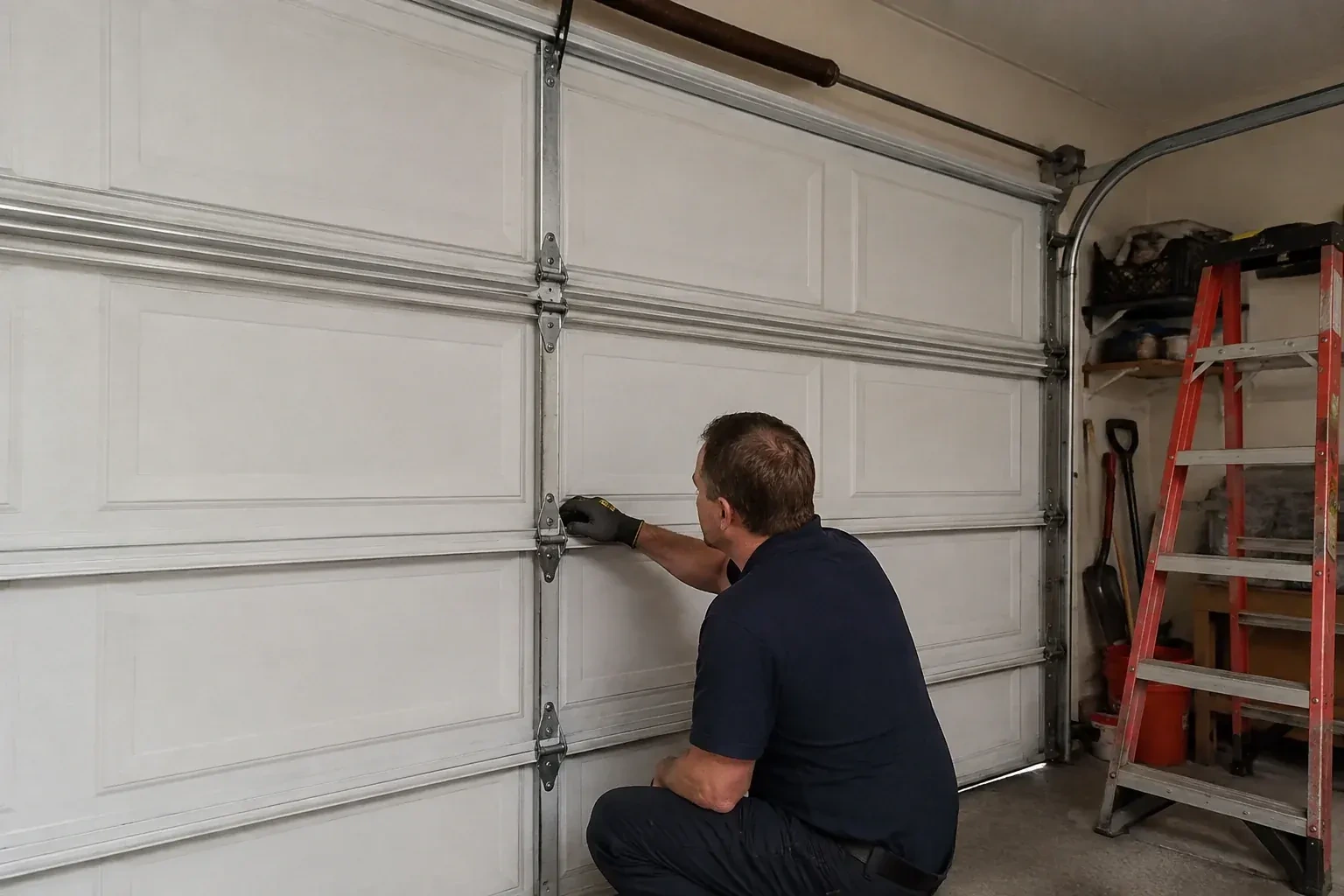
- Garage Door Hinge ReplacementOn the old wood door, one hinge has pulled away from the panel, dragging a screw and a chunk of soft timber with it.
- Garage Door Track Repair or ReplacementBacking out this morning, the mirror caught the track beside the door.
- Torsion Spring ReplacementAfter pulling the red release cord, you tried lifting the door yourself and it would barely leave the floor.