Openers · Parkway
Belt-Drive Opener Repair in Parkway
After the power came back you pulled the red cord to get the car out.
In plain words
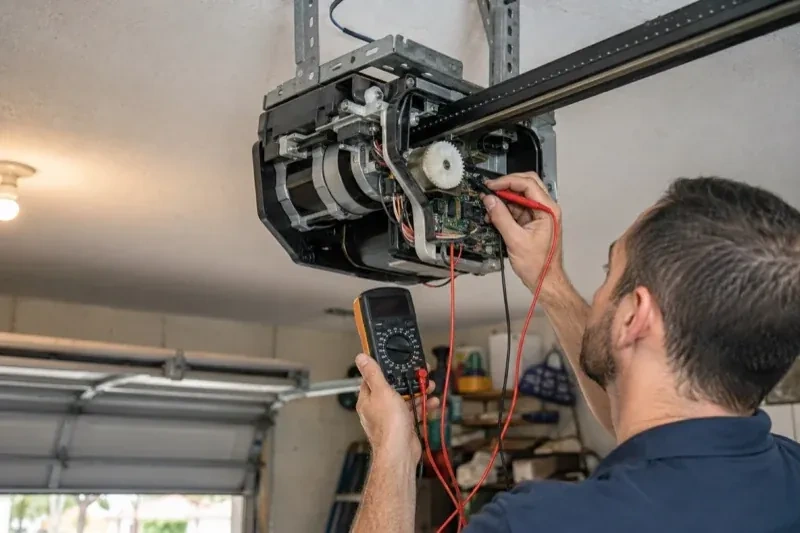
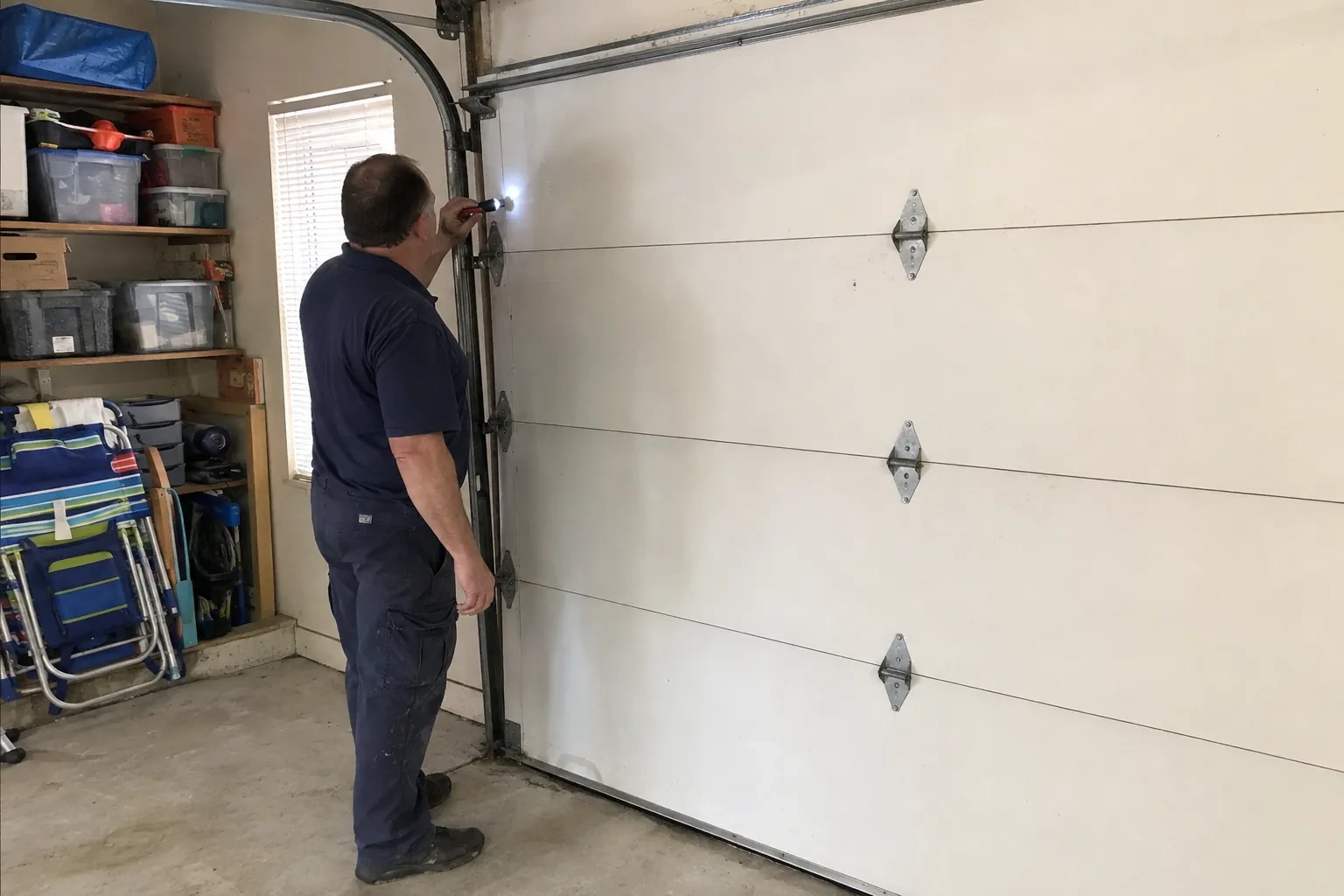
The visit runs in a set order. First the operator is unplugged and the door is released and lifted by hand, because the belt only guides a door the springs already carry; a heavy door is a spring job, not a belt job. Next the belt is examined along both runs, its tension checked at the trolley spring, and the sprocket, idler pulley, trolley and rail looked over. Then the repair itself: adjusting, or replacing the belt, trolley, pulley or gear kit. Finally the motor and trolley are put back in phase, travel and force are relearned, and the two reversal tests are run before the door is handed back.
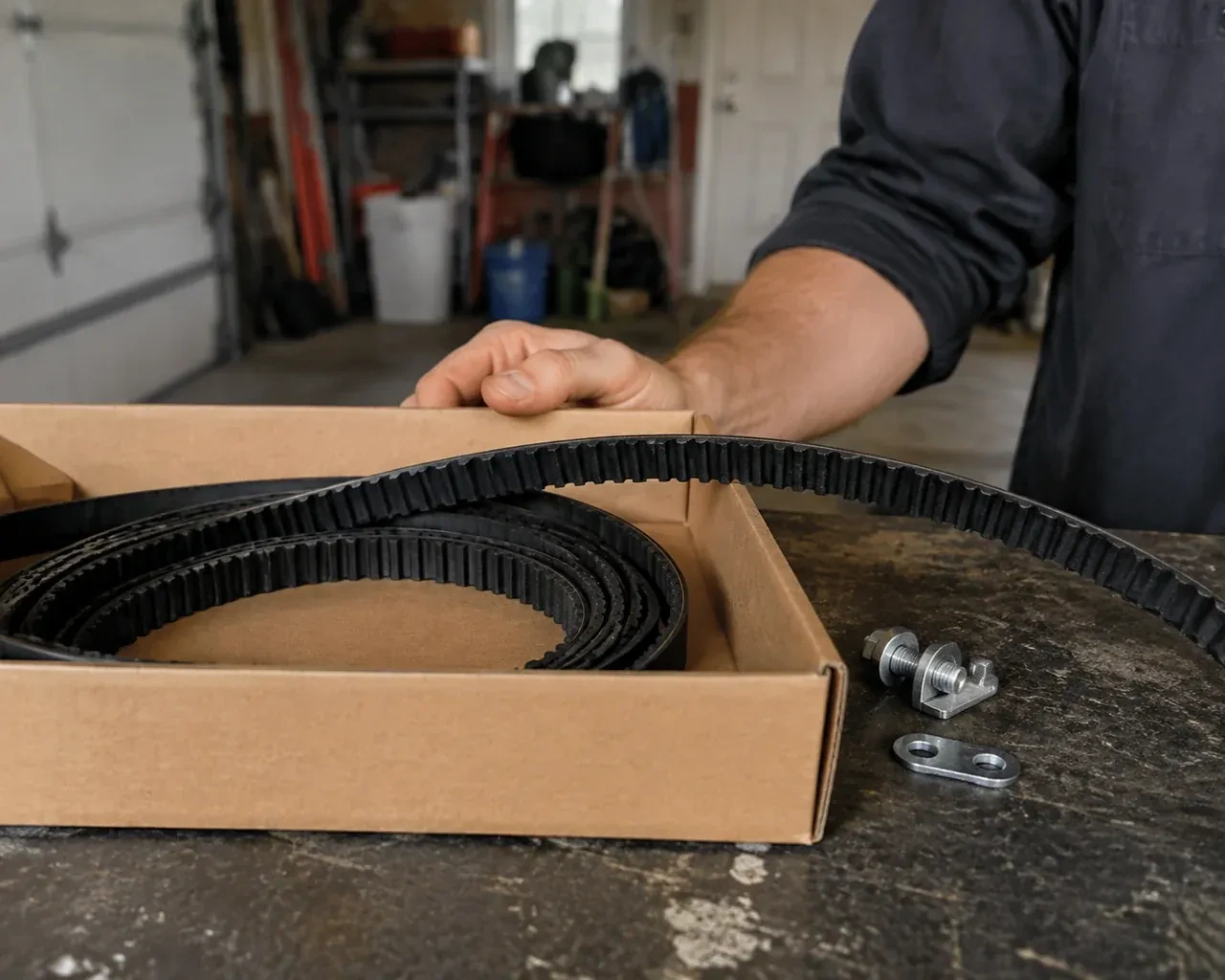
How the visit goesPress the remote and the motor runs its full cycle, lights on, the usual whir, but the door does not move a centimetre. Up at the trolley, the belt is hanging loose where a small plastic clip used to hold it.
Belt-Drive Opener Repair
How the visit goes
Rail, joints and whatever is rubbing
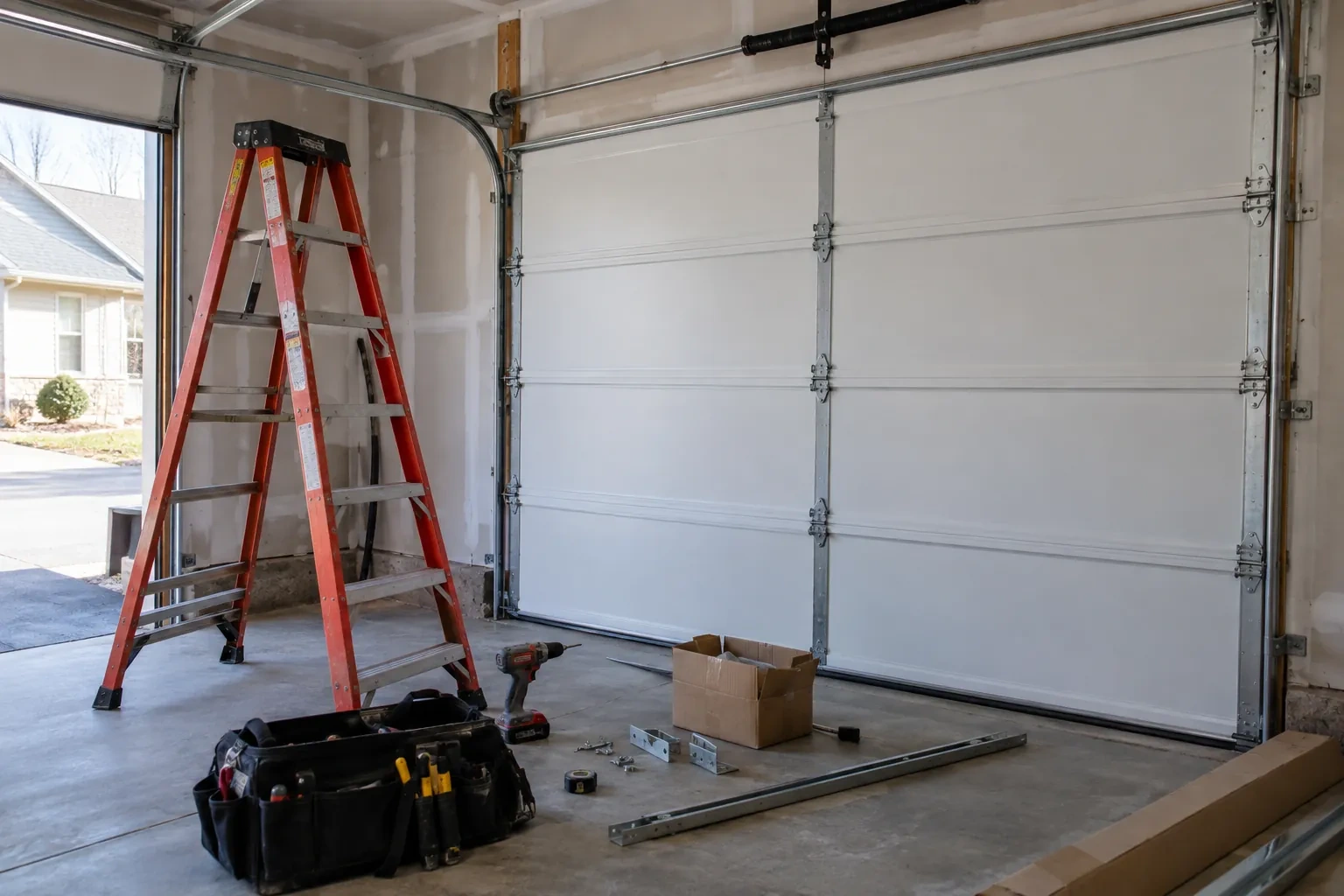
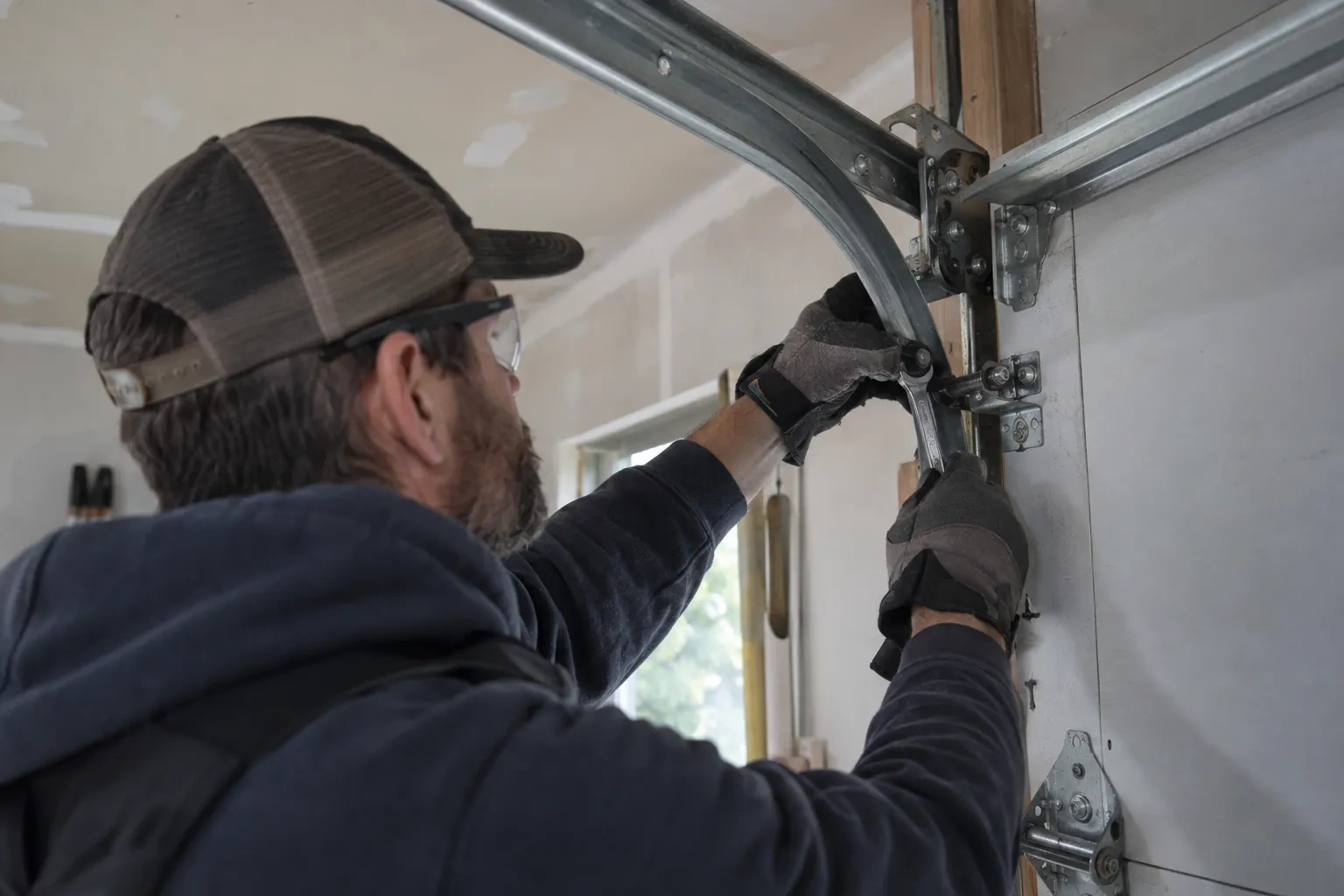
A belt frays for a reason, and the reason is usually somewhere along the rail. The technician sights the rail from the header to the motor head for a bend, a sag where a hanger has loosened, or a joint between rail sections that has stepped out of line and is catching the belt teeth each pass. Marks inside the rail show where the belt has been touching. Storage racks, a bicycle hook or a truck's roof rack lifting the rail are frequent finds. A straight, true rail lets a belt run for years without touching anything, so any of these is corrected as part of the repair rather than left to wear the new belt.
Idler pulley and the front of the rail
A squeal or a belt tracking to one side leads to the idler pulley at the header end of the rail. With the belt slack, the pulley's axle bolt is removed, the worn pulley and its bearing come out of the rail end, and a new pulley goes in on a clean axle. The technician spins it by hand for smoothness, sights the rail to be sure the pulley sits square, and re-tensions the belt. Where the rail itself was bent or a hanger had let it sag, the rail is straightened or re-hung level before the belt is run. The belt edge that was fraying is inspected; if the cords are exposed, the belt is replaced too.
Ready for the cold
If the garage is detached or unheated, the belt has still been tensioned to the opener maker's specified measurement, and the door hardware carries a cold-rated lubricant for the season. Expect the operator to sound a little different at minus twenty; rubber stiffens and the hum deepens, which is normal. If the door reverses on a bitter morning before it has moved, the bottom seal is frozen to the slab and the force setting is protecting the belt and the door. Free the seal by breaking the ice along the threshold, then press the button again. Wiping the seal with silicone before winter stops it bonding to the concrete in the first place.
Belt-Drive Opener Repair
In the van
Reinforced drive belt with clip
Garage-door lubricant for hinges and rollers
2x4 offcut for the reversal test
Inner and outer trolley
Light grease for the drive gear
Belt-Drive Opener Repair
What affects the quote
A second operator on the same property
Where a double garage has two belt drives, or a workshop has its own, both can be looked at in one trip, and the quote shows the two repairs on a single visit.
Height of the ceiling
Where the operator hangs under a tall or vaulted ceiling, the sprocket and idler are reached from taller ladders and the work at the head takes longer.
Age and model of the operator
Parts for a current model are on the van. An older or less common operator may need a belt or trolley ordered to fit, which changes timing and sometimes the part.
What to have ready
- What is the belt doing: sagging, slapping, clicking, frayed, or hanging loose?
- Has anyone tightened or adjusted the belt recently?
- Can you send a photograph along the rail showing the belt, and one of the label?
Belt-Drive Opener Repair: questions
QuestionsWhy does my belt drive clatter like a chain drive now?
Sprocket noise on a belt drive almost always means tension is wrong in one direction or the other. A slack belt skips teeth on the sprocket and slaps the rail; a belt pulled too tight grinds on the sprocket and strains the motor bearings. Both sound harsh. Setting the tension spring to its proper length, and checking that the sprocket and idler pulley are not worn, brings the quiet back.
How long does a belt-drive repair take?
A tension adjustment with the safety tests is a short visit. Replacing the belt, trolley or idler pulley, then phasing the motor, relearning limits and running the reversal tests, is usually an hour or two. A gear-and-sprocket kit at the motor head takes longer because the head unit is opened. If the balance test turns up spring work, that is agreed as a separate job with its own time.
How often should belt tension be checked?
A look every few months is enough: with the door closed and again with it open, the belt should run level with no sag below the rail. A yearly service that checks tension against the spring length, looks at the sprocket and pulley and runs the balance and reversal tests keeps a belt drive quiet for its whole life. Check again after the first hard cold of the winter.
Related services
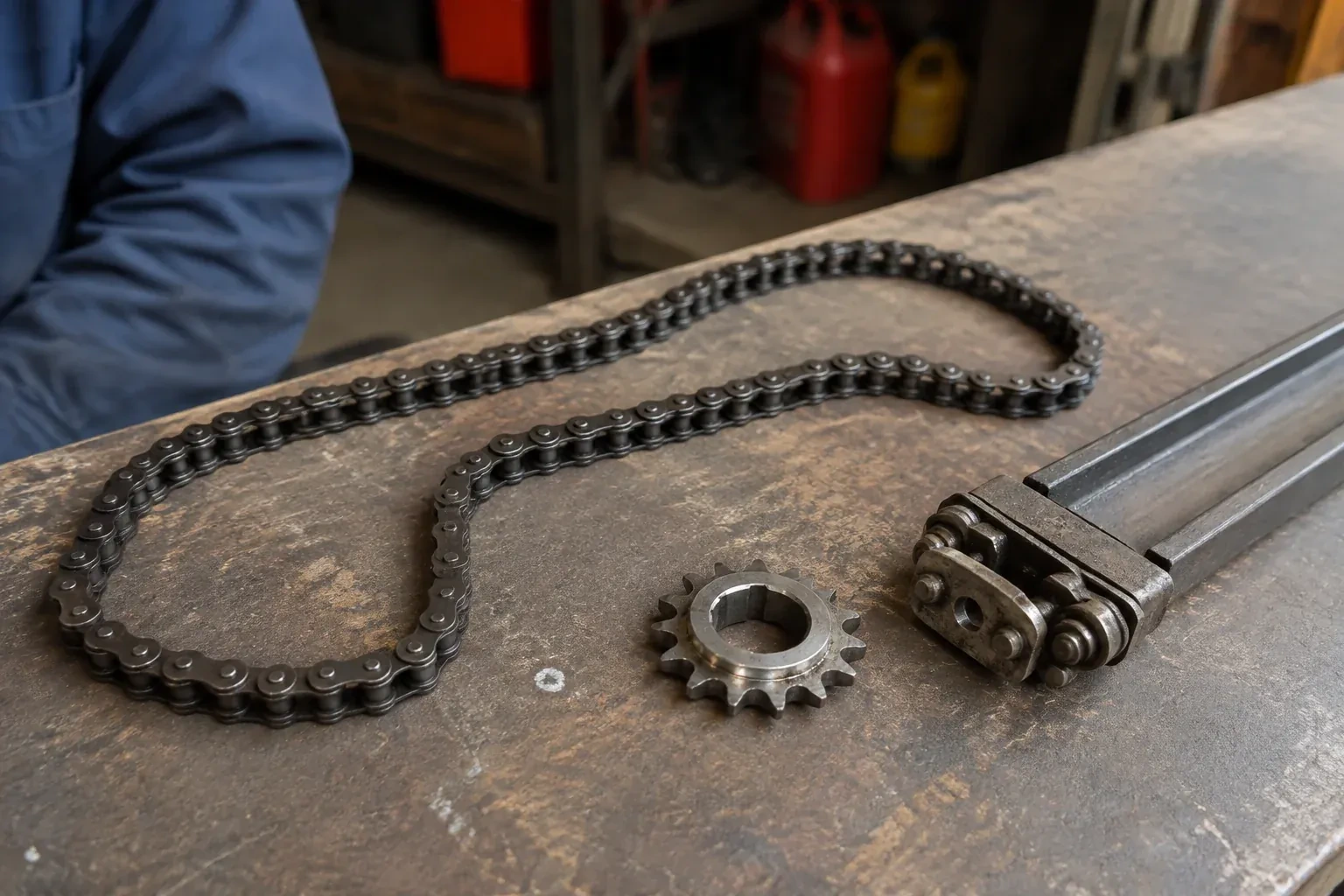
- Chain-Drive Opener RepairThe chain hangs in a loop under the rail and slaps against it on every cycle.
- Garage Door Opener ReplacementPress the button and the motor hums, but the door stays exactly where it is.
- Photo-Eye Sensor Alignment or ReplacementAfter a cold night the door stays open until the garage warms up.