Springs · Kitchener
Torsion Spring Replacement
After pulling the red release cord, you tried lifting the door yourself and it would barely leave the floor.
In plain words
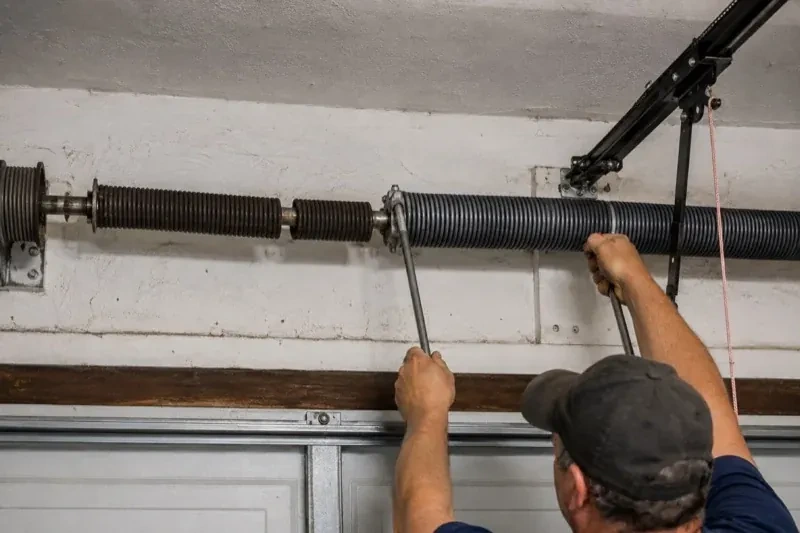
Torsion spring replacement restores the counterweight that makes a garage door light enough to lift. A sectional door often weighs more than a fridge, and the spring above the opening carries nearly all of that load, storing energy as the door closes and releasing it as it opens. When a spring breaks or wears out, the technician removes it, fits a spring matched to the door's weight and height, winds it to the correct number of turns and checks that the door balances at every point of travel. The opener returns to doing its light share of the work, and the door moves smoothly and evenly again.
How the visit goesAfter pulling the red release cord, you tried lifting the door yourself and it would barely leave the floor. A door that used to glide up with one hand now takes real effort, which points to the counterbalance rather than the opener.
Torsion Spring Replacement
How the visit goes
Confirming the system layout
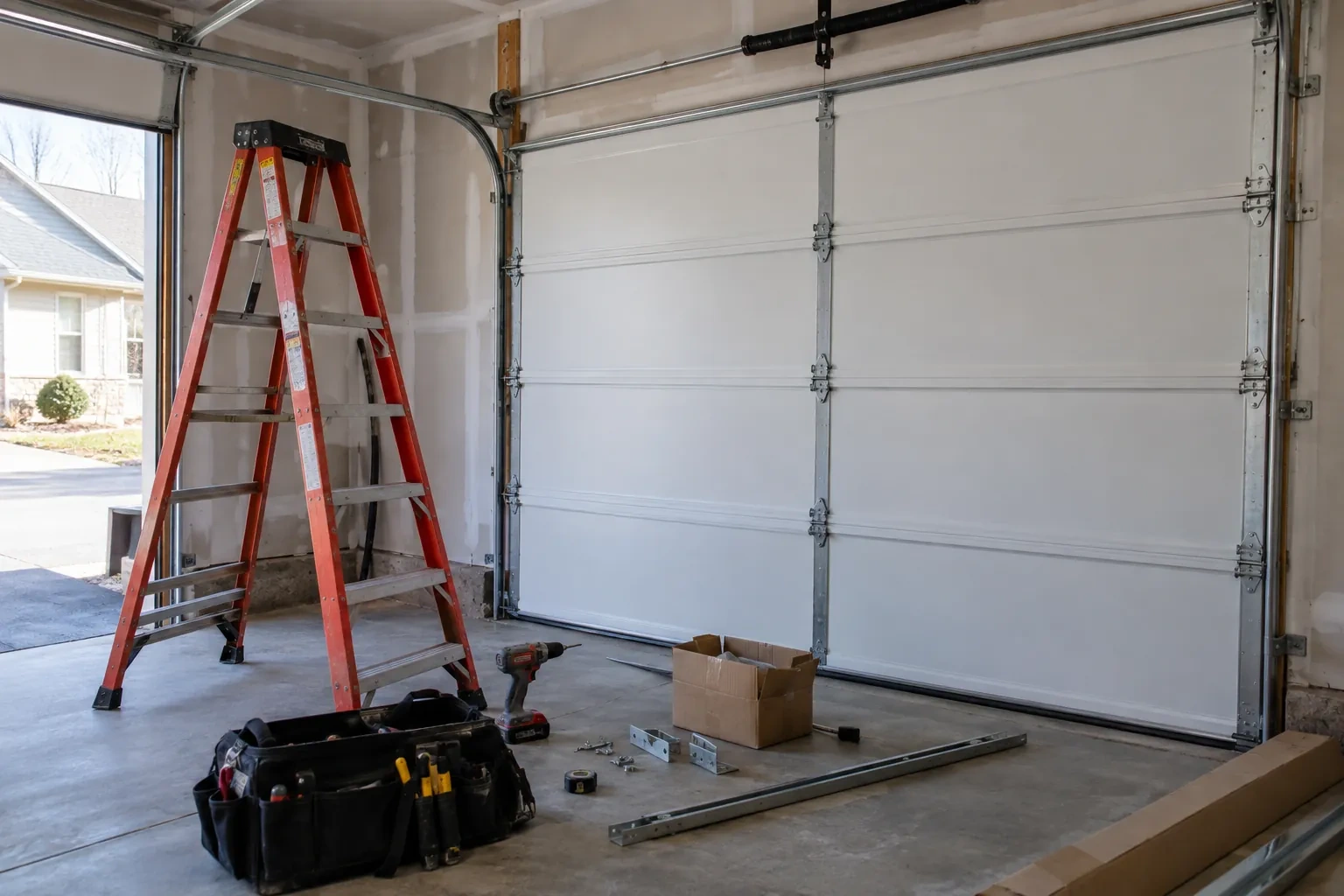
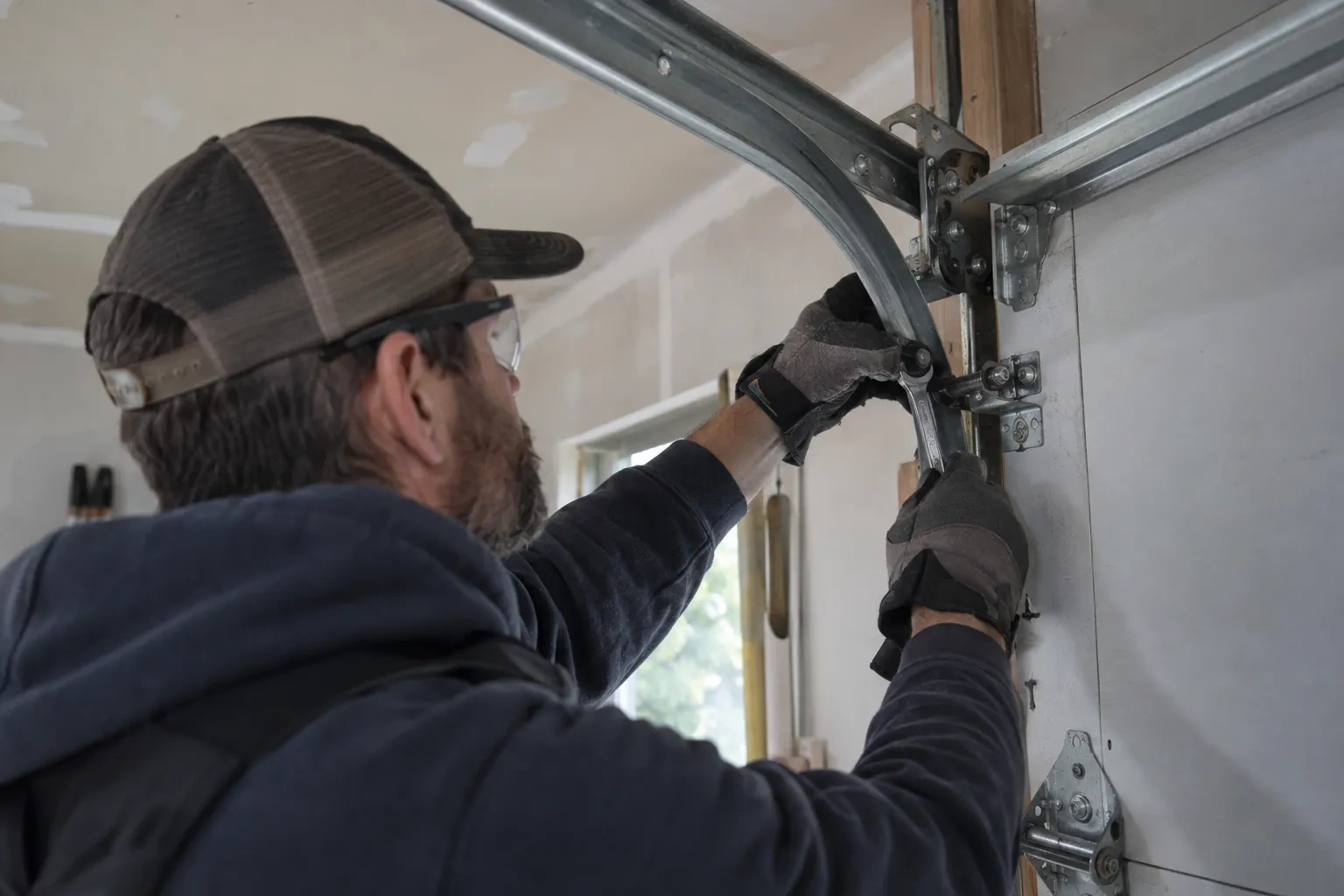
Doors are set up in several ways, and the replacement has to match. The technician notes whether there is one spring or two, whether the shaft is a single piece or two halves joined by a coupler, and what the shaft diameter is. Drum type is read from the drums themselves: standard-lift drums for a normal ceiling, high-lift or vertical-lift drums where the door rises well above the opening, or a rear-mounted assembly in a low-headroom garage. Track radius and headroom are measured because they change how many turns the spring needs and which drums it must work with.
Renewing the bearings while the shaft is out
Removing a spring frees the shaft, which is the moment to deal with bearings. The centre bearing, which sits in the bracket between the springs and carries the shaft under constant load, is pressed out and replaced if it grinds or has play. End bearings in the plates at each side are checked the same way. New bearings are seated square, and the shaft is slid back through them and turned by hand to confirm smooth rotation before any spring is wound. Smooth bearings reduce the effort the spring and opener have to overcome, which extends the life of both.
Through the seasons
The new spring has been set for the door as it is today, and the seasons are part of its life. Cold mornings make steel and grease a little stiffer, so the door may feel marginally slower in deep winter while still balanced; lubrication in autumn helps. Slush and road salt carried in on tires settle on the bottom brackets and cable ends, so a rinse and a light spray in spring slow corrosion where the cables anchor. Summer humidity is easier on hardware but rewards a dry, clean track. Small seasonal habits like these let the spring reach its full rated cycle count.
Torsion Spring Replacement
In the van
End bearing plates
Lift cables
Wire gauge and tape measure
Torsion springs, oil-tempered or galvanized
Torsion shaft and coupler
Torsion Spring Replacement
What affects the quote
Age of the door and matching hardware
Older doors sometimes carry shaft diameters, bearing plates or drum patterns that are no longer common. Sourcing compatible hardware or adapting the mounting adds to the scope for these doors.
One spring or two
A single-spring door needs one spring; a paired system is usually replaced as a matched set of left- and right-wound springs. The number of springs and whether both are replaced is the largest single influence on the scope.
Centre and end bearings
With the shaft out, bearings that grind, wobble or have seized are renewed. Smooth bearings reduce the load on the spring and opener, and their condition is confirmed by hand during the check.
What to have ready
- Is the door a single or double width, and roughly how tall?
- Do you know the door's age or when the springs were last replaced?
- Can you send a photo of the spring area and the opener?
Torsion Spring Replacement: questions
QuestionsWhy does the door need to be balanced, and how is that tested?
Balance means the spring is holding almost exactly the door's weight, so the door neither flies up nor slams down and the opener only guides it. It is tested by releasing the opener, lifting the door to about waist height and letting go: a balanced door stays there. The technician fine-tunes in quarter turns of the spring until the door holds at several heights and travels evenly on both sides.
What is the difference between torsion and extension springs?
Torsion springs mount on a shaft above the door and twist to store energy, lifting the door through cables and drums. Extension springs run alongside the horizontal tracks and stretch as the door closes, pulling it up through pulleys. Torsion systems tend to lift more evenly, take up less space beside the tracks and are the standard on most modern doors. Both are professional service items because of the energy they hold.
What is the difference between galvanized and oil-tempered springs?
Oil-tempered springs are the traditional dark grey or black coil; they hold their tension well over time and are widely used. Galvanized springs have a zinc coating that resists rust, which is useful in damp garages, though they tend to relax slightly and may need a small adjustment after settling in. Both are available in standard and high-cycle ratings, and the technician can explain which suits your garage.
Related services
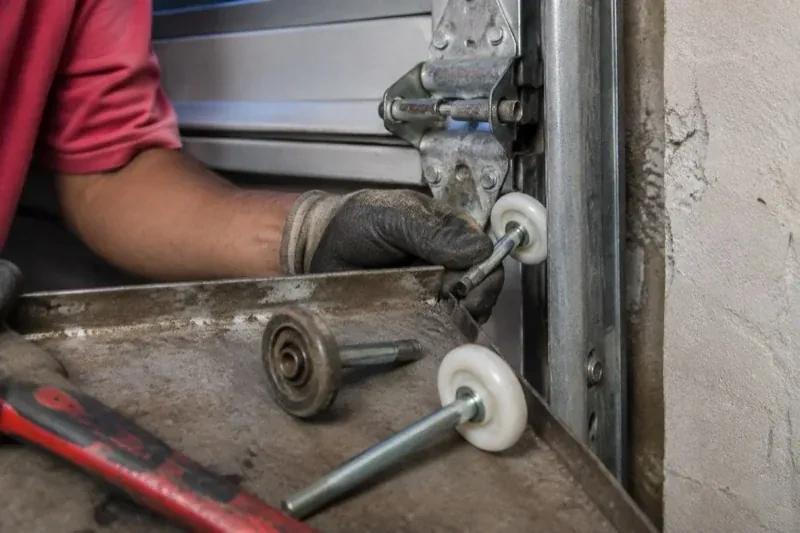
- Garage Door Hinge ReplacementOn the old wood door, one hinge has pulled away from the panel, dragging a screw and a chunk of soft timber with it.
- Garage Door Track Repair or ReplacementBacking out this morning, the mirror caught the track beside the door.
- Garage Door Cable ReplacementThe car bumper kissed the door on the way in.