Repairs · Kitchener
Garage Door Perimeter Weatherstrip
Every time the door closes there is a rubbing squeal along one side, and the flexible fin has folded under itself and torn.
In plain words
Around a garage door there are three seals: one on the bottom edge of the door, and two running up the sides and across the top of the opening. Those last two are the perimeter weatherstrip. They are fixed to the stop moulding on the jambs and header, and their flexible fin rests against the door face when it is closed, closing the gap between door and frame. Replacing them means fitting new lengths that meet the door evenly, cutting down how much wind, driven snow, dust, leaves and small animals get through. The bottom seal is handled as its own job, but the two are often done together.
How the visit goesThe bedroom over the garage is always the cold room, and standing in the garage you can feel why: a steady draft along the door edges that moves the cobwebs on the wall. The seal around the opening has flattened to nothing.
Garage Door Perimeter Weatherstrip
How the visit goes
A daylight test from inside
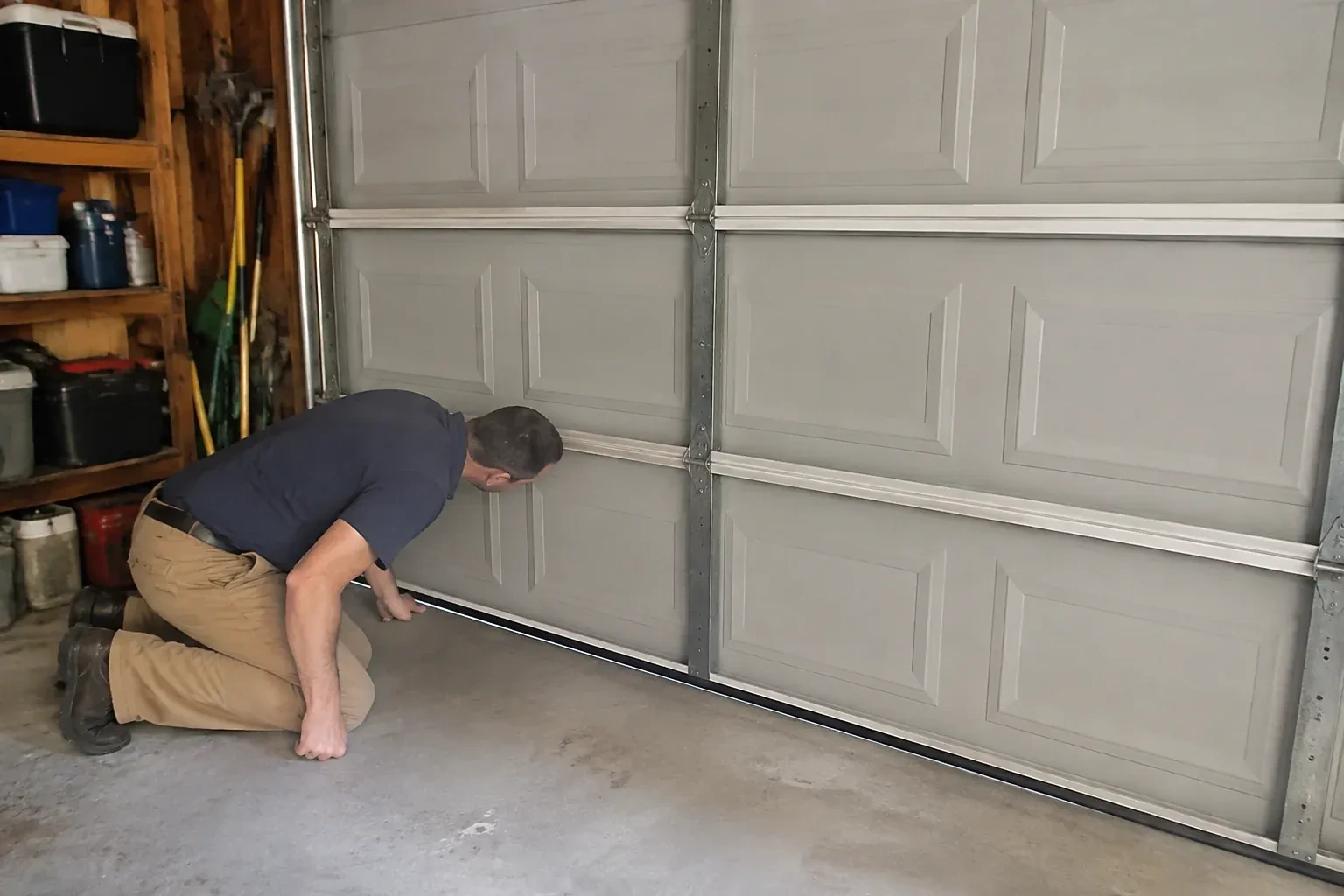
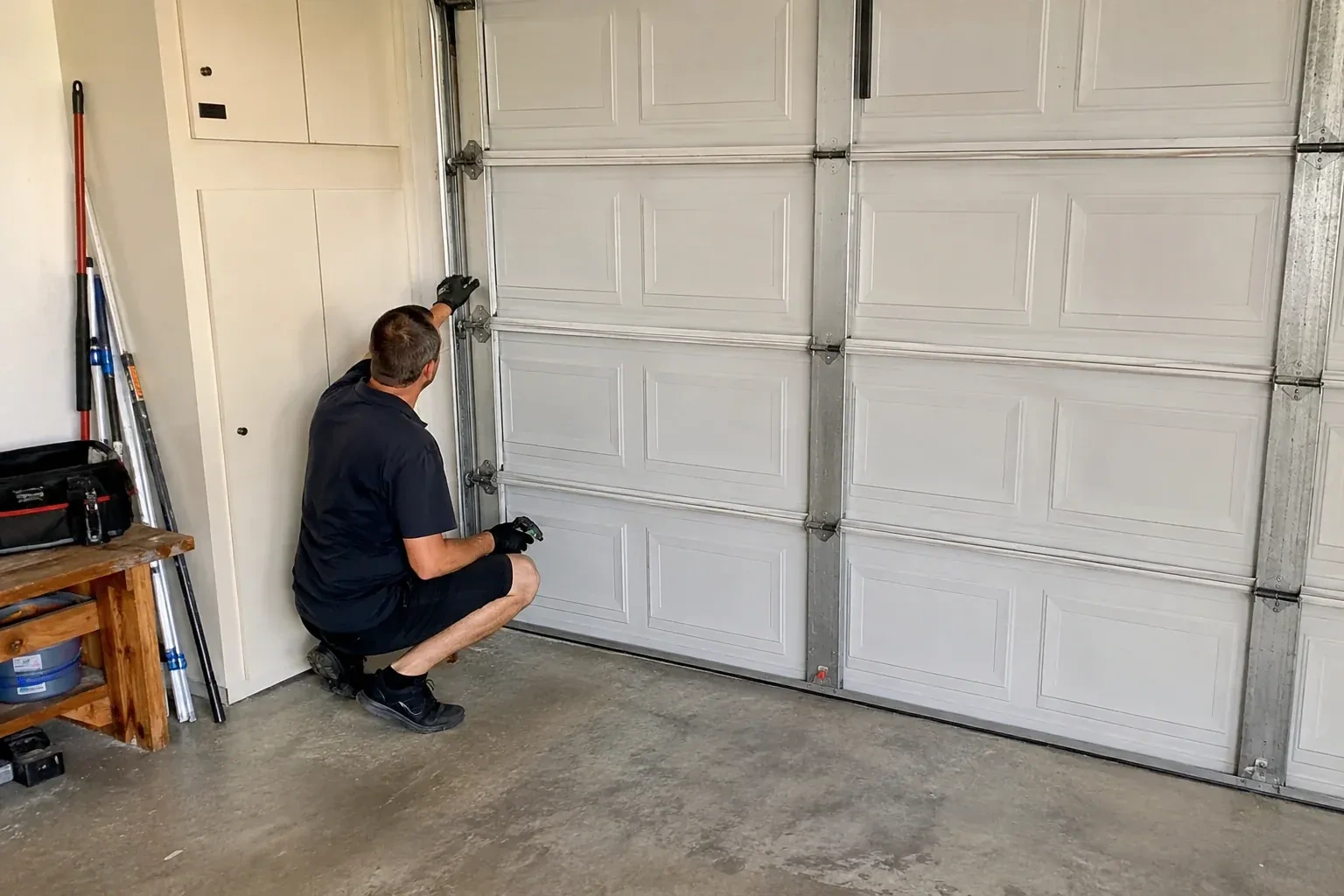
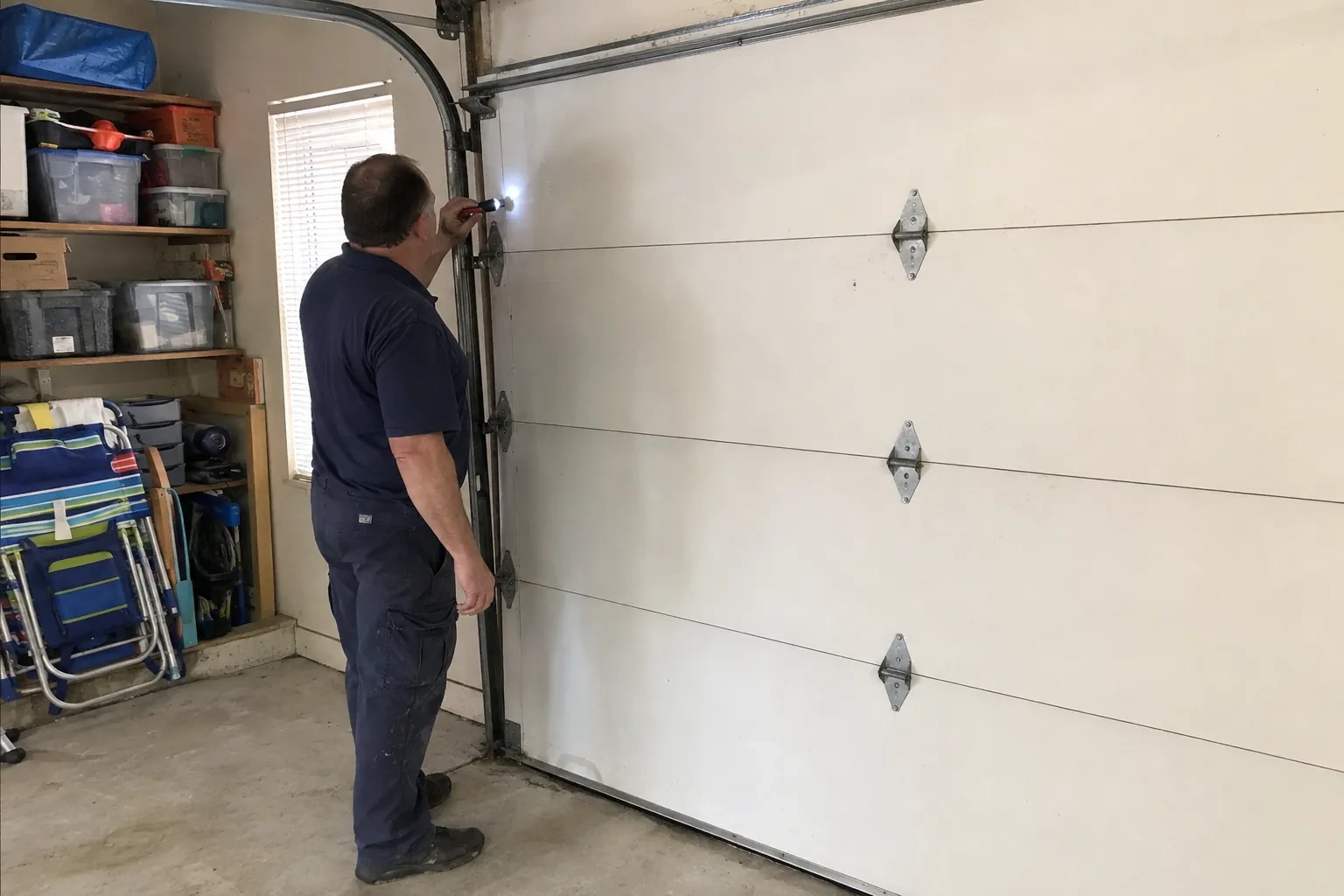
The first check needs no tools. The door is closed, the garage lights go off, and the technician stands inside looking along each side and across the header for lines of daylight. A bright, even line means the fin has shrunk back or hardened; a wedge that widens toward the top or bottom points to the door sitting out of square; a gap only at a corner means the pieces were never overlapped. On a windy day a hand or a smoke pencil along the edge finds drafts that daylight misses. The pattern of the gaps is what tells the technician whether the seal alone is the answer or whether the door needs a small adjustment first.
Fastening that lasts through the seasons
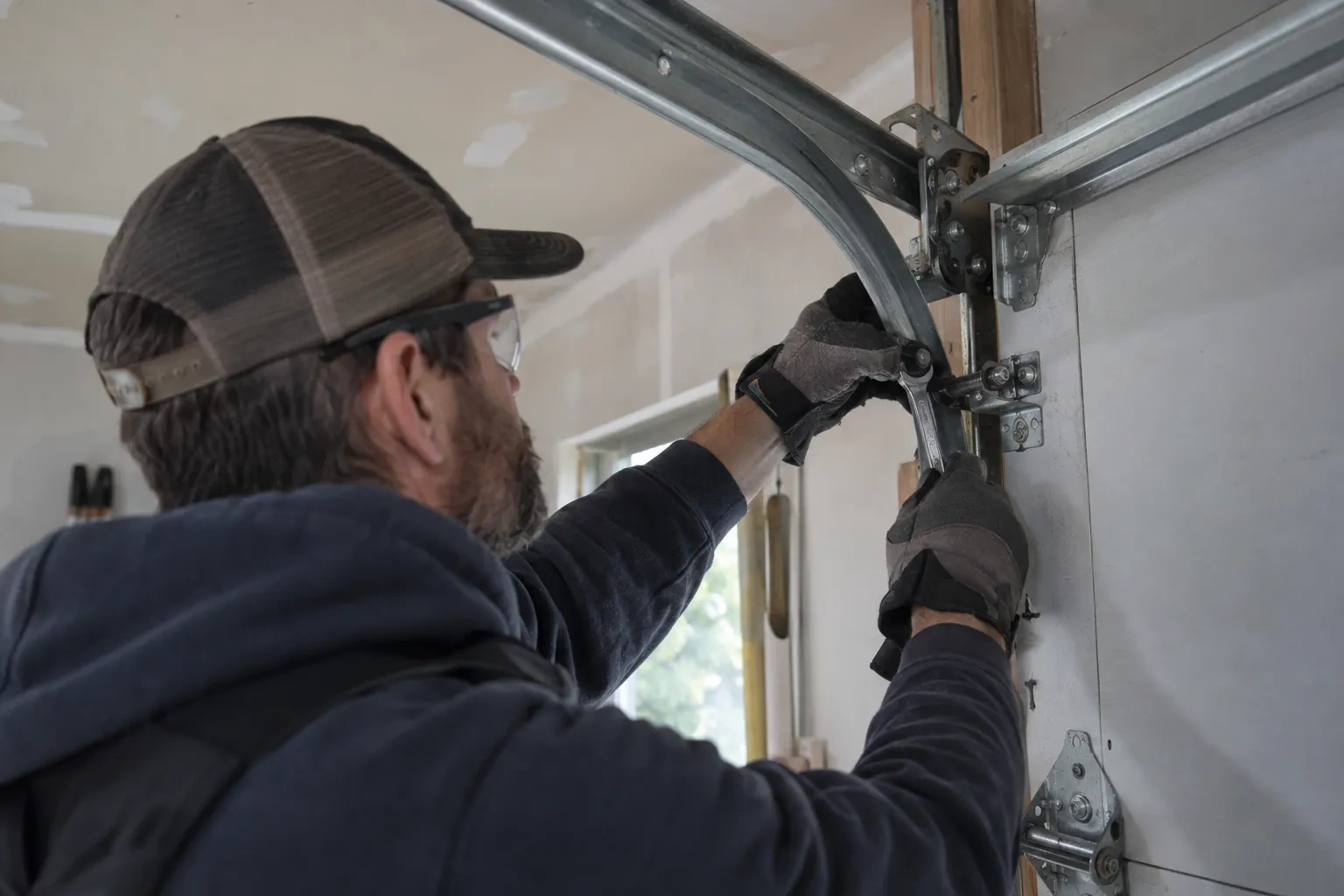
Fasteners are chosen for the weather they will live in: galvanized or stainless trim nails, exterior screws where the stop is heavy or the wood is hard, and weatherproof staples only for a light fin on sound wood. They are spaced evenly so the strip stays straight between them, and a nail set is used so the heads sit flush without crushing the vinyl. In cold weather the lengths are kept warm in the van until the moment they are fitted, because cold vinyl is brittle and splits at the ends. Fasteners near the end of each piece go in a little further back for the same reason.
If the door changes, the seal is re-checked
The seal was set against the door as it sits today. If the door is later adjusted, has its springs or rollers replaced, or is swapped for a new one, the contact can change: a door that now sits a few millimetres further out presses the fin harder, and one that sits further in leaves a gap. After any such work, do the daylight test again and ask the technician doing that job to check the perimeter seal while they are there. Re-setting a length is a small task and keeps the two parts of the system working together.
Garage Door Perimeter Weatherstrip
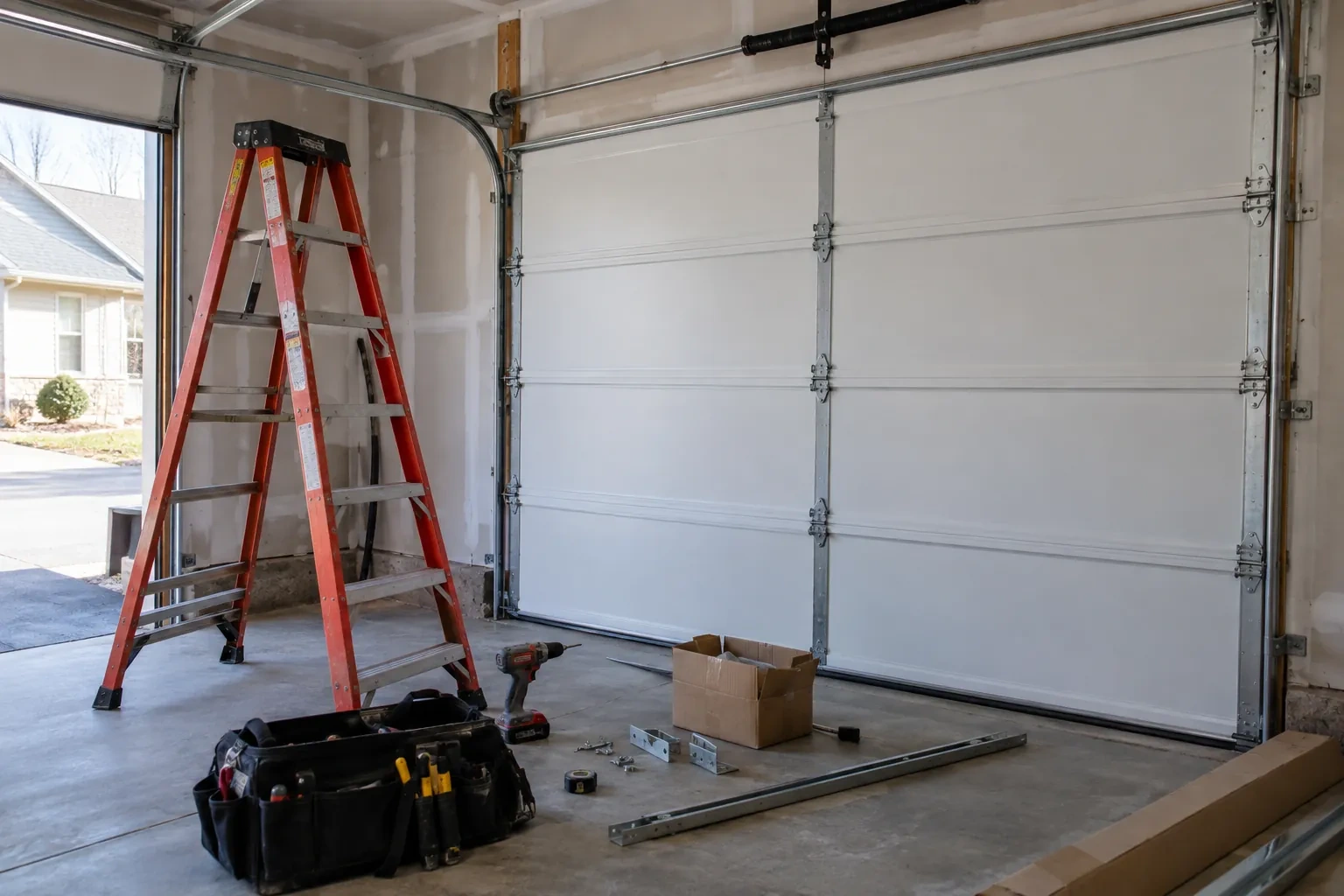
In the van
Flexible vinyl fin seal
Exterior caulking and gun
Galvanized or stainless trim nails
Epoxy consolidant and exterior primer
Flat bar, hammer and nail set
Garage Door Perimeter Weatherstrip
What affects the quote
Removing the old stop and paint build-up
Lifting a wood stop that has been painted for decades, scraping old adhesive and knocking down paint ridges takes longer than pulling a loose fin, and the time shows in the quote.
Weather on the day
Cold weather means keeping vinyl warm between the van and the opening and fitting each length with extra care, so a winter visit can run a little longer than one in mild weather.
Condition of the jambs
Soft or rotten wood at the base of a jamb is cut out and spliced with new lumber or PVC trim before the seal goes on, and that repair is quoted as its own item.
What to have ready
- Does the door rub or catch on the seal when it moves?
- Has the door recently been replaced or adjusted?
- Where do you see daylight, drafts or snow: sides, top, or corners?
Garage Door Perimeter Weatherstrip: questions
QuestionsDoes it matter if my garage is detached and unheated?
The seal still earns its place. It keeps driven snow, rain, leaves and animals out of the garage and off whatever is stored there, and it stops the door edges rattling in the wind. For an attached or heated garage the comfort benefit to the house is added on top. The technician may suggest a simpler fin replacement for a detached shell and a one-piece stop where the garage is lived beside.
Can you replace just one side or only the top piece?
Yes, a single damaged length can be replaced when the rest is sound and still soft; the new piece is matched to the existing profile and colour and its corner is overlapped with the neighbouring fin. When the whole set is the same age and the others are hardening too, replacing all three at once gives an even seal and saves a second visit, and the technician will say which applies.
How is the seal fastened to the frame?
A flexible fin is nailed or stapled to the face of the wood stop with galvanized or stainless fasteners spaced evenly along its length; a one-piece vinyl stop is nailed or screwed through its rigid edge into the jamb and header. Fasteners go into sound wood, heads are set flush without crushing the vinyl, and the joint between stop and trim is caulked where water could get behind.
Related services
- Garage Door Tune-UpYou pulled the red cord to lift the door by hand during a power cut and it felt like lifting a car.
- Off-Track Garage Door ResetOne side of the door hangs a hand's width lower than the other.
- Garage Door Panel ReplacementYou misjudged the last metre of the driveway and felt the bumper meet the door.