Springs · Kitchener
Garage Door Hinge Replacement in Kitchener
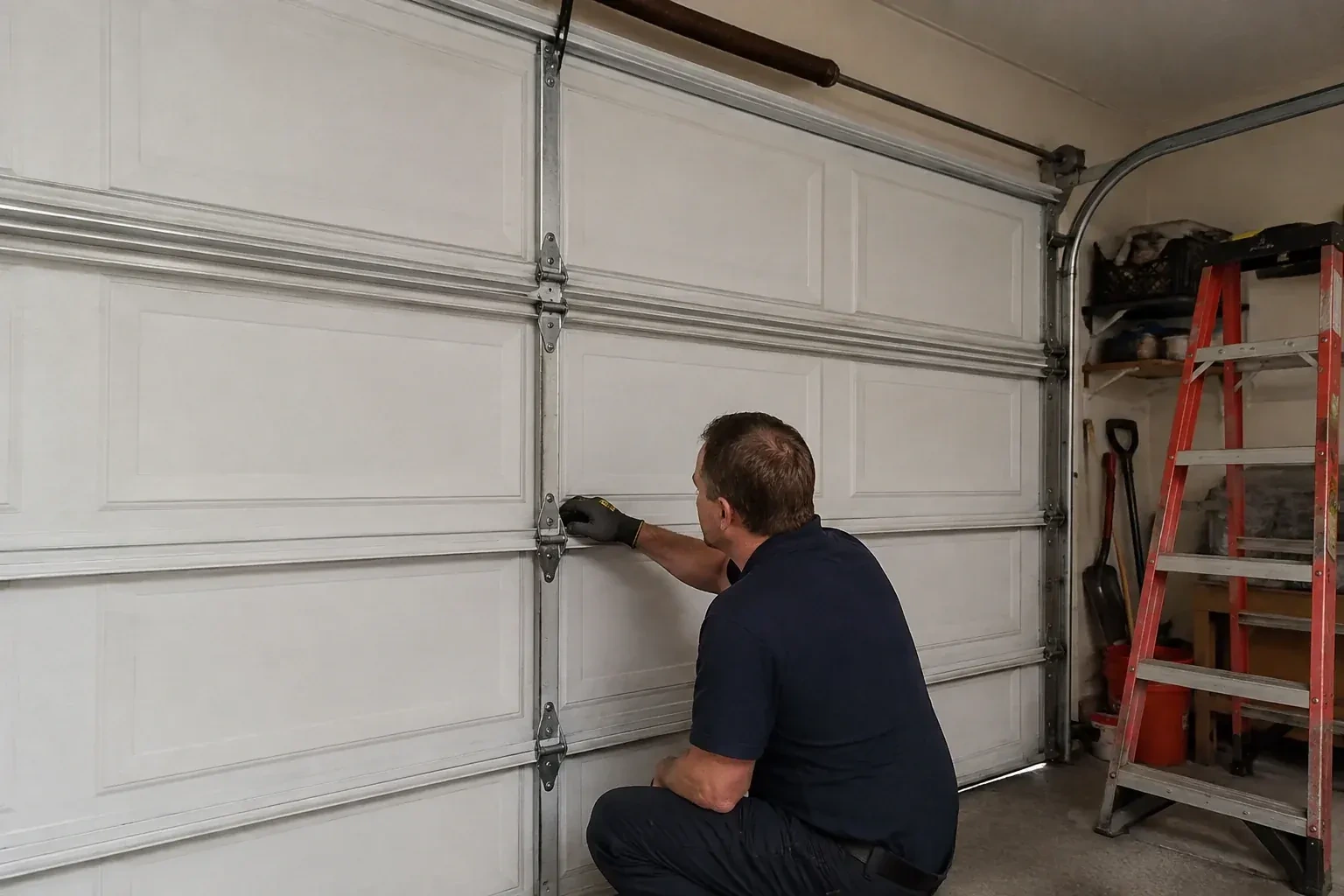
On the old wood door, one hinge has pulled away from the panel, dragging a screw and a chunk of soft timber with it.
In plain words
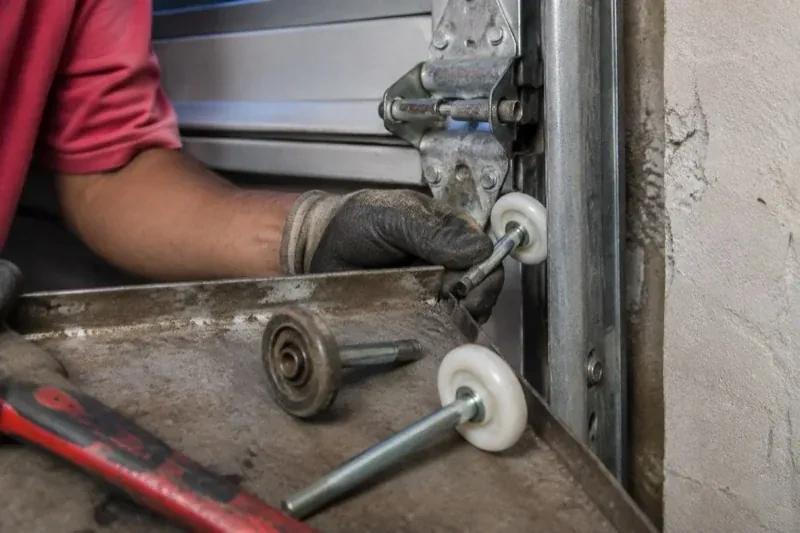
A hinge rarely fails on its own. A door that has drifted out of balance makes the opener drag it, and every hinge takes that strain on each trip. A roller whose bearing has seized twists the hinge that holds it. A track that has crept out of line makes the panels bind at the curve, and the hinge at that joint flexes until it cracks. Hinge replacement therefore begins with the whole door: rollers, track, balance and the panel edges around each hinge. The cause is corrected alongside the new hinge so the fresh part is not asked to absorb the same stress that finished the old one.
How the visit goesAfter a cold night the bottom seal had frozen to the slab. The opener strained, something gave, and now one of the upper hinges sits with its leaf bent outward and the panel below it flexes when the door moves.
Garage Door Hinge Replacement
How the visit goes
Reading the number on each edge hinge
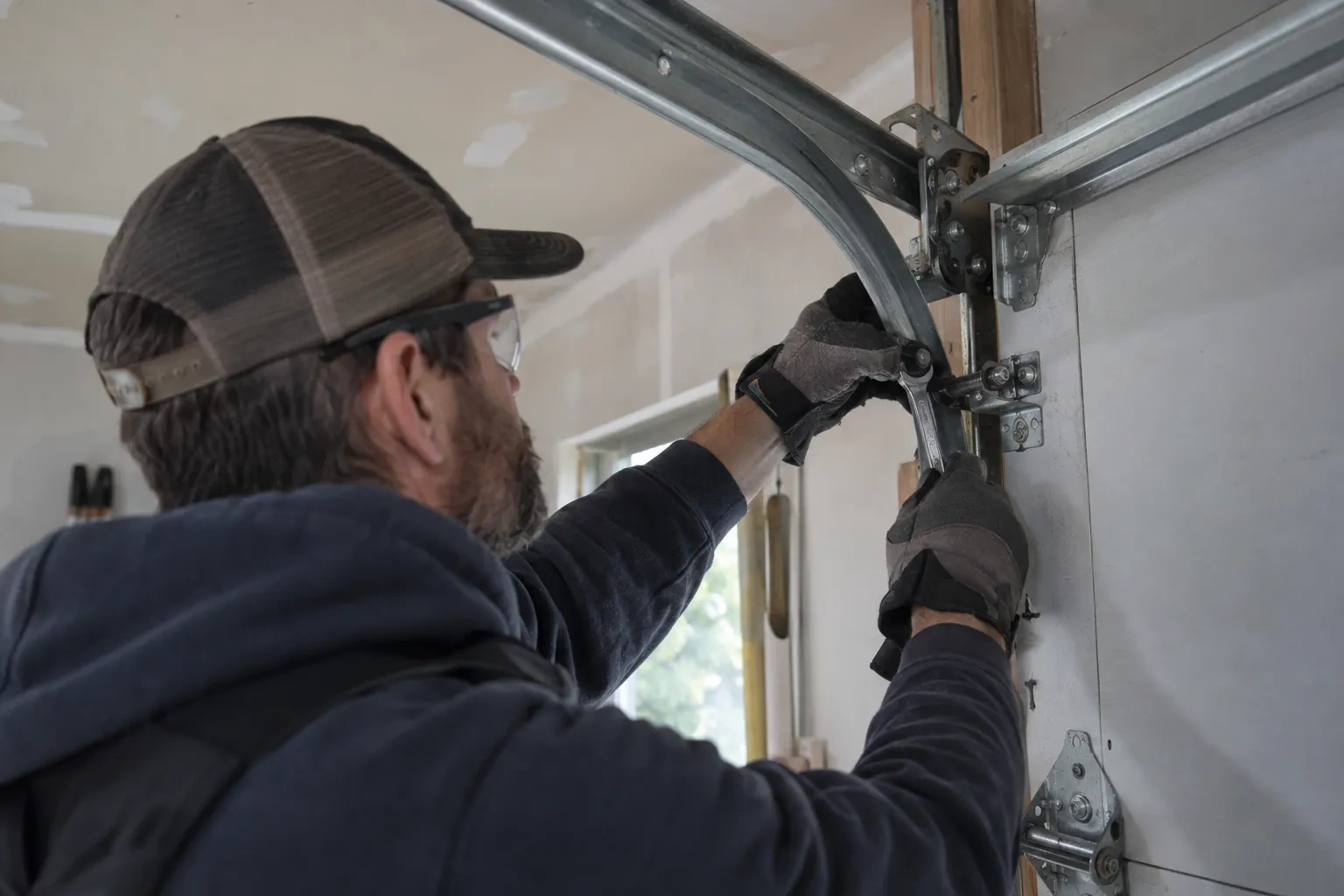
Every edge hinge carries a stamped number, and the technician reads it rather than assuming. A 1 sits at the joint above the bottom panel, a 2 at the next joint up, then 3, with 4 and 5 appearing on taller doors. The number sets how far the roller stands off the door, so the door leans into the jambs when closed and follows the track as it climbs. An earlier repair sometimes leaves a 2 where a 3 belongs, and that door binds or gaps at the curve for years without anyone knowing why. Confirming the number on each joint, and correcting any that are wrong, is part of the first look.
Going over the rest of the hardware
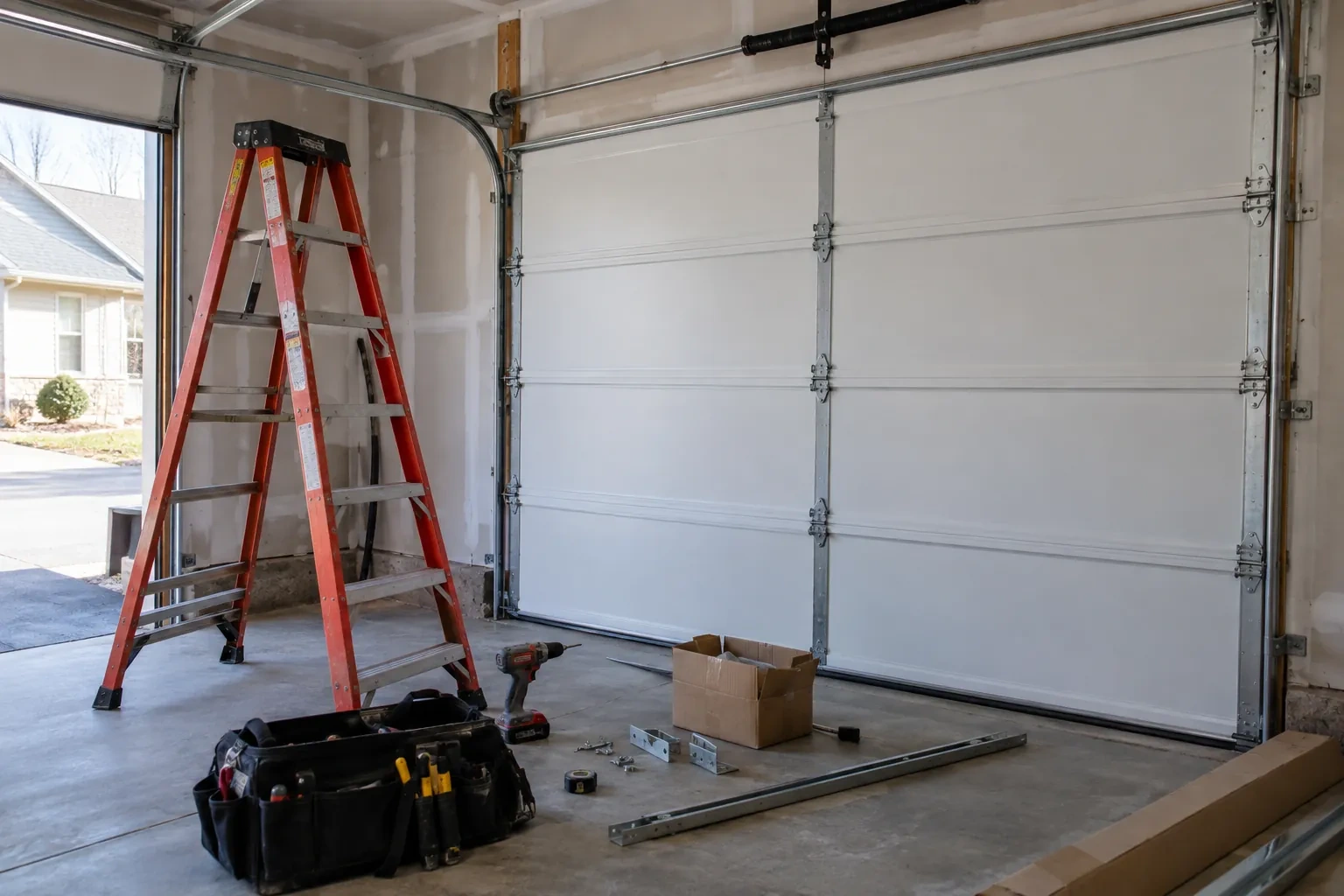
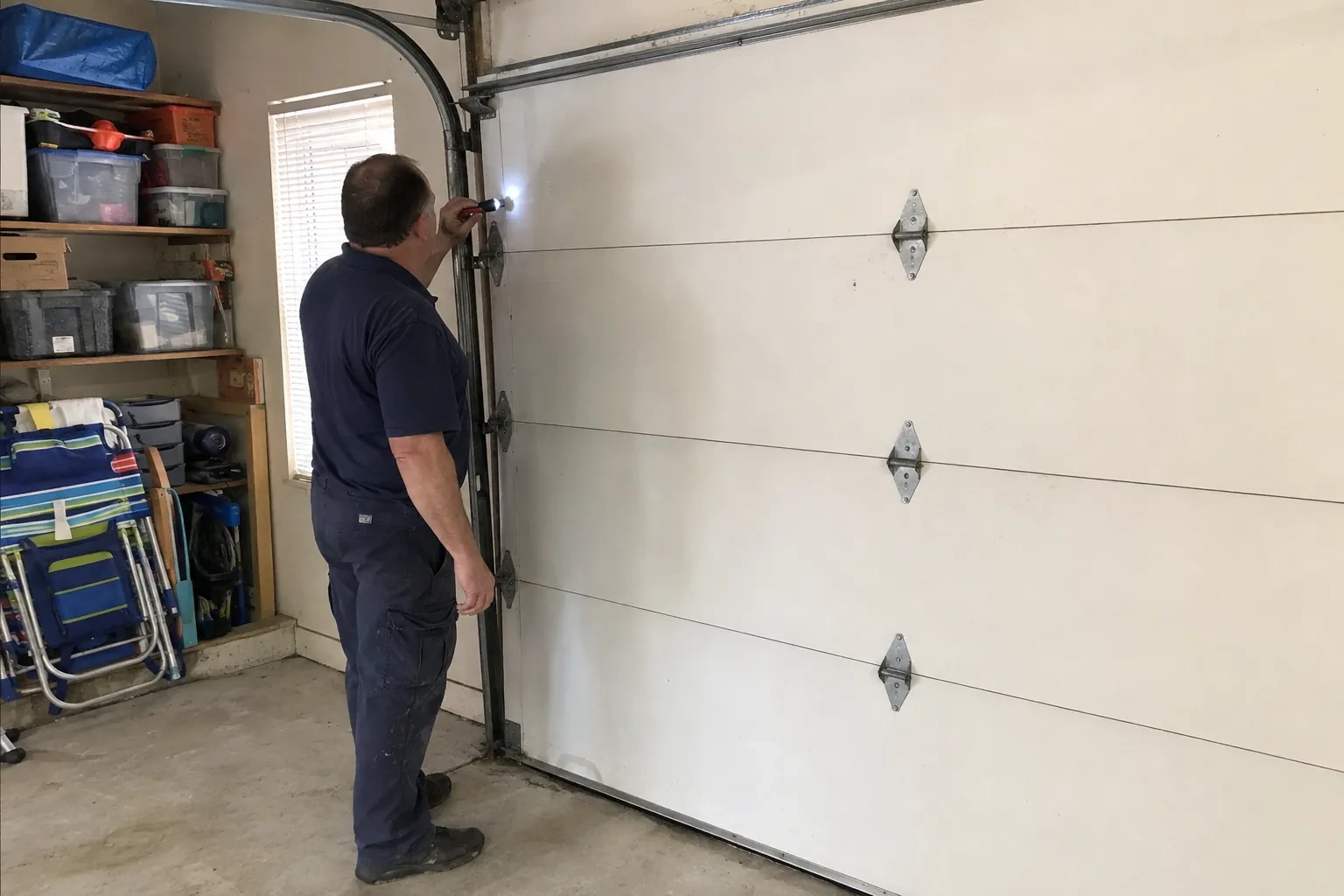
With tools out and the door still, the technician goes down the whole door: every hinge screw snugged, roller stems and hinge knuckles given a garage door lubricant, top fixtures checked for tight fasteners, and the track brackets on the jambs confirmed secure. The bottom brackets are looked at but left alone, because they anchor the lift cables and are under spring tension. Struts and their fasteners get the same pass. This sweep takes little time and usually catches the next loose screw before it becomes the next cracked hinge, so the door leaves in better shape than the single repair would suggest.
Learning the door's new sound
A well-hinged door has a sound, a steady rumble with no clicks, and it is worth getting to know it. A new pop or click at a fixed height points at a hinge or roller at that joint. A grinding note from one end suggests a roller bearing. A rattle when the door settles onto the floor is often a loose centre hinge screw. Because you now know what the door sounds like when everything is tight, a change stands out early, while it is a screw or a single hinge rather than a bent panel. A phone recording of the healthy door is a handy reference.
Garage Door Hinge Replacement
In the van
Silicone or lithium hinge lubricant
Socket set and impact driver
Carriage bolts, nuts and washers
Track clamps or locking pliers
Flashlight and level
Garage Door Hinge Replacement
What affects the quote
Damage to the stile or panel
After an impact, straightening a stile, fitting a support plate or adding a strut comes with the hinge work and is quoted as separate items so you can see each one.
Manufacturer-specific hinge patterns
Hinge width and hole spacing differ between door makers. A door that needs a maker-specific hinge rather than a standard one may involve ordering, which the quote notes.
Access to the door
Shelving against the door, a car that has to stay inside, or a tall door that needs a stepladder for the upper joints all affect the time quoted.
What to have ready
- Is the door steel, wood or insulated steel?
- Is anything stored against the door or under the track we should know about?
- Is a roller leaning or partly out of the track anywhere?
Garage Door Hinge Replacement: questions
QuestionsWill new hinges make the door quieter?
Often noticeably. A cracked or loose hinge is the source of many pops, clicks and rattles, and a hinge that holds its roller square lets the wheel run flat instead of scraping the track lip. Combined with fresh lubricant on the knuckles and rollers, the door settles into a steady rumble. Any noise that remains usually points to the rollers, the opener chain or the springs, which the technician can identify for you.
Can I tighten loose hinge screws myself?
Yes, hinge screws are a homeowner task. Disconnect the opener, leave the door closed, and snug each hinge screw with a socket wrench without forcing it, since overtightening strips the hole. Leave the bottom brackets alone; they anchor the cables and are under spring tension. If a screw spins freely or a hinge is cracked, stop there and have it looked at, because a stripped hole needs a fresh anchor rather than more turns.
How long do garage door hinges last?
Many hinges last the life of the door. Those that fail early are usually on doors that were out of balance, had seized rollers, saw heavy daily use, or sat in slush and salt through many winters. A light hinge on a heavy door also wears sooner. Rather than a fixed number of years, watch for cracks near the holes, a rocking pin, rust at the knuckle and screws backing out.
Related services
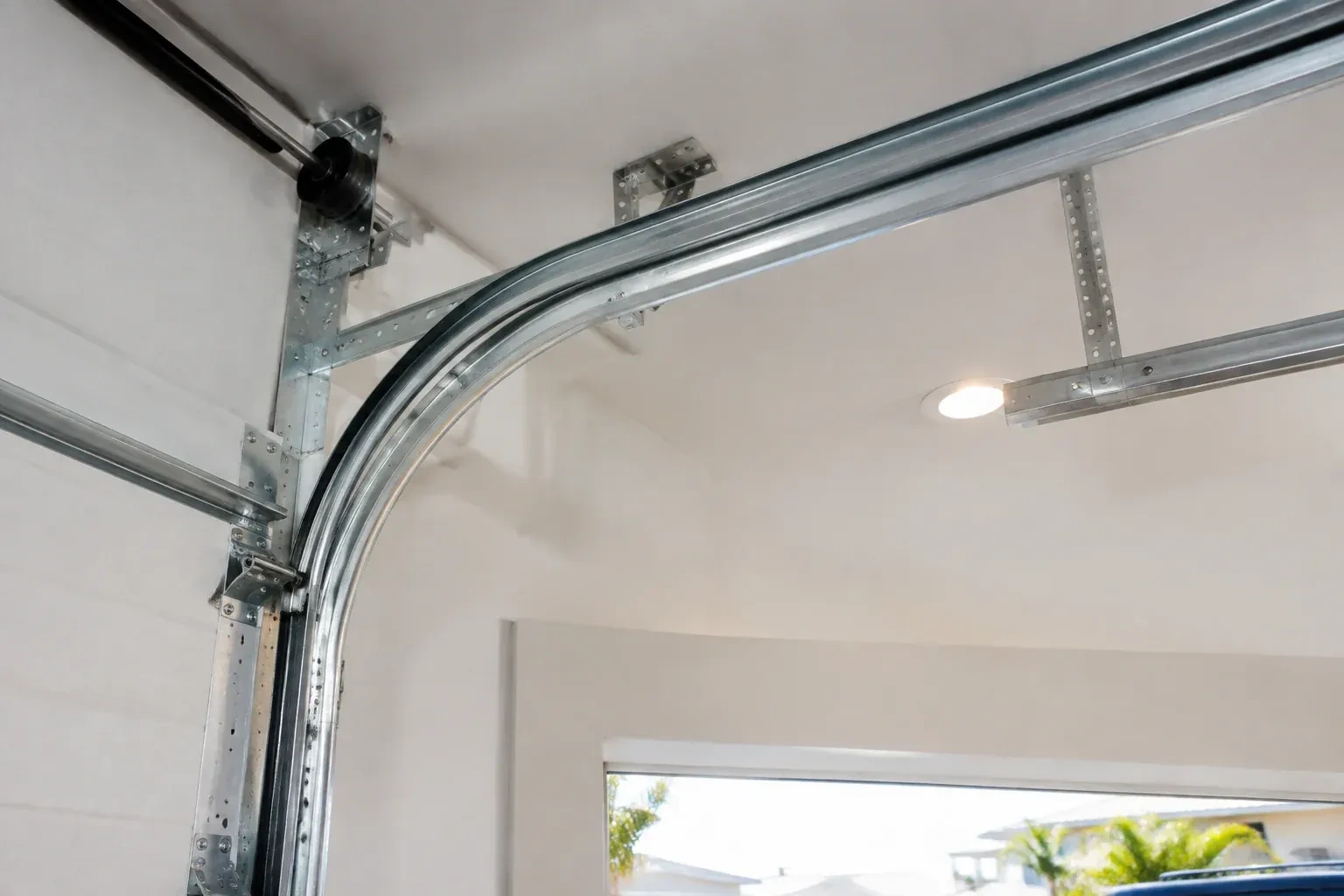
- Garage Door Track Repair or ReplacementBacking out this morning, the mirror caught the track beside the door.
- Garage Door Cable ReplacementThe car bumper kissed the door on the way in.
- Torsion Spring ReplacementAfter pulling the red release cord, you tried lifting the door yourself and it would barely leave the floor.