Repairs · Centreville
Garage Door Panel Replacement in Centreville
You misjudged the last metre of the driveway and felt the bumper meet the door.
In plain words
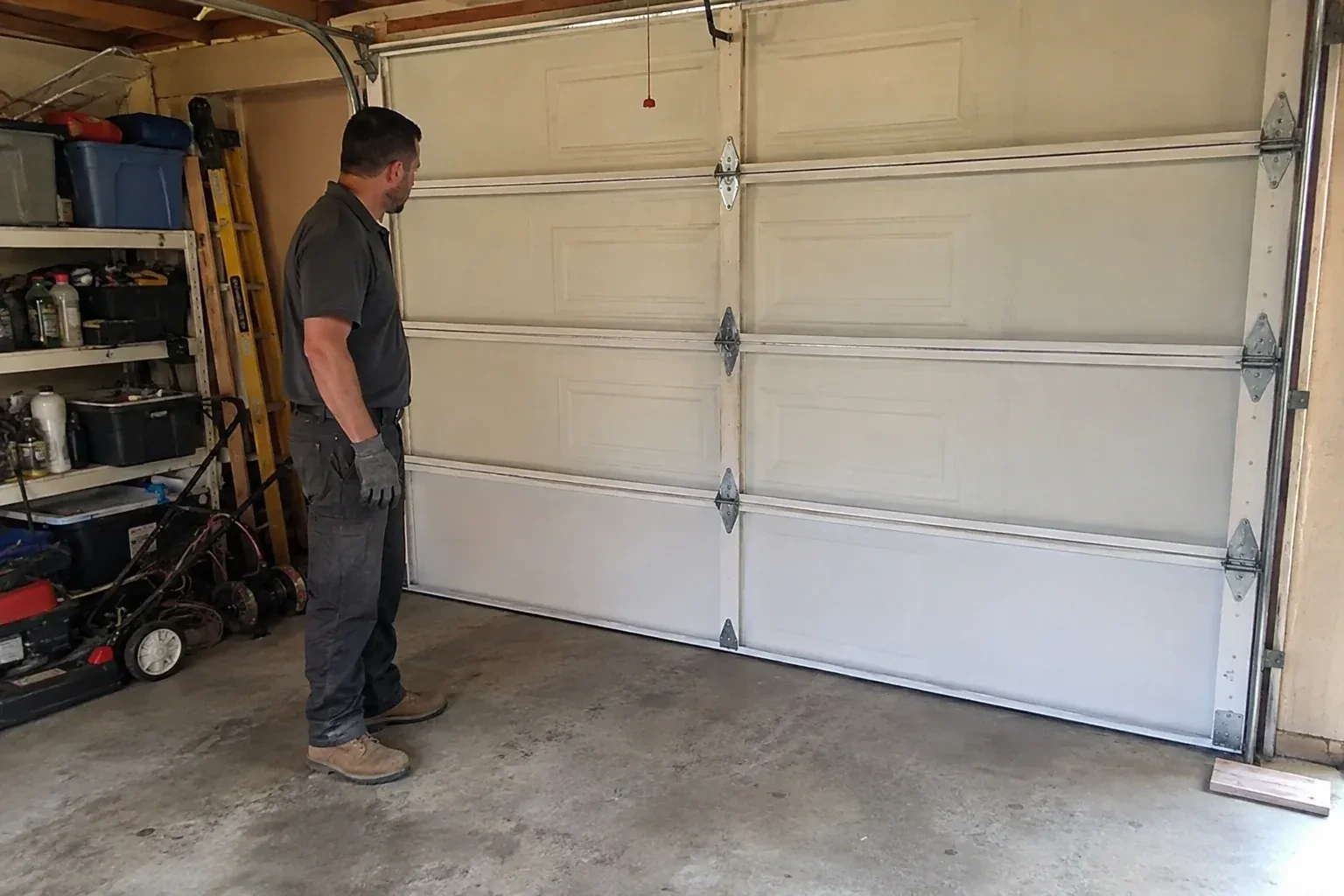
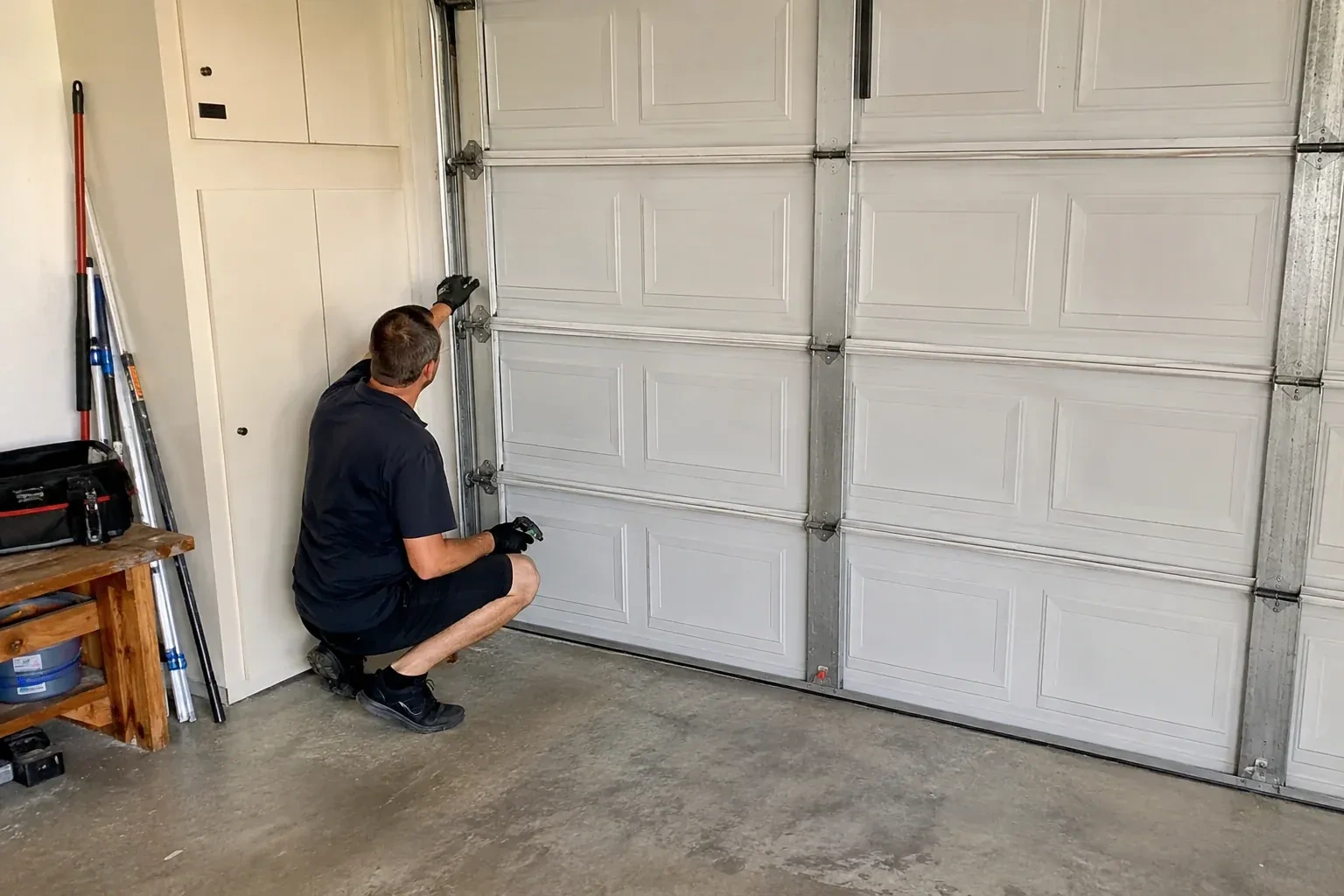
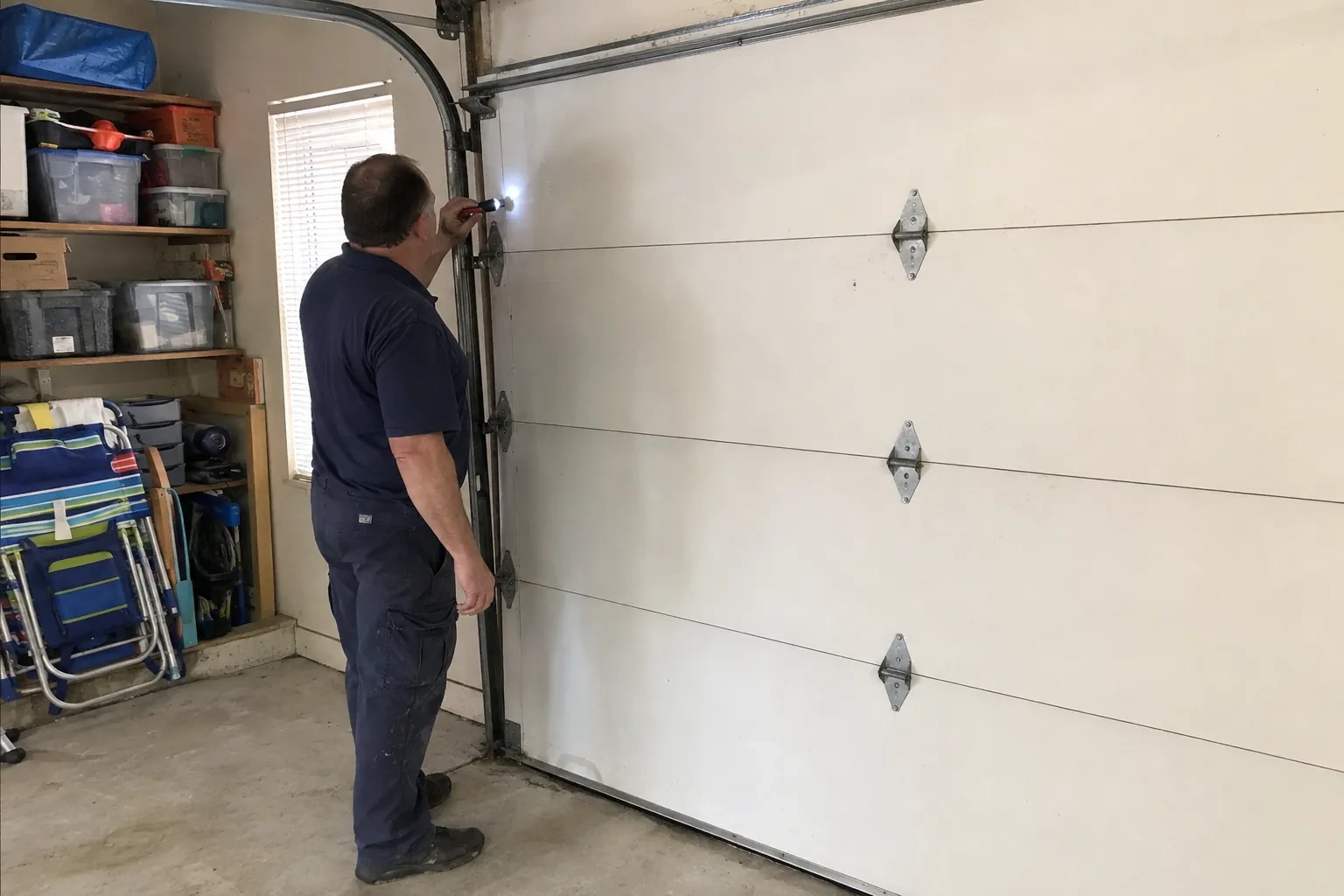
Everything about a section replacement flows from knowing exactly which door you have. Two doors that look alike from the driveway can differ in section height, thickness, the shape of the joint where sections meet, where the hinges bolt on and how the skin is embossed. A new section has to share all of those details to seat cleanly against its neighbours. So the visit starts with a hunt for the manufacturer's label, usually on the edge of a section or on the track, followed by measurements and photographs. With that identity confirmed, the right section can be ordered with confidence rather than hope.
How the visit goesThe top section has developed a bend where the opener arm pulls on it. On the way up it flexes visibly, the door hesitates near the top of its travel, and daylight shows through the joint below it when the door is closed.
Garage Door Panel Replacement
How the visit goes
Keeping the door safe until the new section arrives
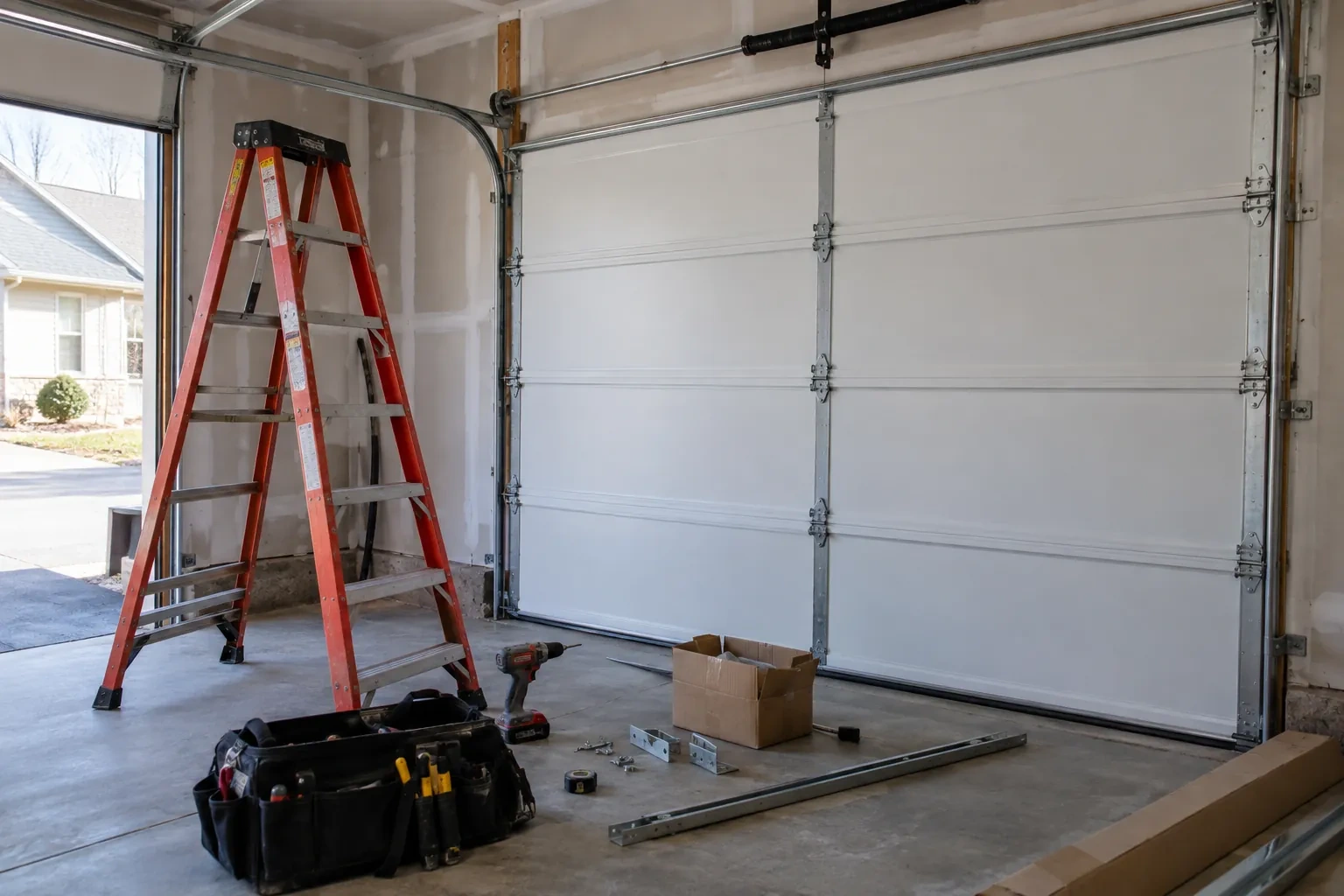
Because a section is ordered rather than pulled from a shelf, the first visit ends with the door in a safe state for the wait. If the damage is cosmetic, the door can usually stay in normal service. If a section is folded, a hinge has torn out or a cable has gone slack, the technician braces the section, disconnects the opener so it cannot pull on a weakened door, and secures the door in the closed position. Sometimes a temporary strut will let a bowed section run until its replacement comes. You are told plainly which of these applies and what to avoid doing in the meantime.
Releasing tension for a bottom section
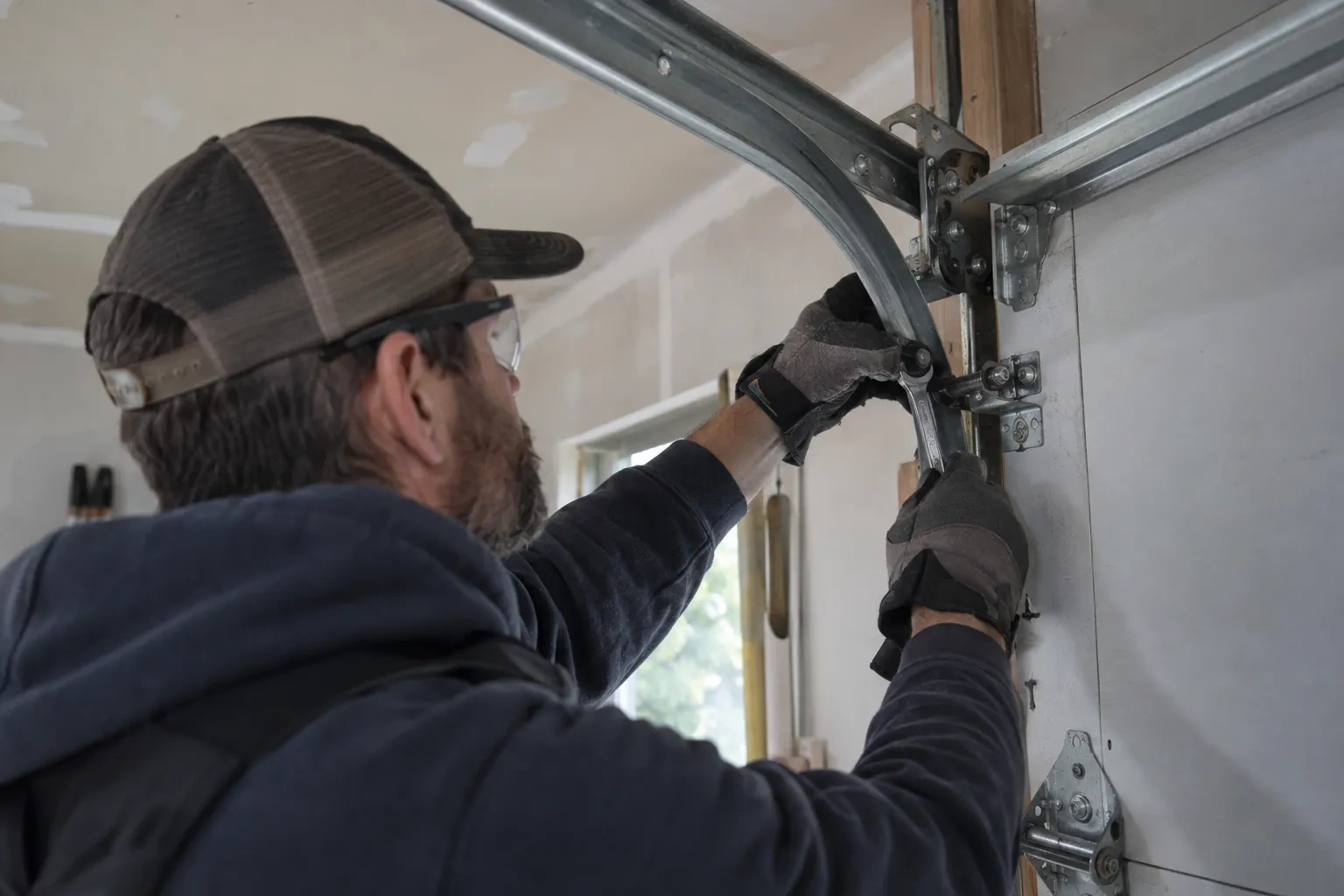
The bottom section is the one place where the lift cables attach, and those cables are held taut by the springs. Before its brackets are unbolted, the technician takes the energy out of the system. On a torsion door that means fitting winding bars into the cone and unwinding the spring turn by turn while the set screws are loosened; on an extension-spring door it means propping the door open and unhooking the springs. With the cables slack, the bottom brackets, the seal retainer and the section itself can be removed safely. The same steps are reversed at the end, and the door's balance is set fresh.
Habits that keep sections out of harm's way
Most section damage comes from a handful of everyday moments, and small changes head them off. Wait until the door is fully open before pulling in or out; the sensor and lights on many openers make that easy to judge. Give the door a metre of clearance when parking a trailer or leaning bikes. If the driveway is the rink, a practice net or a sheet of plywood on the inside face of the lower sections takes the pucks instead of the steel. And if the door is ever struck, stop using it and have it looked at, because the visible dent is not always the whole story.
Garage Door Panel Replacement
In the van
Nylon or steel rollers
Bottom seal retainer and astragal
Adjustable top roller brackets
Garage-door lubricant
Matching replacement section
Garage Door Panel Replacement
What affects the quote
Access and working room
A section is wider than the door opening and is carried in and manoeuvred by two people. A cluttered garage, a low ceiling around the spring, or a tight driveway adds handling time.
A make-safe visit while the section is on order
When the door has to be braced, disconnected or secured closed until the section arrives, that first visit is quoted as its own item, with the installation visit following once the part is in.
Windows in the section
A glazed section carries frames, glass and sometimes decorative inserts, each specified with the order. A section with windows is quoted as a glazed section; adding windows where there were none changes the line as well.
What to have ready
- Does the damaged section have windows in it?
- Would you consider a whole new door if a matching section is unavailable?
- Are any hinges, rollers or cables visibly bent, loose or hanging?
Garage Door Panel Replacement: questions
QuestionsWhat happens to the opener during the work?
It is disconnected at the release cord and unplugged before any hardware comes off, so the motor cannot pull on a door that is missing a section. After the new section is in and the door has been balanced by hand, the opener is reconnected and tested: its reversal against a board on the floor and its photo-eyes are checked every time, and the open and close limits or the force setting are reset only if that check shows they need it.
Why is the bottom section handled differently from the others?
The bottom section is where the lift cables attach, through the bottom brackets at each end, and those cables are under the full pull of the springs. Before the brackets come off, the springs have to be unwound or unhooked so the cables go slack. The bottom section also carries the seal retainer and astragal that meet the floor. After the new section is in, the springs are re-tensioned and the balance reset.
What is a strut, and does a new section need one?
A strut is a horizontal steel stiffener fastened across the inside of a section to keep it from bowing. Wide doors, top sections where the opener arm pulls, and bottom sections that take knocks are the usual places for them. If your damaged section had a strut, the new one gets a straight strut refitted or replaced. If a top section bowed because it never had one, adding a strut is part of putting it right.
Related services
- Garage Door Tune-UpYou pulled the red cord to lift the door by hand during a power cut and it felt like lifting a car.
- Off-Track Garage Door ResetOne side of the door hangs a hand's width lower than the other.
- Garage Door Bottom Seal ReplacementThe garage doubles as a workshop, and with the heater running the floor near the door stays cold and the draft finds your ankles at the bench.