Springs · Doon
Extension Spring Replacement in Doon
The home inspector's report on the house you are buying flags the garage door: extension springs with no safety cable running through them, coils showing rust, and a door that sank when he lifted it partway.
In plain words
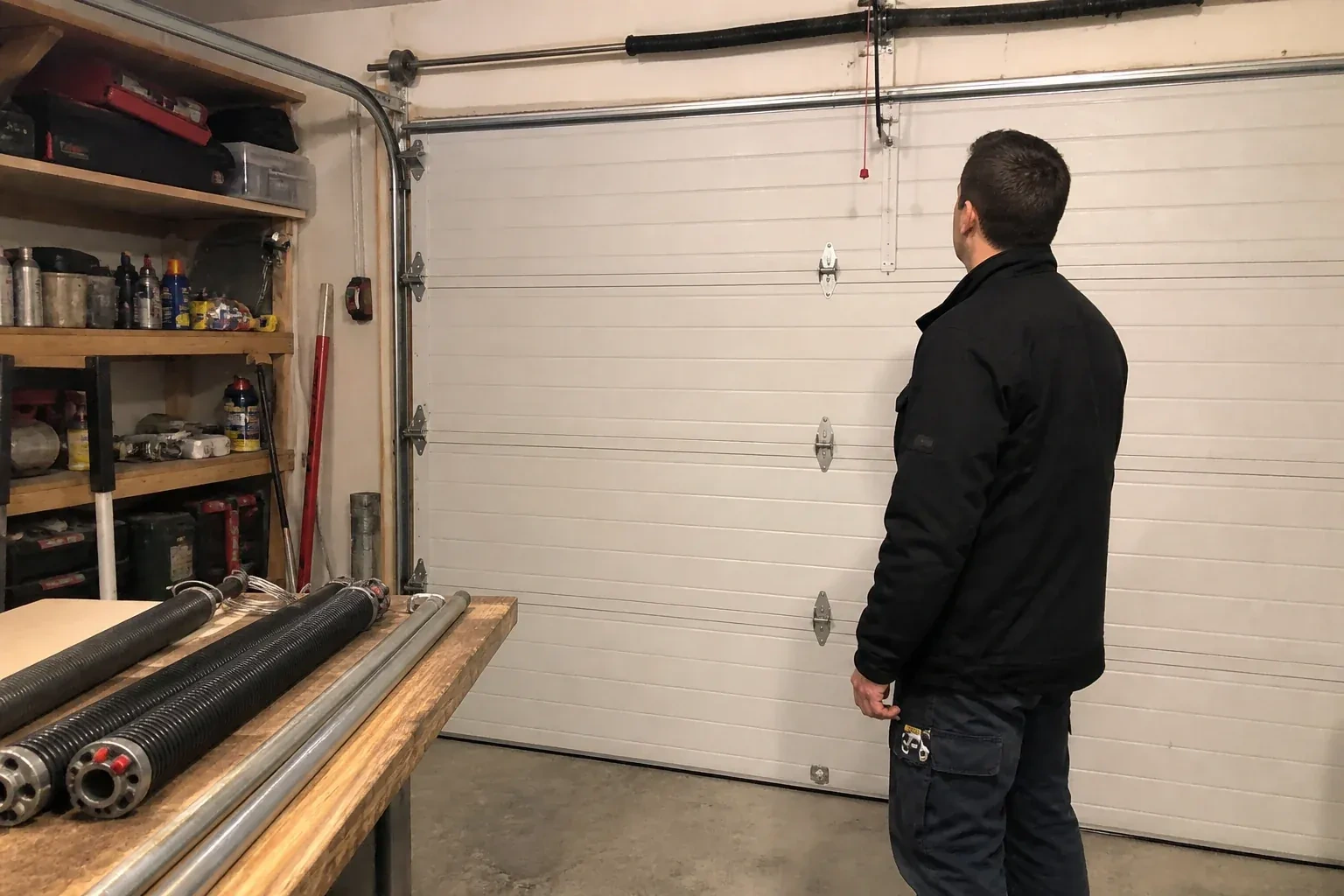
Extension springs are common on the detached garages behind older houses, where a low ceiling left no room for a torsion shaft, and those garages are rarely heated. Damp summers, hard frosts and salt carried in on the car pit the spring wire over the years, and a fatigued spring most often lets go on a cold morning when the steel is stiffest. Replacement fits a new pair rated for the door, renews the pulleys and cables that have rusted alongside them, adds containment cables where the original installation never had any, and leaves a door that lifts easily by hand when the power is out.
How the visit goesOpen the door by hand and it drifts back down on its own, a little at first and then all at once. Nothing is broken that you can see, but the springs along the tracks look tired, rusty and slightly sagging.
Extension Spring Replacement
How the visit goes
Containment cables, present or missing
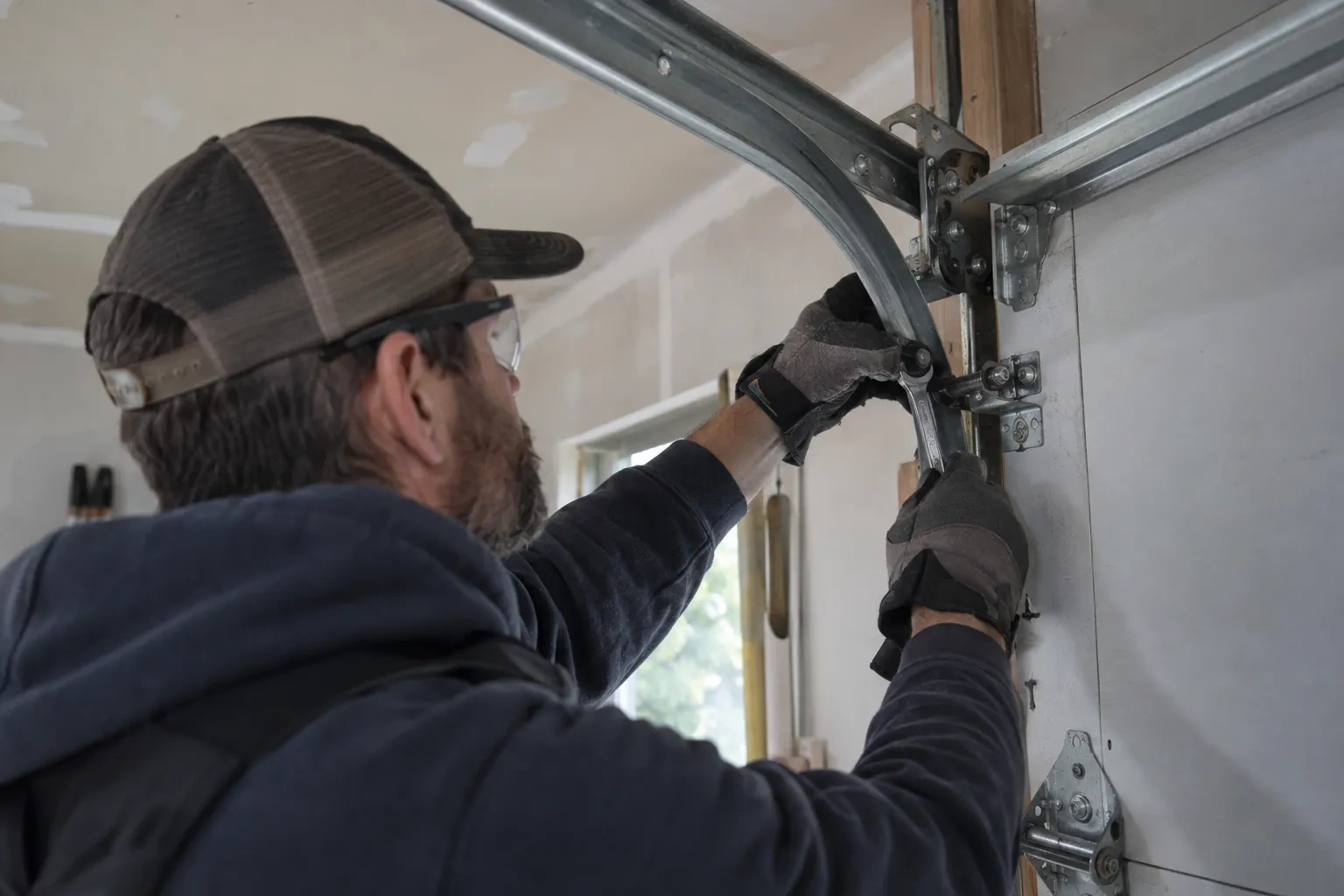
The question the industry's own inspection checklist asks of every extension-spring door is whether each spring has a cable running through its centre, anchored at both ends. The technician checks for it on both sides, then checks its condition: a cable that is frayed, kinked, anchored to a loose screw or simply tied off to the hanger is not doing its job. Doors installed decades ago often have none at all, and doors that had a spring changed by a previous owner sometimes have one side fitted and one forgotten. Fresh containment cables go on with the new springs, and their anchor points are set into solid framing so that a spring which breaks stays on its cable.
Bringing the opener back into step
The opener is the last thing touched. Once the door balances by hand, the trolley is reconnected and the door run through several full cycles under power while the technician watches the cables ride their pulleys and the springs stretch evenly. Because the door is now lighter to move than it was on tired springs, the opener's force and travel settings are reset to suit; a force setting left high would push a balanced door too hard. Then the reversal checks are done in front of you: a block laid flat under the centre of the door, which the door must touch and reverse from, and a hand passed through the photo-eye beam while the door closes.
A clear threshold and an honest opener
Two habits protect the new springs from the shocks that shorten a spring's life. The first is the floor: a door that comes down on a bin, a bike wheel or a ridge of packed snow stops short while the springs and cables are still pulling, and the jolt can throw a cable off its pulley. Keep the opening clear and scrape the ice ridge off the threshold before running the door in winter. The second is the opener's force setting. It was set for the newly balanced door; if the door ever seems to need more push, that is the springs asking for attention, not a reason to turn the force up.
Extension Spring Replacement
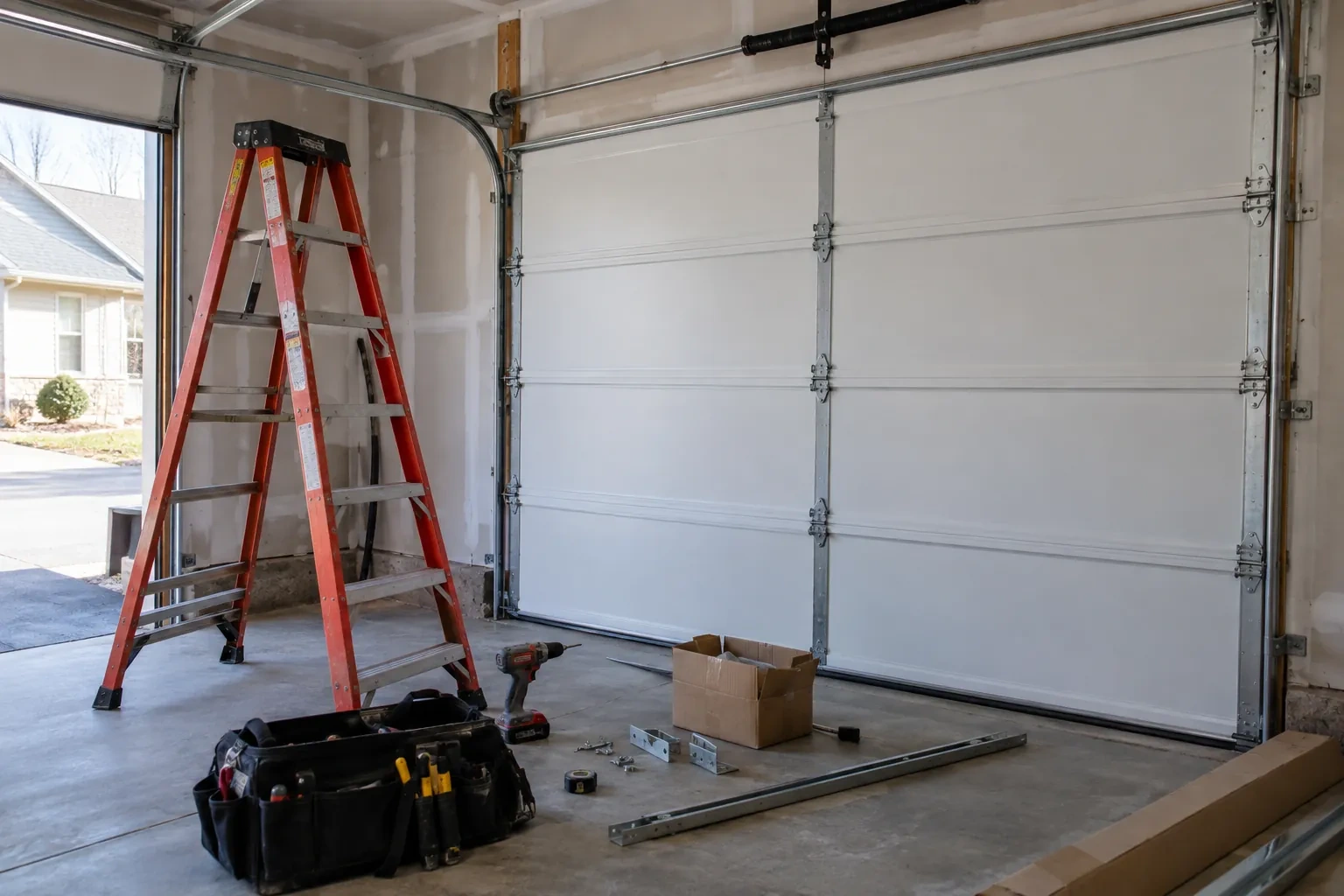
In the van
Track clamps or locking pliers
Extension springs, matched pair
Lag screws and hanger bolts
Containment (safety) cables
Garage-door spray lubricant
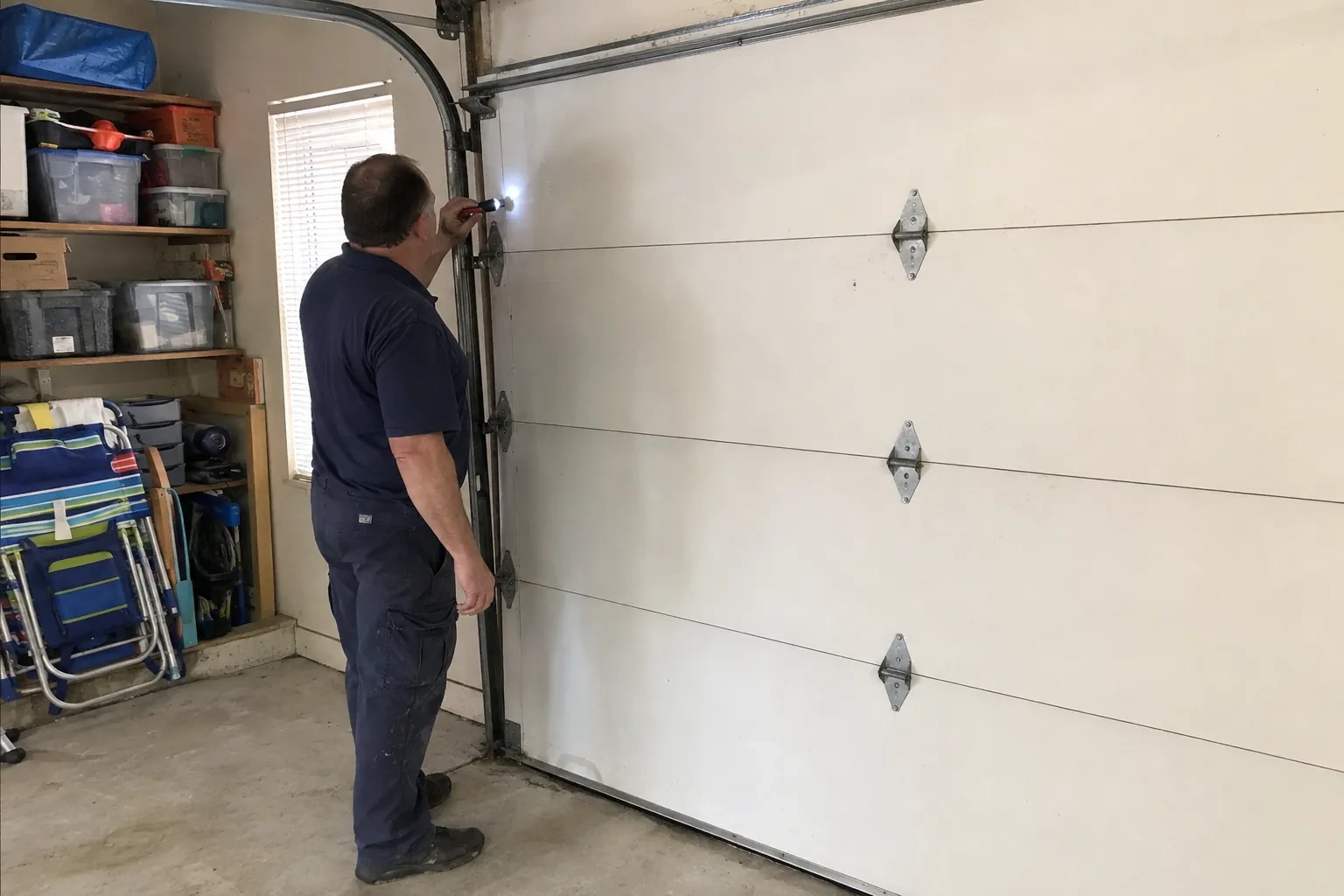
Extension Spring Replacement
What affects the quote
Getting the van to the garage
A detached garage down a shared laneway, a rural property or a building with the bay behind a gate takes more time to reach and set up in, and the quote allows for that.
Pulleys that need renewing
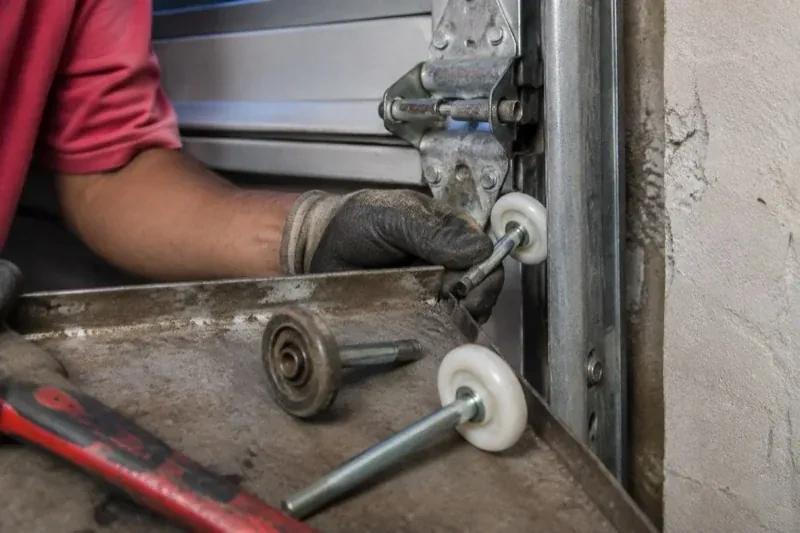
Each side has two pulleys, and a wheel worn to a groove or a bearing that has stiffened is replaced with the springs. The quote names how many and which type.
Weight added since the door went in
Insulation panels, windows or a wood overlay fitted after the original springs mean a heavier rating than the old pair. The door is weighed and the quote reflects the door as it is now.
What to have ready
- Is there anything stored beside the tracks or under the springs?
- Is a car parked inside that will need to come out first?
- Is it a single or a double door, and what is it made of?
Extension Spring Replacement: questions
QuestionsHow do you know which springs my door needs?
By weight. Extension springs are rated for the weight they lift, so the technician releases the opener and weighs the door on a scale, then matches that figure and the door's height to a spring rating and stretch length. The old springs are measured as a check on wire size, coil diameter and length. Where the two disagree, the scale decides, since doors gain weight from added insulation or panels.
Can I keep using the opener until the spring is replaced?
It is better to leave the door where it is. With one spring gone, the opener is lifting most of the door's weight on its own, which strains the motor, can bend the top section and often throws a cable off its pulley, adding to the work. Use another door in and out, keep the bay clear, and let the technician move the door once it is secured.
What is the difference between extension springs and torsion springs?
They balance the door in different places. Extension springs are the two long coils that run beside the horizontal tracks and stretch as the door closes; they work through pulleys and cables. A torsion spring is wound on a shaft above the door opening and turns drums that wind the cables. The parts, the way tension is set and the service itself are different, so it helps to say which you have when you call.
Related services
- Garage Door Hinge ReplacementOn the old wood door, one hinge has pulled away from the panel, dragging a screw and a chunk of soft timber with it.
- Garage Door Track Repair or ReplacementBacking out this morning, the mirror caught the track beside the door.
- Garage Door Cable ReplacementThe car bumper kissed the door on the way in.